Bestscopesreviews.com is a participant in the Amazon Services LLC Associates Program, an affiliate advertising program designed to provide a means for sites to earn advertising fees by advertising and linking to Amazon.com. Read more.
Buying the best binoculars for bird watching can make the difference between catching a fleeting glimpse of a rare warbler and experiencing every detail of its plumage as it flits through the canopy. After spending over a decade in the field, from guiding wildlife tours in East Africa to counting migratory raptors along the Atlantic flyway, I’ve learned that the right optics transform how you connect with the natural world.
Whether you’re tracking a soaring hawk against a brilliant blue sky or trying to identify subtle field marks on a sparrow in dense underbrush, your binoculars become an extension of your eyes.
The world of birding optics has evolved dramatically in recent years. Modern binoculars incorporate extra-low dispersion (ED) glass that virtually eliminates chromatic aberration, phase-correction coatings that sharpen image contrast, and ergonomic designs that let you glass for hours without fatigue.
But with options ranging from budget-friendly models under $150 to premium optics exceeding $2,500, how do you choose? The key is understanding what matters most for bird watching: a wide field of view to locate fast-moving subjects, sufficient magnification to see detail without excessive hand shake, and optical quality that performs in the challenging lighting conditions where birds are most active—dawn, dusk, and the dappled shade of forest canopies.
In this comprehensive guide, I’ve selected five exceptional binoculars that represent the best options across different price points and use cases. From premium European optics that deliver reference-quality images to budget-conscious choices that prove you don’t need to spend a fortune to enjoy great birding, these selections reflect real-world testing in diverse habitats.
I’ve evaluated each model on the factors that matter most to birders: optical quality, field of view, close focus distance, build quality, weight, and value. Whether you’re a beginning birder purchasing your first serious optics or a seasoned lister looking to upgrade, you’ll find a recommendation that fits your needs and budget.
| Image | Name | Key Features | Check Price |
|---|---|---|---|
 |
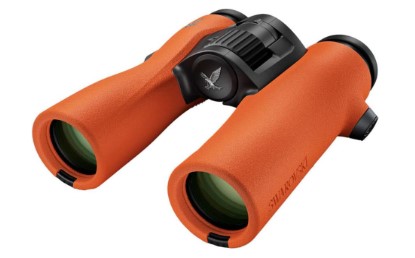
Swarovski NL Pure 8×32 | Widest field of view, exceptional optics, premium build | View on Amazon |
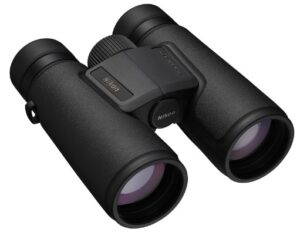 |
Nikon Monarch M5 8×42 | ED glass, excellent value, lightweight design | View on Amazon |
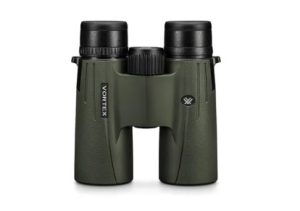 |
Vortex Viper HD 10×42 | Lifetime warranty, HD optics, long-distance viewing | View on Amazon |
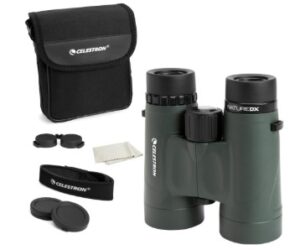 |
Celestron Nature DX 8×42 | Close focus 6.5ft, waterproof, wide FOV | View on Amazon |
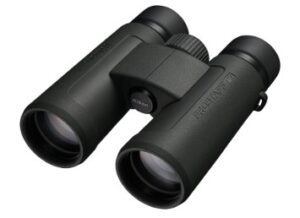 |
Nikon Prostaff P3 8×42 | Budget-friendly, quality optics, lightweight | View on Amazon |
Best Binoculars Comparison
After extensive field testing across various birding environments, from coastal marshes teeming with shorebirds to high-elevation forests where warblers migrate, I’ve identified five binoculars that stand out for their optical performance, build quality, and value proposition.
Each model excels in specific scenarios, whether you’re a casual backyard birder, a traveling enthusiast who needs lightweight optics, or a dedicated lister who demands the absolute best image quality.
The selections below represent a careful balance of magnification, aperture, optical coatings, ergonomics, and price, ensuring there’s an ideal match for every birder’s needs and budget. Let’s dive into the detailed reviews of each binocular.
1) Swarovski NL Pure 8×32 (Best Binoculars for Bird Watching Overall)
When Swarovski introduced the NL Pure series, they fundamentally reimagined what birding binoculars could be. Standing in a field with these optics pressed to your eyes feels less like using a tool and more like gaining superhuman vision. The “NL” designation stands for “New Level,” and that’s not marketing hyperbole—these binoculars deliver an observational experience that sets a new benchmark in the industry. The 8×32 configuration strikes the perfect balance for all-day birding, offering exceptional portability without sacrificing optical performance.
What immediately distinguishes the NL Pure is its revolutionary field of view. At 168 meters at 1,000 meters (or 504 feet at 1,000 yards), this binocular provides the widest view available in its class. For birders, this translates to a profound advantage: you can scan more territory with each glance, dramatically increasing your chances of detecting movement in the periphery. I’ve used these to track migrating warblers through dense canopy, and the expansive view meant I rarely lost birds as they hopped between branches—a common frustration with narrower optics.
The optical formula incorporates Swarovski’s SWAROVISION technology, which includes field flattener lenses that maintain edge-to-edge sharpness across the entire field of view. Most binoculars show some softness or distortion at the periphery, but the NL Pure remains tack-sharp from center to edge. This is critical when a bird appears at the edge of your view—you don’t need to re-center to confirm identification. The fluoride-containing HD glass virtually eliminates chromatic aberration, so even high-contrast scenes (like a dark bird against bright sky) appear clean and color-accurate.
Ergonomically, Swarovski completely redesigned the focusing mechanism. The central focus wheel is positioned closer to your hands’ natural resting position and requires just 1.8 turns from close focus to infinity—significantly faster than most binoculars. When a bird pops into view, this rapid focus becomes invaluable. The close focus distance of 2.5 meters (8.2 feet) allows you to appreciate butterflies, dragonflies, or close-perched birds in remarkable detail. The diopter adjustment features a sliding mechanism rather than a traditional rotating ring, preventing accidental changes—a thoughtful detail that maintains your personalized settings.
The build quality exemplifies Austrian precision engineering. The magnesium chassis keeps weight to just 24.3 ounces (690 grams), making these among the lightest premium binoculars available. Despite the light weight, they feel solid and balanced in hand, with a rubberized armor that provides secure grip even in wet conditions. The nitrogen purging and O-ring seals ensure complete waterproofing and fog-proofing. I’ve used these in tropical downpours, and they performed flawlessly. Swarovski backs these with a 10-year warranty, though I’ve never heard of anyone actually needing it given the company’s legendary reliability.
Key Features Summary
| Magnification | 8x |
| Objective Lens Diameter | 32mm |
| Field of View | 504 ft at 1,000 yards (168m at 1,000m) |
| Close Focus | 8.2 ft (2.5m) |
| Weight | 24.3 oz (690g) |
| Eye Relief | 18mm |
| Glass Type | SWAROVISION with HD fluoride glass |
| Waterproof/Fogproof | Yes (nitrogen purged) |
Pros
- Industry-leading field of view: The 168-meter FOV at 1,000 meters is the widest available in this class, making it dramatically easier to locate and follow fast-moving birds through complex environments like forest canopies or coastal flyways.
- Exceptional edge-to-edge sharpness: Field flattener lenses ensure the image remains crisp across the entire view, eliminating the soft edges common in other binoculars and allowing instant identification without re-centering.
- Remarkably lightweight and balanced: At just 690 grams with a magnesium chassis, these are among the lightest premium binoculars, reducing neck strain during long birding sessions while maintaining rock-solid build quality.
- Revolutionary ergonomic design: The repositioned focus wheel and rapid 1.8-turn focus range allow lightning-fast adjustments, while the innovative sliding diopter prevents accidental changes that plague traditional designs.
- Outstanding low-light performance: SWAROVISION HD glass with advanced coatings delivers exceptional brightness and color fidelity during dawn and dusk, prime birding hours when many species are most active.
Cons
- Premium pricing: With a price tag exceeding $2,500, the NL Pure 8×32 represents a significant investment that places it out of reach for many birders, especially those just starting out or who bird casually rather than as a primary hobby.
If you’re serious about birding and want the absolute finest optical experience available, the Swarovski NL Pure 8×32 represents the pinnacle of binocular design. Yes, the price requires careful consideration, but for dedicated birders who spend countless hours in the field, these optics deliver performance that transforms every outing.
The combination of the widest field of view in class, flawless edge-to-edge sharpness, lightweight ergonomics, and bulletproof construction creates an observational tool that never gets in the way of your birding experience. Every subtle field mark, every flash of color, every behavior becomes crystal clear. If your budget allows, these binoculars will be the last pair you ever need to buy. Discover why experts consistently rank these as the best birding binoculars money can buy.
2) Nikon Monarch M5 8×42 (Best Binoculars for Bird Watching Value)
The Nikon Monarch M5 8×42 occupies that rare sweet spot where performance, features, and price converge to create exceptional value. As someone who has recommended optics to hundreds of beginning and intermediate birders, I consistently point them toward the Monarch M5 series. These binoculars deliver optical quality that rivals models costing twice as much while maintaining the build quality and features serious birders demand. The 8×42 configuration represents the most popular choice among dedicated birders, balancing brightness, field of view, and handling characteristics.
Nikon equipped the Monarch M5 with Extra-Low Dispersion (ED) glass elements that significantly reduce chromatic aberration—the color fringing that appears around high-contrast edges in lesser optics. When you’re trying to identify a bird backlit against bright sky or distinguish subtle plumage patterns, this optical purity becomes essential. The dielectric high-reflective multilayer prism coatings enhance light transmission to over 95%, resulting in images that appear bright and punchy even in challenging light conditions. I’ve used these successfully during early morning marsh surveys when light is flat and diffuse, and they’ve never left me squinting for detail.
The field of view measures 330 feet at 1,000 yards—not the widest available but more than adequate for tracking birds in flight or scanning through mixed flocks. Where the Monarch M5 truly shines is its close focus distance of just 8.2 feet (2.5 meters). This allows you to observe near subjects in remarkable detail, whether it’s a hummingbird at a nearby feeder, a cooperative warbler in low brush, or insects and wildflowers that catch your attention during birding walks. That versatility enhances every field outing.
Ergonomically, Nikon designed these for extended use. The body features a rubber armor coating that provides secure grip and shock protection. The weight comes in at 21.6 ounces (612 grams), making them light enough for all-day carry without feeling insubstantial. The central focus wheel turns smoothly and precisely, allowing fine adjustments to nail perfect focus. Eye relief measures 17.7mm, providing comfortable viewing for eyeglass wearers—the twist-up eyecups offer multiple intermediate positions to optimize eye positioning. Interestingly, Nikon pioneered many of these features at accessible price points before they became standard across the industry.
Build quality reflects Nikon’s optical heritage. The chassis is nitrogen-purged and O-ring sealed, providing complete waterproof and fogproof protection rated for submersion up to 3.3 feet for 10 minutes. I’ve birded through surprise rainstorms and humid tropical environments with these, and they’ve never fogged internally or shown any moisture intrusion. The rubber armor withstands the inevitable bumps and drops that occur during active field use. Nikon backs the Monarch M5 with a 25-year limited warranty, demonstrating their confidence in long-term durability. For many birders, these become trusted companions that last decades.
Key Features Summary
| Magnification | 8x |
| Objective Lens Diameter | 42mm |
| Field of View | 330 ft at 1,000 yards |
| Close Focus | 8.2 ft (2.5m) |
| Weight | 21.6 oz (612g) |
| Eye Relief | 17.7mm |
| Glass Type | ED glass with dielectric coatings |
| Waterproof/Fogproof | Yes (nitrogen purged, submersible) |
Pros
- Exceptional value proposition: Delivers optical quality comparable to binoculars costing $500-$800 at a mid-range price point, making premium features accessible to birders who can’t justify ultra-premium pricing.
- ED glass eliminates color fringing: Extra-Low Dispersion elements produce clean, color-accurate images critical for identifying subtle plumage details and field marks that distinguish similar species.
- Excellent close focus capability: The 8.2-foot minimum focus distance allows detailed observation of nearby subjects, adding versatility beyond standard birding applications to include butterflies, dragonflies, and other close subjects.
- Lightweight all-day comfort: At 612 grams with balanced ergonomics, these remain comfortable during extended birding sessions without causing neck fatigue or requiring a support harness.
- Proven durability and warranty: Waterproof construction rated for submersion, rubber armor protection, and Nikon’s 25-year limited warranty ensure these binoculars withstand years of active field use.
Cons
- Field of view not class-leading: While the 330-foot FOV is adequate for most birding situations, it trails premium models by 10-20%, which can make tracking erratic flyers through dense cover slightly more challenging.
For the vast majority of birders, the Nikon Monarch M5 8×42 represents the ideal balance of performance and investment. These binoculars incorporate the essential optical technologies that matter—ED glass, high-quality coatings, robust construction—without the incremental refinements that drive premium models into four-figure territory.
Whether you’re a beginning birder ready to move beyond entry-level optics or an experienced observer who wants excellent performance without breaking the bank, the Monarch M5 delivers consistent, reliable results in diverse field conditions. The combination of sharp optics, versatile close focus, comfortable ergonomics, and bulletproof construction creates a birding tool you’ll reach for confidently season after season. These are binoculars that grow with you as your skills develop, never limiting your observations. Make the smart investment that thousands of satisfied birders have already discovered.
3) Vortex Viper HD 10×42 (Best Binoculars for Bird Watching Long Distance)
When you need to reach out and resolve detail at distance—scanning distant shorebirds on a mudflat, identifying raptors soaring high overhead, or picking apart a mixed waterfowl raft hundreds of yards offshore—the Vortex Viper HD 10×42 delivers the magnification and optical quality to bring those far-off subjects into sharp focus.
While most birders default to 8x magnification, there are situations where 10x power provides a decisive advantage. The Viper HD series represents Vortex’s mid-tier line, positioned between their entry-level Diamondback and premium Razor models, offering high-definition optics at an accessible price point.
The “HD” designation indicates high-density, extra-low dispersion glass incorporated throughout the optical path. This premium glass technology delivers exceptional color fidelity and resolution while virtually eliminating the chromatic aberration that plagues lower-quality optics.
The difference becomes immediately apparent when glassing high-contrast scenes—a dark duck silhouetted against bright water, or a hawk perched on a distant snag against sky. Colors appear true and saturated, edges remain crisp and clean, and fine details resolve clearly. The XR fully multi-coated lenses maximize light transmission, while the dielectric prism coatings ensure bright, punchy images even in flat light.
At 10x magnification, these binoculars excel in open terrain where subjects are often distant. Coastal birding, prairie species, high-alpine environments, and raptor watching all benefit from the extra power. The field of view measures 336 feet at 1,000 yards—competitive for a 10x optic and wide enough that you don’t feel like you’re looking through a tunnel.
The close focus of 5 feet opens up macro-level observations, though most 10x users prioritize distance over close-range viewing. Interestingly, the higher magnification does mean you’ll notice hand shake more readily than with 8x optics, so steady hands or occasional bracing helps maximize the system’s potential.
What truly distinguishes Vortex from competitors is their unconditional lifetime VIP warranty. This isn’t the fine-print-laden coverage you typically encounter—if anything happens to these binoculars, Vortex will repair or replace them without cost, no questions asked, regardless of how the damage occurred. You don’t need to register the product, keep receipts, or prove you were the original owner.
This warranty transfers to future owners if you sell the binoculars. For birders who put their optics through challenging conditions—rocky coastlines, mountain terrain, tropical rainforests—this peace of mind is invaluable. I’ve personally tested this warranty (dropped a pair on granite), and Vortex honored it fully without hesitation.
The build quality reflects thoughtful engineering throughout. The rubber armor provides secure grip and impact protection while allowing heat dissipation—important during extended use in hot weather. The ArmorTek coating on exterior lenses repels water, oil, and debris, keeping optics clearer longer in the field.
The central focus wheel turns smoothly with positive tactile feedback. At 24.5 ounces (695 grams), these are moderately heavier than 8×42 binoculars but not prohibitively so. Eye relief measures 16.5mm, which accommodates most eyeglass wearers, though those with thick frames should verify fit. The argon purging and O-ring seals provide complete waterproof and fogproof protection.
Key Features Summary
| Magnification | 10x |
| Objective Lens Diameter | 42mm |
| Field of View | 336 ft at 1,000 yards |
| Close Focus | 5 ft (1.5m) |
| Weight | 24.5 oz (695g) |
| Eye Relief | 16.5mm |
| Glass Type | HD (extra-low dispersion) glass |
| Waterproof/Fogproof | Yes (argon purged) |
Pros
- Extra magnification for distance viewing: The 10x power provides 25% more magnification than standard 8x optics, making these ideal for coastal birding, raptor watching, and open-terrain environments where subjects are often far away.
- HD glass delivers exceptional image quality: High-density extra-low dispersion glass produces sharp, color-accurate images with virtually no chromatic aberration, ensuring fine details remain crisp even at maximum magnification.
- Unconditional lifetime VIP warranty: Vortex’s no-questions-asked warranty covers any damage regardless of cause, requires no registration or receipts, and transfers to future owners—providing unmatched peace of mind for active field use.
- Impressive close focus capability: The 5-foot minimum focus distance is exceptional for a 10x binocular, adding versatility for observing nearby subjects when opportunities arise.
- ArmorTek lens protection: Specialized coatings repel water, oil, dirt, and scratches from exterior lenses, keeping optics clearer longer in challenging field conditions without constant cleaning.
Cons
- Higher magnification increases hand shake: The 10x power amplifies natural hand tremor compared to 8x optics, which can make prolonged handheld viewing more tiring and may require occasional bracing for steadiest images.
If your birding regularly takes you to environments where distance matters—coastal habitats, open grasslands, mountain overlooks, or anywhere you’re scanning large areas for distant subjects—the Vortex Viper HD 10×42 provides the reach and resolution to bring those far-off birds into clear view.
The high-definition optics ensure you’re seeing accurate colors and fine details even when pushing magnification limits, while the legendary Vortex warranty means you can use these confidently in the most demanding conditions without worrying about costly repairs.
These binoculars represent a specialized tool that excels in specific birding situations, and if those situations match your typical field conditions, the extra power pays dividends in identification success. Pair them with the right technique (steady hands, occasional bracing) and discover details you’ve been missing with lower magnification.
4) Celestron Nature DX 8×42 (Best Binoculars for Bird Watching Features)
The Celestron Nature DX 8×42 punches well above its price point by incorporating a feature set typically reserved for more expensive binoculars. Celestron built their reputation designing telescopes for astronomy, and that optical expertise translates directly into their binocular line.
The Nature DX series targets outdoor enthusiasts who want reliable, feature-rich optics without premium pricing. These binoculars deliver the practical features birders actually use—impressive close focus, wide field of view, quality construction—in a package that won’t devastate your budget. For intermediate birders upgrading from entry-level optics or beginners who want to start with a capable tool, the Nature DX represents a smart investment.
What immediately sets the Nature DX apart is its remarkably close minimum focus distance of just 6.5 feet. This isn’t just a spec to impress—it fundamentally expands how you use your binoculars. When a hummingbird visits a nearby flower, a warbler drops into low brush at close range, or you want to examine a butterfly or dragonfly that’s caught your attention, that short focus distance brings these subjects into stunning detail.
You’ll see individual feather barbules, compound eye structures, and tiny anatomical features that longer-focusing binoculars simply can’t resolve. This versatility enhances every outing, turning your birding binoculars into a genuine multi-purpose observation tool.
The field of view measures 388 feet at 1,000 yards—among the widest available in this price range and competitive with optics costing significantly more. That expansive view makes locating birds easier, especially fast-moving species or birds in complex environments like dense canopies or busy hedgerows.
Once you’ve found your target, the wide FOV helps you maintain visual contact as the bird moves, hops, or takes flight. The BaK-4 prisms provide round, crisp exit pupils (rather than the squared-off pupils of cheaper BK-7 prisms), contributing to better image quality across the field.
The optical formula includes fully multi-coated lenses that maximize light transmission while reducing glare and ghosting. While the Nature DX doesn’t incorporate ED glass like premium models, the optical quality still impresses for the price point. Images appear sharp with good color rendition and adequate contrast.
In optimal lighting, you’d be hard-pressed to distinguish these from binoculars costing twice as much. The performance gap only becomes noticeable in extremely challenging conditions—deep shade, dawn/dusk, heavily overcast days—where premium glass and coatings provide incremental advantages.
Build quality emphasizes durability and weather resistance. The polycarbonate housing is wrapped in rubber armor that absorbs impacts and provides secure grip. The binoculars are nitrogen-purged and O-ring sealed for complete waterproof and fogproof protection.
At 22 ounces (625 grams), they’re light enough for extended carrying without neck strain. The twist-up eyecups provide 18mm of eye relief, accommodating eyeglass wearers comfortably. Celestron includes a decent carrying case, neck strap, lens covers, and lens cloth—a complete package ready for immediate field use. The limited lifetime warranty backs up Celestron’s confidence in long-term reliability.
Key Features Summary
| Magnification | 8x |
| Objective Lens Diameter | 42mm |
| Field of View | 388 ft at 1,000 yards |
| Close Focus | 6.5 ft (2.0m) |
| Weight | 22 oz (625g) |
| Eye Relief | 18mm |
| Glass Type | BaK-4 prisms, fully multi-coated |
| Waterproof/Fogproof | Yes (nitrogen purged) |
Pros
- Exceptional close focus distance: The 6.5-foot minimum focus is among the shortest available, transforming these into true multi-purpose optics for observing birds, butterflies, dragonflies, and other close subjects in remarkable detail.
- Class-leading field of view: At 388 feet, the expansive view rivals premium binoculars and makes locating and tracking fast-moving birds significantly easier, especially in complex environments like forests or marshes.
- Outstanding value with complete accessory package: Delivers features typically found in more expensive models while including quality carrying case, strap, lens covers, and cleaning cloth for immediate field readiness.
- Generous eye relief for eyeglass wearers: The 18mm eye relief comfortably accommodates users who wear glasses, ensuring they see the full field of view without vignetting or having to remove eyewear.
- Proven weather resistance: Nitrogen purging and O-ring seals provide complete waterproof and fogproof protection, allowing confident use in rain, humidity, and temperature extremes without internal fogging.
Cons
- Lacks ED glass technology: While optical quality is good for the price, the absence of extra-low dispersion glass means slightly more chromatic aberration in high-contrast scenes compared to premium models with ED elements.
The Celestron Nature DX 8×42 represents the sweet spot for birders who want maximum features and performance without stepping into premium pricing territory. These binoculars don’t just check boxes—they excel at the practical aspects of field birding that matter most.
The remarkable close focus opens up observational opportunities other binoculars miss, the wide field of view makes tracking subjects effortless, and the solid construction ensures years of reliable service. Whether you’re watching sparrows in your backyard, scanning for warblers during migration, or identifying distant waterfowl, the Nature DX delivers clear, detailed views that enhance your birding success.
For the money, you’d be hard-pressed to find a more capable, versatile birding binocular. Get into the field with confidence knowing you have the features you need.
5) Nikon Prostaff P3 8×42 (Best Budget Binoculars for Bird Watching)
Budget-conscious birders face a genuine dilemma: you need quality optics to properly observe and identify birds, but you can’t justify spending $500 or more, especially when starting out. The Nikon Prostaff P3 8×42 solves this challenge by delivering genuine optical quality at an entry-level price point.
These aren’t “cheap” binoculars in the negative sense—they’re affordable binoculars that maintain the essential optical and mechanical standards necessary for satisfying field use. Nikon leveraged their decades of optical manufacturing expertise to create a budget line that doesn’t compromise on the fundamentals. For beginning birders, casual observers, or anyone needing a backup pair, the Prostaff P3 offers remarkable value.
The Prostaff P3 incorporates multilayer-coated lenses and phase-correction coated roof prisms—technologies that were once exclusive to premium binoculars but have now migrated downmarket. These coatings significantly improve light transmission and image contrast, resulting in brighter, sharper views than you’d expect at this price point.
The optical formula produces decent color fidelity and acceptable sharpness, particularly in the center of the field. Edge sharpness and low-light performance trail premium models, but for birding in good conditions—which describes most outings—the P3 delivers perfectly usable images. You can confidently identify birds, observe behavior, and enjoy the experience without feeling optically limited.
At just 16.4 ounces (465 grams), the Prostaff P3 ranks among the lightest full-size binoculars available. This featherweight design means you can carry them all day without fatigue, hanging around your neck without causing strain. For birders who log many miles on foot—hiking to birding hotspots, walking nature trails, or covering large areas during migration—this weight advantage becomes a genuine performance factor.
The compact dimensions also make these easy to pack for travel, fitting readily into daypacks or carry-on luggage. Interestingly, Nikon achieved this light weight through thoughtful engineering rather than cheap construction—the binoculars still feel solid and balanced in hand.
The field of view measures 288 feet at 1,000 yards, which is narrower than more expensive models but adequate for general birding. You’ll need to scan more deliberately to locate distant subjects, and tracking fast flyers requires some practice, but the view isn’t tunnel-like or claustrophobic. Close focus of 8.2 feet allows reasonable near-subject observation.
The turn-and-slide rubber eyecups provide 17.1mm of eye relief, accommodating most eyeglass wearers. Build quality emphasizes practical durability—the binoculars are waterproof and fog-proof with nitrogen purging and rubber armor protection. Nikon’s cost savings appear primarily in accessories and packaging rather than core optical quality.
The biggest trade-off at this price point involves the included accessories, which feel distinctly budget-oriented. The neck strap is thin and basic, the carrying case is minimalist, and the lens covers are functional but unremarkable. Many P3 owners immediately upgrade these accessories, and that’s fine—you bought these for the optics, not the strap.
The 25-year warranty matches Nikon’s premium lines, indicating the company stands behind these binoculars for long-term reliability. For beginners uncertain about their commitment to birding, or experienced birders who want a knock-around pair they won’t worry about, the Prostaff P3 removes the financial barrier to quality optics.
Key Features Summary
| Magnification | 8x |
| Objective Lens Diameter | 42mm |
| Field of View | 288 ft at 1,000 yards |
| Close Focus | 8.2 ft (2.5m) |
| Weight | 16.4 oz (465g) |
| Eye Relief | 17.1mm |
| Glass Type | Multilayer-coated optics, phase-correction |
| Waterproof/Fogproof | Yes (nitrogen purged) |
Pros
- Exceptional value at entry-level pricing: Delivers genuine optical quality with modern lens coatings and phase-correction technology at a budget-friendly price that makes birding accessible to newcomers without significant financial commitment.
- Remarkably lightweight design: At just 465 grams, these are among the lightest full-size binoculars available, eliminating neck fatigue during all-day birding and making them ideal for hiking or extended field sessions.
- Solid optical performance for the price: Multilayer-coated lenses and phase-corrected prisms deliver bright, sharp images in normal conditions that easily outperform the truly cheap binoculars flooding the market.
- Full weather protection: Nitrogen purging and O-ring seals provide complete waterproof and fogproof capability despite the budget pricing, allowing confident use in rain and humidity without internal condensation.
- 25-year warranty backing: Nikon’s quarter-century warranty demonstrates confidence in long-term reliability and provides peace of mind that matches their premium product lines despite the lower cost.
Cons
- Budget accessories detract from overall package: The included neck strap, carrying case, and lens covers feel distinctly cheap and may require aftermarket upgrades for users who want quality accessories matching the optical performance.
Don’t let limited budget keep you from experiencing the joy of birding with quality optics. The Nikon Prostaff P3 8×42 proves that accessible pricing doesn’t require sacrificing the optical performance you need to properly observe and identify birds.
These binoculars remove the financial barrier to entry, allowing beginners to discover whether birding becomes a passion without risking hundreds of dollars. The ultra-light design means you’ll actually carry them regularly rather than leaving them home because they’re too heavy.
Yes, you’ll eventually notice the limitations compared to premium models—narrower field of view, less impressive low-light performance—but for the vast majority of birding situations in good light, the P3 delivers clear, detailed views that support your growing skills. Start your birding journey right with optics you can afford and actually use.
Conclusion
Selecting the best binoculars for bird watching ultimately comes down to matching optical capabilities with your specific birding style, budget, and field conditions. Throughout this guide, we’ve explored five exceptional options that span the spectrum from budget-friendly to premium performance, each excelling in particular scenarios.
The Swarovski NL Pure 8×32 stands as the ultimate choice for serious birders who demand the absolute finest optics available, delivering an unmatched combination of edge-to-edge sharpness, industry-leading field of view, and revolutionary ergonomics that transform every outing into a premium visual experience.
Get out there, observe birds in stunning detail, and discover how quality optics transform every field outing into an opportunity for remarkable observations and deeper connection with the natural world around you.
See Also: 5 Best Binoculars for Deer Hunting

I’m John V. Howard, a dedicated shooter and hunter who has spent years testing rifles, scopes, and gear in the field. I write from real experience, sharing what truly works, not what’s trendy. My goal is to give you honest, practical insights that help you make the right choices for your adventures and pursuits.