Bestscopesreviews.com is a participant in the Amazon Services LLC Associates Program, an affiliate advertising program designed to provide a means for sites to earn advertising fees by advertising and linking to Amazon.com. Read more.
Are you having a hard time finding the best monoculars for long distance that hold a sharp, stable image when you push them to the edge of their range? I have spent a lot of time behind high-magnification optics in the field, and I know firsthand how quickly a monocular that looks impressive on paper falls apart when you try to use it at serious distances.
The difference between a monocular that performs at 500 yards and one that performs at 1,500 yards comes down to a handful of critical design decisions that most buyers do not know to look for.
In this guide, I am going to walk you through my top picks, break down the features that genuinely matter for long-distance observation, and help you find the right monocular for your specific needs, whether you are hunting, birding, or scanning terrain at serious range.
Best Monoculars Comparison
| Image | Name | Key Features | Check Price |
|---|---|---|---|
 |
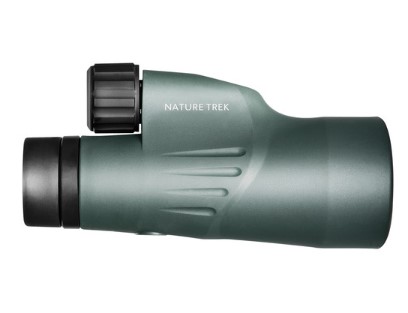
Hawke Nature-Trek 15×50 | 15x magnification, 50mm objective lens, fully multi-coated optics, BaK-4 prism, waterproof and fogproof | Check Price |
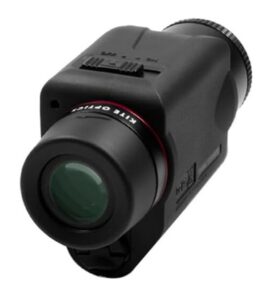 |
Kite APC 16×42 Stabilized Monocular | 16x magnification, electronic image stabilization, 42mm objective, 1500 plus yard effective range, tripod adaptable | Check Price |
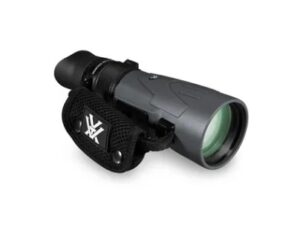 |
Vortex Recon R/T 15×50 | 15x magnification, 50mm objective lens, ranging reticle, fully multi-coated optics, rugged tactical build | Check Price |
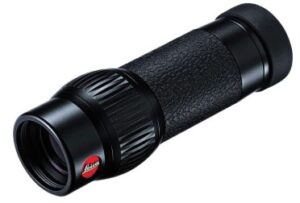 |
Leica Monovid 8×20 | 8x magnification, 20mm objective, premium Leica glass, compact and pocketable, exceptional sharpness and color fidelity | Check Price |
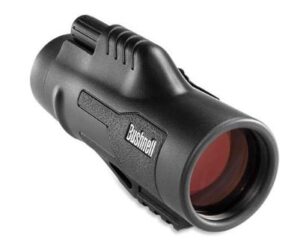 |
Bushnell Legend Ultra HD 10×42 | 10x magnification, 42mm objective, ED Prime glass, fully multi-coated, waterproof, durable rubber armor housing | Check Price |
Now that you have a snapshot of the full lineup, let me dig into each monocular in detail. Long-distance observation puts very specific demands on an optic, and not every monocular on the market is honest about what it can deliver at range. I will tell you exactly what each of these does well, where its limits are, and who it is the right fit for.
1) Hawke Nature-Trek 15×50 (Best High Power Monocular for Long Distance)
When the subject you need to study is pushing the edge of what the human eye can resolve at distance, magnification becomes the deciding variable, and the Hawke Nature-Trek 15×50 is the monocular that delivers the most accessible entry point into genuine high-power long-distance observation. Hawke Optics has built a strong reputation in the mid-range optics market over the past two decades, producing binoculars, spotting scopes, and monoculars that consistently outperform their price class. The Nature-Trek 15×50 reflects that philosophy at a magnification level that most monocular buyers never venture into, and it handles the challenge better than the price point would lead you to expect.
The 15x magnification on the Nature-Trek brings subjects three times closer than a standard 5x monocular and fifty percent closer than the 10x optics that dominate the mainstream market. At 500 yards, a 15x monocular effectively makes your subject appear as if it were just over 100 feet away, which is the difference between seeing a shape at distance and seeing identifiable detail that allows you to make decisions about what you are looking at. For hunters scouting game on open hillsides, for birders trying to work out a raptor’s wing pattern at altitude, or for anyone glassing terrain at distances where standard magnification falls short, that extra power is a genuine practical advantage rather than an arbitrary specification upgrade.
The 50mm objective lens is the appropriate companion to 15x magnification for a monocular intended for serious long-distance use. A 50mm lens gathers significantly more light than the 36mm and 42mm objectives common in standard monoculars, and that light-gathering advantage directly supports usable image brightness at the higher magnification where each degree of dimming is more pronounced. The fully multi-coated optical system maximizes the efficiency of every photon that enters the lens, and the BaK-4 prism glass delivers a clean, evenly illuminated exit pupil that maintains image quality across the full field of view rather than falling off at the edges.
One honest point about 15x hand-held monoculars that anyone shopping in this category needs to understand: at this magnification level, a stable shooting position or tripod support is not a luxury. It is essentially a requirement for extended observation sessions. The Nature-Trek includes a tripod adapter thread, and mounting it on even a small travel tripod transforms it from a usable handheld optic into a genuinely precise long-distance observation tool. The waterproof and fogproof construction holds up in the field conditions that long-range glassing sessions typically involve, and the rubber armor housing provides grip confidence in varied weather. For the money, the Nature-Trek 15×50 delivers more genuine long-distance performance than anything else at its price level.
Key Features
| Feature | Detail |
|---|---|
| Magnification | 15x |
| Objective Lens Diameter | 50mm |
| Prism Type | BaK-4 high refractive index glass |
| Lens Coating | Fully multi-coated throughout |
| Tripod Adapter | Yes, threaded adapter included |
| Weatherproofing | Waterproof and fogproof, nitrogen purged |
| Housing | Rubber armored, non-slip grip |
| Best Use Case | High-power open country glassing and scouting |
Pros
- 15x magnification delivers a genuine long-distance observation capability that brings subjects close enough for meaningful identification and detail assessment at ranges where lower power monoculars show their limits
- 50mm objective lens gathers substantially more light than smaller objectives, maintaining usable image brightness at high magnification during the dim conditions of early morning and late evening
- BaK-4 prism glass and fully multi-coated lenses combine to produce an image that is noticeably brighter and more edge-to-edge consistent than lower-grade optical systems at this price point
- Tripod adapter thread allows you to mount the monocular on a standard camera tripod, transforming it from a handheld optic into a stable long-range observation platform that reveals fine detail reliably
- Waterproof and fogproof construction with nitrogen purging handles weather and temperature swings without any effect on the optical system
- Hawke’s reputation for delivering optical performance above its price class makes the Nature-Trek 15×50 one of the strongest value propositions in the high-magnification monocular category
Cons
- 15x magnification amplifies hand movement significantly, making extended hand-held observation sessions tiring and less productive than using a tripod, which means buyers who do not already own or plan to use a tripod support will not get the full benefit this monocular is capable of delivering
If your long-distance observations demand real magnification power and you want to get there without spending spotting scope money, the Hawke Nature-Trek 15×50 is the monocular that makes it happen. Go check out the Hawke Nature-Trek 15×50 and see what serious long-range magnification can do for your time in the field.
2) Kite APC 16×42 Stabilized Monocular (Best Stabilized Monocular for Long Distance)
Every serious long-distance observer eventually runs into the same wall: magnification beyond 10x is theoretically very useful, but hand-shake makes it practically exhausting to use for anything more than brief glances. The Kite APC 16×42 Stabilized Monocular is the answer to that problem, and it is the optic on this list that fundamentally changes the way long-distance monocular observation works by eliminating image shake through built-in electronic stabilization. What stabilization does for a high-magnification monocular is not a subtle improvement. It is a transformational difference that anyone who has spent time trying to hand-hold a 15x or 16x monocular in the field will understand immediately the first time they look through one.
The APC stabilization system in the Kite compensates for the natural hand tremor that becomes progressively more disruptive as magnification increases. At 16x, even a small amount of hand movement translates into significant image movement that makes it genuinely difficult to hold a subject in the field of view long enough to study it properly. The Kite’s electronic stabilization platform counteracts that movement in real time, delivering an image that appears as steady as if the monocular were mounted on a solid tripod. That steady image at 16x magnification is what makes the Kite capable of delivering reliable observation out to 1,500 yards and beyond on subjects where the limiting factor becomes atmospheric conditions rather than the optic’s stability.
The 42mm objective lens is a thoughtful choice for a stabilized monocular. Going larger would increase weight and bulk in a product where portability and hand-holdability are central to the value proposition. The 42mm objective provides enough light-gathering capability to support bright, usable imagery at 16x across a meaningful range of lighting conditions, and the optical quality of the glass and coatings in the Kite is genuinely good, delivering the kind of image clarity that makes the stabilization system worth using rather than compensating for mediocre optics with technological tricks.
The practical use case for the Kite APC is particularly strong for wildlife observers, birders, and anyone who needs to observe at extended range without carrying tripod equipment. A stabilized 16×42 monocular that you can hold steady in your hands delivers long-distance performance in scenarios where setting up a tripod is impractical, time-consuming, or simply not possible. Marine observation, travel birding, and tactical surveillance are all applications where the Kite’s combination of high magnification and stabilized image quality provides a genuine operational advantage over any non-stabilized alternative at the same power level.
Key Features
| Feature | Detail |
|---|---|
| Magnification | 16x |
| Objective Lens Diameter | 42mm |
| Stabilization | Electronic image stabilization system |
| Effective Observation Range | 1,500 yards plus in good conditions |
| Lens Coating | Multi-coated high-transmission optics |
| Tripod Adaptable | Yes |
| Power Source | Battery-powered stabilization system |
| Best Use Case | Hand-held long-distance observation without tripod support |
Pros
- Electronic image stabilization eliminates the hand-shake that makes high-magnification monoculars difficult to use effectively, delivering a steady 16x image that you can hold and study comfortably for extended periods
- 1,500 yards plus effective observation range in good conditions puts this monocular in a performance tier that non-stabilized monoculars at the same magnification simply cannot match for sustained, productive long-distance viewing
- 42mm objective provides good light-gathering capability in a compact and manageable form factor that keeps the stabilized monocular practical for hand-held use rather than necessitating tripod support
- Stabilization works without a tripod, making this the right choice for observation scenarios where setting up support equipment is impractical or time is limited
- The combination of 16x magnification and electronic stabilization creates a long-distance observation capability that has no direct comparison in the non-stabilized monocular market
- Tripod adaptable for situations where maximum stability and minimum fatigue are both required over long glassing sessions
Cons
- The electronic stabilization system requires battery power to operate, which means carrying spare batteries for extended field sessions is a practical necessity, and the monocular without active stabilization at 16x is considerably less useful than it is with the system engaged
If you want the most capable hand-held long-distance monocular experience available without carrying a tripod everywhere you go, the Kite APC 16×42 Stabilized Monocular is in a category of its own. Go check out the Kite APC 16×42 and experience what a stabilized 16x image looks like at serious range.
3) Vortex Recon R/T 15×50 (Best Tactical Monocular for Long Distance)
The Vortex Recon R/T 15×50 is a monocular that was designed with a very specific user in mind: someone who needs to observe at serious distances in demanding field conditions, make tactical decisions based on what they see, and do all of that with an optic that will not quit when the environment gets difficult. Vortex built the Recon line for hunters, military observers, and tactical users who need long-range observation capability paired with ranging functionality, and the result is one of the most purposeful and well-executed long-distance monoculars in the outdoor optics market.
The defining feature of the Recon R/T 15×50 is the ranging reticle built into the optical system. The R/T designation stands for Ranging and Tactical, and that reticle is what sets this monocular apart from every other 15×50 option on the market. The ranging reticle allows you to estimate distances to objects of known size using a simple mil-based reference system. For hunters, this means the ability to estimate the distance to a deer or elk at long range without a separate rangefinder. For tactical observers, it provides fast and reasonably accurate distance estimation at a moment when speed matters. This is a capability that comes built into the optic rather than requiring additional equipment, and in the field that kind of integrated functionality saves time and reduces the gear you need to carry.
The optical system behind the reticle is built to Vortex’s consistently high standard for this price class. Fully multi-coated lenses across the entire optical path maximize light transmission, and the BaK-4 prism glass produces a clean, well-resolved image that holds up at 15x magnification across a range of lighting conditions. The 50mm objective lens gathers meaningful light for a bright, usable image in the dim conditions of dawn and dusk when long-range observation is often most productive for hunters and wildlife observers. The exit pupil diameter at this configuration is 3.3mm, which is sufficient for use in reduced light without the eyestrain that becomes an issue with very small exit pupils at high magnification.
The physical build of the Recon R/T reflects its intended use in unforgiving environments. The rubber armor exterior provides a non-slip grip in wet and muddy conditions, and the waterproof and fogproof construction backed by nitrogen purging ensures that field weather does not compromise optical performance. Vortex backs the Recon R/T with their VIP unconditional lifetime warranty, which covers the optic against any defect or damage for life. For a monocular that is going to see hard use in demanding environments, that warranty is not just a nice feature. It is a meaningful assurance that the investment is protected regardless of what happens to it.
Key Features
| Feature | Detail |
|---|---|
| Magnification | 15x |
| Objective Lens Diameter | 50mm |
| Reticle | Mil-based ranging and tactical reticle |
| Prism Type | BaK-4 glass |
| Lens Coating | Fully multi-coated throughout |
| Exit Pupil | 3.3mm |
| Weatherproofing | Waterproof, fogproof, nitrogen purged |
| Warranty | Vortex VIP unconditional lifetime warranty |
Pros
- Built-in mil-based ranging reticle allows fast and reasonably accurate distance estimation to objects of known size without carrying a separate rangefinder, which is a significant practical advantage for hunters and tactical observers
- 15x magnification paired with a 50mm objective delivers the long-range observation power needed for meaningful detail assessment at distances where standard monoculars run out of capability
- Fully multi-coated optics and BaK-4 prism glass produce a bright, well-resolved image that performs consistently across the lighting conditions most common during serious long-range glassing sessions
- Rubber armor housing and nitrogen-purged waterproof construction handle hard field use and weather exposure without affecting optical performance or physical integrity
- Vortex VIP lifetime warranty protects the investment unconditionally for the life of the optic, which matters significantly for a monocular being used in demanding tactical or hunting environments
- The combination of ranging functionality and premium optical quality in a single monocular package reduces the gear burden on hunters and observers who would otherwise need separate tools for each function
Cons
- The ranging reticle, while genuinely useful, requires the user to know the approximate size of their target object to produce accurate distance estimates, which means a learning investment to use it effectively and limits its utility in scenarios where target size is unknown or uncertain
The Vortex Recon R/T 15×50 is the long-distance monocular for serious field users who want ranging capability, premium optics, and a lifetime warranty in one package. Go check out the Vortex Recon R/T 15×50 and see why it has become the go-to choice for hunters and tactical observers who demand more from their long-range optics.
4) Leica Monovid 8×20 (Best Premium Compact Monocular for Long Distance)
Leica occupies a position in the optics world that very few brands have ever reached or sustained. For over a century, the Leica name has been synonymous with optical precision that sets the benchmark against which other manufacturers measure themselves, and the Monovid 8×20 brings that German engineering heritage into the smallest and most portable package on this list. At first glance, 8x magnification in a 20mm objective monocular might not seem like an obvious choice for a long-distance guide. What the Monovid demonstrates is that resolution, color fidelity, and edge-to-edge sharpness can matter more for certain long-distance applications than raw magnification numbers, especially when image quality at 8x is superior to what competing monoculars deliver at 10 or 12x.
The optical system inside the Monovid 8×20 is where Leica’s investment in glass quality becomes immediately apparent. The lens elements are ground and coated to standards that are measurably above what the rest of the consumer monocular market produces, and the resulting image is noticeably sharper, more color-accurate, and more consistent edge to edge than anything else you will find in a pocketable monocular at any magnification. Color rendering in particular is a Leica hallmark. The natural, true-to-life color that Leica glass delivers allows you to distinguish subtle shades and tones that cheaper glass, regardless of magnification, tends to wash out or shift. For wildlife observation, bird identification, and any scenario where color accuracy aids in target recognition, that optical quality is not a luxury. It is a functional advantage.
The physical form factor of the Monovid 8×20 is genuinely remarkable. This is a monocular that fits in a shirt pocket, weighs practically nothing, and can be carried every single day without ever thinking about it. The build quality reflects Leica’s standards for materials and assembly: the housing is precision-machined, the focus mechanism is smooth and precise with no play or slop, and the entire product communicates a level of quality that justifies the premium price to anyone who handles it for more than a few seconds. The Monovid is also notable for its macro attachment, which converts it into a close-focus loupe for examining subjects at very short distances, adding a dimension of versatility that no other monocular on this list offers.
The right person for the Leica Monovid 8×20 is the observer who prioritizes image quality and portability over maximum magnification, who travels frequently and wants a premium optical tool that fits in a pocket, and who understands that the Leica glass will show them more detail in their field of view than most people believe is possible from 8x magnification in a device this size. If that describes your priorities, this monocular is unlike anything else available at any price.
Key Features
| Feature | Detail |
|---|---|
| Magnification | 8x |
| Objective Lens Diameter | 20mm |
| Glass Quality | Premium Leica optical glass, German engineered |
| Lens Coating | Premium multi-coated Leica proprietary treatment |
| Form Factor | Ultra compact, true shirt pocket size |
| Macro Attachment | Included close-focus loupe adapter |
| Housing | Precision-machined premium construction |
| Color Fidelity | Exceptional natural true-to-life color rendering |
Pros
- Leica optical glass delivers measurably superior sharpness, color fidelity, and edge-to-edge consistency compared to any competing compact monocular, which produces genuinely more useful observational detail within its magnification range
- Ultra compact form factor fits in a shirt pocket and weighs almost nothing, making it the most practical everyday carry long-distance monocular on this list for travelers and urban observers
- True-to-life color rendering aids species identification and target recognition in ways that the color-shifted images from lower-quality glass cannot match regardless of magnification
- Macro loupe attachment adds a close-focus capability that extends the Monovid’s versatility well beyond standard monocular applications
- Premium precision-machined construction communicates and delivers quality that is immediately apparent to anyone who handles it, with focus mechanics and build integrity that are simply in a different class from mass-market monoculars
- Leica’s century-long optical engineering heritage is directly present in every component of the Monovid, giving buyers a product that represents the genuine pinnacle of compact monocular design
Cons
- The premium price is significant and places the Monovid well above every other option on this list, which means buyers need to be honest with themselves about whether the optical quality advantage over less expensive alternatives justifies the cost difference for their specific use case
The Leica Monovid 8×20 is the compact monocular for observers who refuse to compromise on optical quality and want the very best image that current monocular technology can produce in a pocketable form factor. Go check out the Leica Monovid 8×20 and see what a century of German optical engineering delivers in the palm of your hand.
5) Bushnell Legend Ultra HD 10×42 (Best Value Monocular for Long Distance)
Bushnell has been producing optics for American hunters and outdoors people for over seventy years, and the Legend Ultra HD line represents the brand’s most serious attempt to deliver premium optical performance at a price point that does not require a significant financial stretch. The Legend Ultra HD 10×42 monocular is the product on this list that makes the strongest argument that you do not need to spend premium money to get genuinely excellent long-distance optical performance, and for the majority of hunters, birders, and general outdoor observers it delivers a real-world viewing experience that satisfies at distances where many more expensive monoculars run out of resolution.
The optical headline of the Legend Ultra HD is the ED Prime glass used in the objective lens elements. ED stands for Extra-Low Dispersion, and the practical effect of ED glass on image quality is measurable and visible. Standard optical glass disperses different wavelengths of light at slightly different angles as they pass through the lens, which produces chromatic aberration, the color fringing around high-contrast edges that appears in lower-quality optics as a purple or green outline around dark objects against bright backgrounds. ED glass dramatically reduces this dispersion, which means the image you see through the Legend Ultra HD is noticeably cleaner, more color-accurate, and better resolved at the edges of the field of view than what standard glass delivers at the same magnification. At long distance, where chromatic aberration is more visually disruptive, the ED glass advantage is more pronounced and more practically meaningful.
The 10×42 configuration is one of the most balanced specifications in monocular design for general long-distance use. Ten times magnification is manageable to hand-hold steadily for the extended observation sessions that productive long-distance glassing requires. The 42mm objective provides a 4.2mm exit pupil, which is bright and comfortable to use across a wide range of lighting conditions from full daylight to the reduced light of golden hour, a time when hunters and wildlife observers are most productive in the field. The fully multi-coated optical system maximizes light transmission through the lens train, complementing the ED glass advantage with efficient coating technology that keeps the image bright at the magnification level this monocular operates at.
The physical build of the Legend Ultra HD is deliberately overbuilt for a monocular in this price class. The rubber armor exterior provides grip and impact resistance, and the waterproof and fogproof construction uses genuine sealing rather than splash-resistant marketing language. The focus wheel is smooth and fast, allowing you to shift from a close subject to a bird at 400 yards quickly and without hunting for the focus point. For the money, the Bushnell Legend Ultra HD 10×42 delivers an optical and build package that genuinely competes with monoculars priced significantly higher, and for most long-distance observers it represents the most practical balance of performance and value on this list.
Key Features
| Feature | Detail |
|---|---|
| Magnification | 10x |
| Objective Lens Diameter | 42mm |
| Glass Type | ED Prime extra-low dispersion glass |
| Lens Coating | Fully multi-coated throughout |
| Exit Pupil | 4.2mm |
| Housing | Rubber armored, impact-resistant construction |
| Weatherproofing | Waterproof and fogproof |
| Best Use Case | General long-distance observation, hunting, birding, travel |
Pros
- ED Prime extra-low dispersion glass significantly reduces chromatic aberration compared to standard glass, delivering cleaner color accuracy and better resolution at high-contrast edges that matters noticeably at long distance
- 10×42 configuration provides the optimal balance between magnification power, image stability, and exit pupil brightness for sustained long-distance hand-held observation across varied lighting conditions
- Fully multi-coated lenses complement the ED glass advantage with maximum light transmission efficiency, keeping the image bright and usable across the full range of outdoor lighting scenarios
- Rubber armor housing and genuine waterproof construction hold up to field use in weather conditions that softer monoculars in this price range cannot handle reliably
- Fast and smooth focus wheel allows quick adjustment across the full focus range, which matters during active observation when subjects at varied distances appear in quick succession
- The overall value proposition is exceptional, delivering optical performance and build quality that genuinely competes with monoculars priced at significantly higher levels
Cons
- The 10x magnification ceiling, while appropriate for general long-distance use, limits this monocular in scenarios where subjects at extreme range require more power for meaningful detail observation, and hunters or observers who regularly glass at 600 yards and beyond may find themselves wanting more reach than 10x provides
The Bushnell Legend Ultra HD 10×42 is the long-distance monocular that proves exceptional optical performance does not have to come with an exceptional price tag. Go check out the Bushnell Legend Ultra HD 10×42 and see what ED glass and premium coatings can do for your long-range observation without stretching your budget.
Conclusion
Long-distance monocular observation is as much about understanding optical fundamentals as it is about picking the most powerful option on the shelf. The right monocular for serious range work balances magnification against image stability, objective size against portability, and glass quality against price in ways that depend entirely on how and where you use the optic.
What this guide shows clearly is that the best long-distance monoculars cover a wide spectrum of approaches, from stabilized high-power designs that eliminate the image shake problem entirely, to premium compact glass that delivers superior resolution at moderate magnification, to value-driven ED optics that outperform their price class at distances most observers regularly encounter.
Understand your specific use case, match the optic’s strengths to the demands of your environment, and any of the monoculars covered here will reward you with long-distance performance that changes the way you see the field.
See Also: 5 Best Monoculars for Bird Watching

I’m John V. Howard, a dedicated shooter and hunter who has spent years testing rifles, scopes, and gear in the field. I write from real experience, sharing what truly works, not what’s trendy. My goal is to give you honest, practical insights that help you make the right choices for your adventures and pursuits.