Bestscopesreviews.com is a participant in the Amazon Services LLC Associates Program, an affiliate advertising program designed to provide a means for sites to earn advertising fees by advertising and linking to Amazon.com. Read more.
Are you searching for the best telescopes for astrophotography but feeling overwhelmed by the sheer number of options out there? I have been there, and I know how confusing it gets when every product listing promises stunning images without telling you the whole story. The truth is that not every telescope is built with imaging in mind, and picking the wrong one can mean blurry results, frustrated nights, and money wasted on gear that was never designed for what you are trying to do.
The good news is that I have done the hard work for you. I have narrowed it down to five exceptional telescopes that genuinely deliver when it comes to capturing the night sky on camera.
In this guide, I will walk you through the key features that make each one worth your attention, the real advantages they bring to your imaging sessions, and the one drawback you should know before pulling the trigger. By the end of this article, you will know exactly which scope belongs on your imaging rig.
Best Scopes Comparison
| Image | Name | Key Features | Check Price |
|---|---|---|---|
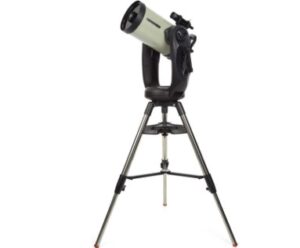 |
Celestron CPC Deluxe 925 HD | 9.25 inch EdgeHD optics, dual fork arm mount, XLT coatings, GPS alignment, 2350mm focal length | Check Price |
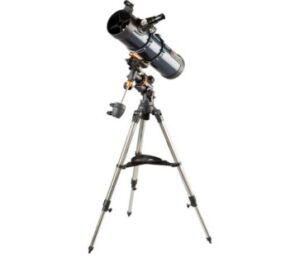 |
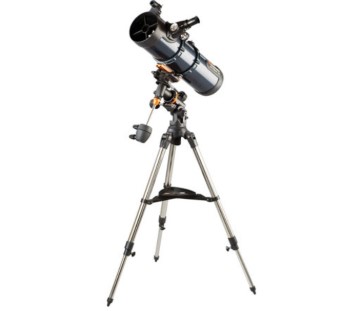
Celestron AstroMaster 130EQ | 130mm Newtonian reflector, equatorial mount, 650mm focal length, two eyepieces included, manual slow motion controls | Check Price |
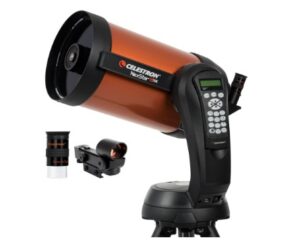 |
Celestron NexStar 8SE | 8 inch Schmidt Cassegrain, single arm GoTo mount, 40,000 object database, 2032mm focal length, StarBright XLT coatings | Check Price |
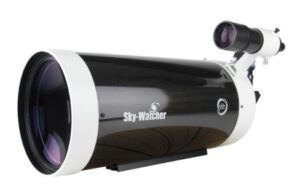 |
Sky Watcher SkyMax 180 PRO | 180mm Maksutov Cassegrain, EQ6 compatible, 2700mm focal length, f/15 focal ratio, fully multicoated optics | Check Price |
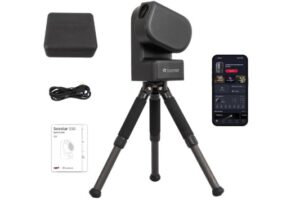 |
ZWO Seestar S50 | 50mm smart refractor, integrated Sony IMX462 sensor, built-in motorized filter wheel, autonomous app controlled imaging, dual band filter included | Check Price |
Now that you have a snapshot of the full lineup, let us get into the details that actually matter for astrophotography. Each of these telescopes has been selected for a specific reason, and understanding those reasons will help you match the right scope to your imaging goals. Whether you are chasing wide nebula fields, tight planetary detail, or fully automated deep sky imaging, the right answer is somewhere on this list.
1) Celestron CPC Deluxe 925 HD (Best Telescope for Astrophotography of Planets and High Detail Targets)
When it comes to high resolution imaging of planets, the Moon, and tight deep sky objects, aperture and optical precision go hand in hand. The Celestron CPC Deluxe 925 HD brings both to the table in a package that is more capable than most imagers will ever fully push to its limits. This is a telescope built for serious work, and it shows in every aspect of its design from the corrector plate to the fork arm mount.
The optical heart of this telescope is the 9.25 inch EdgeHD optical system. EdgeHD is Celestron’s aplanatic Schmidt Cassegrain design, which means it corrects for the field curvature that plagues standard Schmidt Cassegrain telescopes at the edges of the image circle. In practical terms this gives you pinpoint stars across the entire frame of your camera sensor rather than the bloated, comatic star images you often see in uncorrected designs. For astrophotography this is not a minor improvement. It is a fundamental upgrade that makes a visible difference in every single image you capture.
The 2350mm focal length at f/10 gives you incredible reach for high magnification work. Jupiter’s cloud bands, the Cassini Division in Saturn’s rings, the polar ice caps on Mars, and fine lunar crater detail all render with extraordinary clarity when the atmosphere cooperates. Paired with a high frame rate planetary camera, this telescope becomes a genuinely elite planetary imaging system that can compete with instruments costing far more.
The dual fork arm mount is one of the defining features of the CPC line. Unlike single arm designs, the dual fork provides far greater stability and resistance to flexure, which is critically important during long exposure imaging. Any mount flex causes star trailing in your images, and the dual fork significantly reduces that risk. The built-in GPS alignment system means the mount knows its exact position and time the moment you power it on, which accelerates your setup and gets you imaging faster.
StarBright XLT coatings on the optics push light transmission well above standard coated mirrors, giving you better signal in your images and cleaner backgrounds in shorter exposures. For imagers working under light polluted suburban skies, every bit of optical efficiency matters, and these coatings deliver a genuine advantage.
The internal battery compartment and compatibility with Celestron’s starbright wedge for equatorial mode make this an incredibly flexible imaging platform. You can image in alt-azimuth mode for planetary work or add the wedge for longer exposure deep sky imaging without field rotation.
Key Features
| Feature | Details |
|---|---|
| Aperture | 9.25 inches (235mm) |
| Optical Design | EdgeHD aplanatic Schmidt Cassegrain |
| Focal Length | 2350mm |
| Focal Ratio | f/10 |
| Mount Type | Dual fork arm computerized GoTo |
| Alignment | Built-in GPS automated alignment |
| Coatings | StarBright XLT fully multicoated |
| Object Database | 40,000 plus celestial objects |
Pros
- EdgeHD optics deliver flat field performance that eliminates edge star distortion across full camera sensors
- Dual fork arm mount provides superior stability and reduced flexure compared to single arm designs
- Built-in GPS alignment accelerates setup and gets you imaging faster every session
- StarBright XLT coatings maximize light throughput for better signal in every exposure
- Highly versatile across planetary, lunar, and deep sky astrophotography applications
Cons
- The significant weight and bulk of the dual fork arm system makes this a setup that stays in a permanent or semi-permanent location rather than a grab and go imaging rig
The Celestron CPC Deluxe 925 HD is the kind of telescope that rewards every hour you put into learning your imaging workflow. If crisp, detailed captures of the solar system and beyond are what you are after, this scope belongs on your shortlist. Go check it out and see what your imaging sessions could look like with optics this refined.
2) Celestron AstroMaster 130EQ (Best Telescope for Astrophotography Beginners on a Budget)
Not everyone stepping into astrophotography is ready to commit four figures to their first telescope, and honestly that is the right instinct. Learning the fundamentals of imaging takes time and patience, and doing that on a telescope that does not break the bank while you develop your skills is a genuinely sensible approach. The Celestron AstroMaster 130EQ is the telescope that fills that role better than almost anything else at its price point, offering a solid optical and mechanical foundation that beginner imagers can actually learn on.
The 130mm Newtonian reflector optical tube is the real strength of this package. A 130mm aperture collects a meaningful amount of light and the parabolic primary mirror produces clean, sharp images that are entirely capable of capturing decent photos of the Moon, brighter planets, and even some of the brighter deep sky objects when conditions are favorable. The 650mm focal length at f/5 gives you a relatively fast and wide field of view that makes framing targets easier, which is a genuine advantage when you are still learning how to acquire and center objects for imaging.
The equatorial mount is what separates the AstroMaster 130EQ from its alt-azimuth stablemates and makes it relevant for astrophotography. An equatorial mount aligns one axis with Earth’s rotational axis, which means a single slow motion adjustment keeps a target centered as the sky moves. For short exposure planetary and lunar photography this equatorial tracking capability is a meaningful asset, allowing you to collect frames without the constant repositioning that alt-azimuth mounts require.
The manual slow motion control cables on both axes give you fine positional adjustment without disturbing the telescope balance or introducing vibration, which matters during imaging sessions where any movement shows up in your results. The setup process teaches you real skills about polar alignment and equatorial mechanics that will serve you well on every telescope you own for the rest of your astronomy life.
Celestron includes two eyepieces and a finder scope in the package, giving you everything needed for basic visual use alongside your imaging work. The optical tube also accepts standard camera adapters and T-rings, making it compatible with most entry level DSLR cameras for lunar and planetary imaging right out of the box.
It is worth being clear that this is a beginner platform. The manual mount limits you to shorter exposures and requires more active involvement during imaging sessions. But for someone learning the craft, that hands-on involvement is genuinely educational, and the results you can achieve with patience and practice will surprise you.
Key Features
| Feature | Details |
|---|---|
| Aperture | 130mm (5.1 inches) |
| Optical Design | Newtonian reflector |
| Focal Length | 650mm |
| Focal Ratio | f/5 |
| Mount Type | Manual equatorial with slow motion controls |
| Included Eyepieces | 10mm and 20mm |
| Finder Scope | 5×24 included |
| Camera Compatibility | Standard T-ring and adapter compatible |
Pros
- Equatorial mount provides genuine tracking capability for short exposure imaging at a very accessible price
- 130mm aperture and f/5 focal ratio deliver bright, wide field images well suited to lunar and planetary work
- Manual slow motion controls allow precise repositioning without introducing shake
- Teaches essential equatorial mechanics and polar alignment skills that transfer to any future telescope
- Standard camera adapter compatibility makes it immediately usable with most entry level DSLRs
Cons
- The lack of motorized tracking means you are limited to shorter exposures and must manually reposition targets frequently during imaging sessions
If you are just starting out in astrophotography and want a telescope that teaches you the fundamentals without demanding a professional budget, the Celestron AstroMaster 130EQ is exactly where you should begin. Check it out and take the first real step toward capturing the night sky on camera.
3) Celestron NexStar 8SE (Best Telescope for Astrophotography with GoTo Convenience)
There is a very specific category of telescope that experienced observers describe as the sweet spot: large enough to produce genuinely impressive images, computerized enough to make finding and tracking targets effortless, and portable enough to actually use regularly without dreading setup. The Celestron NexStar 8SE sits right in that sweet spot, and it has earned its reputation as one of the most popular telescopes ever made for very good reason.
The 8 inch Schmidt Cassegrain optical tube is a proven imaging platform. Schmidt Cassegrain telescopes fold their optical path using mirrors, producing a 2032mm focal length in a tube that is compact enough to carry under one arm. This focal length gives you excellent reach for planetary imaging while still being capable of capturing smaller deep sky targets like globular clusters, planetary nebulae, and compact galaxies. The f/10 focal ratio is ideal for planetary work, and adding a focal reducer drops it to f/6.3 for wider deep sky imaging, giving you genuine versatility from a single optical tube.
The StarBright XLT coatings on the 8SE’s optics are one of Celestron’s most meaningful contributions to their mid-range lineup. These fully multicoated surfaces increase total light transmission through the optical system, producing better contrast, cleaner backgrounds, and more usable signal in every exposure you take. For astrophotography this translates directly into shorter integration times and better image quality per unit of time under the stars.
The single arm GoTo mount is the feature that makes the 8SE so accessible. You power it on, align it on two bright stars, and from that point the telescope will find and track any of the 40,000 plus objects in its onboard database with impressive accuracy. For astrophotographers this means less time hunting for targets in the dark and more time actually imaging. The mount tracks smoothly enough for short to medium length exposures, particularly on brighter targets like the planets and the Moon.
The single arm design does introduce some limitations for serious long exposure deep sky imaging. The mount is not an equatorial design and will produce field rotation during extended exposures without a wedge. But for the large number of imagers whose primary focus is lunar, planetary, and shorter exposure deep sky work, the 8SE’s capabilities are more than sufficient and the convenience factor is genuinely hard to overstate.
Portability is one of the 8SE’s most underappreciated strengths. The quick release optical tube detaches from the mount in seconds, and the single arm fork arm breaks down quickly. Getting this telescope from case to aligned and ready to image takes under fifteen minutes once you know the procedure, which means more sessions happen because setup is never a deterrent.
Key Features
| Feature | Details |
|---|---|
| Aperture | 8 inches (203mm) |
| Optical Design | Schmidt Cassegrain |
| Focal Length | 2032mm |
| Focal Ratio | f/10 (f/6.3 with optional reducer) |
| Mount Type | Single arm computerized alt-azimuth GoTo |
| Coatings | StarBright XLT fully multicoated |
| Object Database | 40,000 plus celestial objects |
| Alignment | Two star SkyAlign automated |
Pros
- Proven 8 inch Schmidt Cassegrain optics deliver excellent performance across planetary and deep sky imaging
- GoTo mount with 40,000 object database makes target acquisition fast and reliable every session
- StarBright XLT coatings improve light transmission and image contrast significantly
- Quick release tube and compact design make this one of the most portable 8 inch telescopes available
- Optional focal reducer adds genuine versatility by dropping focal ratio to f/6.3 for wide field work
Cons
- The alt-azimuth single arm mount produces field rotation during long exposures, requiring a wedge upgrade for serious deep sky astrophotography
The Celestron NexStar 8SE is one of those telescopes that manages to be genuinely excellent at almost everything it was designed to do. If you want a capable, convenient, and portable imaging platform that grows with your skills, go check it out. It may well be the last telescope you need for a very long time.
4) Sky Watcher SkyMax 180 PRO (Best Telescope for Astrophotography of Planets and the Moon)
Among serious planetary imagers there is a design that consistently comes up in conversations about the sharpest, most contrast-rich views of the solar system: the Maksutov Cassegrain. And among Maksutov Cassegrain telescopes available to amateur astrophotographers, the Sky Watcher SkyMax 180 PRO stands out as one of the finest examples of what this optical design can achieve when it is executed with genuine precision. This is a telescope that was built specifically to excel at the kind of high magnification imaging where optical quality separates excellent results from merely decent ones.
The 180mm aperture Maksutov Cassegrain design uses a steeply curved meniscus corrector lens at the front of the tube combined with a secondary mirror that is aluminized directly onto the rear surface of that corrector. This produces an exceptionally well corrected, thermally stable optical system with virtually no secondary mirror diffraction spikes and a tightly focused diffraction disk that planetary imagers specifically seek out. At 2700mm focal length and f/15, the SkyMax 180 delivers image scale that puts genuine detail on the disk of Jupiter, Saturn, and Mars in a way that shorter focal length telescopes simply cannot match.
The fully multicoated optics push contrast to exceptional levels. High contrast is arguably even more important for planetary imaging than raw resolution, because the subtle tonal differences between cloud bands, surface markings, and atmospheric features only become visible when the optical system minimizes scatter and maximizes the ratio between light from the target and light from everywhere else. The SkyMax 180 PRO’s optics are optimized for exactly this kind of performance.
The PRO designation is meaningful here. Sky Watcher’s PRO series instruments are finished to tighter manufacturing tolerances and come with more precisely aligned optics than their standard lineup. For astrophotography, this matters because an optically misaligned telescope cannot be fully corrected in post-processing. You need the optics right at the source, and the SkyMax 180 PRO delivers that from the moment it arrives.
Compatibility with a range of premium equatorial mounts, including Sky Watcher’s own EQ6 and EQ8 platforms, makes this tube assembly a genuine cornerstone of a serious imaging rig. The two inch focuser rack and pinion mechanism provides smooth, stable focus control, and the long focal length means that even small focuser movements correspond to very fine focus changes, which is exactly what you want during critical focus adjustment for planetary work.
Thermal equilibration does take time with this design given the mass of the corrector lens, so planning an extra thirty minutes before your critical imaging session begins is recommended. This is a characteristic of the Maksutov design rather than a flaw, and experienced imagers factor it into their workflow naturally.
Key Features
| Feature | Details |
|---|---|
| Aperture | 180mm (7.1 inches) |
| Optical Design | Maksutov Cassegrain |
| Focal Length | 2700mm |
| Focal Ratio | f/15 |
| Focuser | 2 inch rack and pinion |
| Coatings | Fully multicoated |
| Mount Compatibility | EQ5 and above, dovetail Vixen and Losmandy compatible |
| Build | PRO series precision aligned optics |
Pros
- Maksutov Cassegrain design delivers exceptional contrast and sharpness ideal for planetary and lunar imaging
- 2700mm focal length provides the image scale needed to capture fine planetary surface detail
- PRO series manufacturing tolerances ensure properly aligned, high performance optics out of the box
- Fully multicoated optics maximize contrast and minimize light scatter
- Highly compatible with premium equatorial mounts for a complete serious imaging setup
Cons
- The Maksutov corrector lens requires an extended thermal equilibration period before the telescope reaches peak optical performance, which demands advance planning on imaging nights
If your primary astrophotography ambition is capturing the finest possible detail on Jupiter, Saturn, the Moon, and other solar system targets, the Sky Watcher SkyMax 180 PRO belongs at the top of your shortlist. Go check it out and see what this level of optical precision looks like translated into your astrophotography results.
5) ZWO Seestar S50 (Best Telescope for Astrophotography Beginners Who Want Instant Results)
The ZWO Seestar S50 represents something genuinely new in amateur astrophotography, and if you have been watching the hobby from the outside wondering when the technology would get accessible enough to justify jumping in, this telescope is your answer. It is a fully integrated smart telescope that automates essentially the entire imaging workflow, from alignment to stacking to final image delivery, on a device small enough to fit in a backpack. For adults who want beautiful astrophotos without spending months learning complex software and hardware workflows, the Seestar S50 is arguably the most exciting product to appear in the amateur astronomy market in years.
The optical system at the core of the S50 is a 50mm refractor operating at f/5, which gives a short and compact tube ideal for wide field deep sky targets. The integrated Sony IMX462 sensor sits at the focal plane of this refractor and is a back-illuminated design, meaning it captures light with exceptional efficiency compared to older sensor technologies. The result is a system that can extract usable signal from faint deep sky objects in surprisingly short total integration times, often producing impressive images of nebulae and galaxies within twenty to thirty minutes of continuous stacking.
The built-in motorized filter wheel is a feature that would normally add hundreds of dollars to any conventional imaging setup. The S50 includes a dual band narrowband filter in the wheel that suppresses light pollution and passes only the wavelengths emitted by ionized hydrogen and oxygen in emission nebulae. This single feature transforms what the telescope can achieve under suburban skies, allowing you to capture vivid nebula images from backyard locations that would otherwise be too light polluted for conventional broadband imaging.
The entire system is controlled via the Seestar app on your smartphone or tablet. You open the app, select your target from the built-in catalog, and the telescope slews, focuses, aligns, and begins stacking exposures automatically. You watch the image build up on your device in real time, with each new sub-exposure adding detail and reducing noise in the live stack. There is no polar alignment, no guiding software, no calibration frames to worry about in the field. It is genuinely point and shoot astrophotography in a form factor that actually works.
The S50 also functions as a visual observation tool through the app, allowing real time video views of the Moon and planets alongside its deep sky imaging capability. The compact, self-contained design with a built-in battery and tripod threads makes it one of the most travel-friendly serious imaging instruments available. You can take it to a dark sky site in carry-on luggage, which is something you absolutely cannot say about any conventional astrophotography rig.
The 50mm aperture does set a ceiling on what the system can achieve compared to larger instruments, and images from the S50 will not match those from a 6 or 8 inch telescope in terms of resolution and fine detail. But for the accessibility it offers and the quality of the results relative to the effort required, it occupies a category of its own.
Key Features
| Feature | Details |
|---|---|
| Aperture | 50mm |
| Optical Design | Refractor |
| Focal Ratio | f/5 |
| Imaging Sensor | Sony IMX462 back-illuminated CMOS |
| Filter Wheel | Built-in motorized with dual band narrowband filter |
| Control | Smartphone app via Wi-Fi |
| Battery | Built-in rechargeable |
| Mount | Integrated motorized GoTo alt-azimuth |
Pros
- Fully automated workflow from alignment to stacked final image requires no prior technical knowledge
- Built-in dual band narrowband filter dramatically improves deep sky performance under light-polluted skies
- Sony IMX462 back-illuminated sensor delivers impressive low-light sensitivity in a compact package
- Extremely portable with built-in battery and compact form factor ideal for travel
- Real time live stacking lets you watch your astrophotos build up on your device as you image
Cons
- The 50mm aperture limits the resolution and fine detail achievable compared to larger telescope systems, making it less suitable for observers who want to grow into advanced high-resolution imaging
The ZWO Seestar S50 is proof that astrophotography does not have to be complicated to be rewarding. If you want genuinely impressive images of nebulae and galaxies from your very first session without a steep technical learning curve, this telescope delivers on that promise unlike anything else at its size. Go check it out and see why it has taken the beginner astrophotography world by storm.
Conclusion
What I love most about this collection of telescopes is how well it represents the full spectrum of what astrophotography can be
The honest truth is that the best telescope for astrophotography is always the one that matches where you are right now and supports where you want to go. If you are just starting out, do not over-invest before you know what you love most about the hobby. If you have been at it for years, you already know what your current setup is missing.
Either way, one of the telescopes above was chosen with you in mind, and any of them will put you in a position to capture images of the universe that genuinely take your breath away. Clear skies and sharp stars.
See Also: 5 Best Thermal Scopes for AR15

I’m John V. Howard, a dedicated shooter and hunter who has spent years testing rifles, scopes, and gear in the field. I write from real experience, sharing what truly works, not what’s trendy. My goal is to give you honest, practical insights that help you make the right choices for your adventures and pursuits.