Bestscopesreviews.com is a participant in the Amazon Services LLC Associates Program, an affiliate advertising program designed to provide a means for sites to earn advertising fees by advertising and linking to Amazon.com. Read more.
Are you having a hard time finding the best telescopes for beginners without ending up lost in a sea of confusing specs and marketing buzzwords? I completely understand that feeling.
The world of astronomy optics is vast, and the sheer number of options out there can make any first time buyer second guess every decision. But here is the good news: I have done the research and the hands on evaluation so you do not have to.
In this guide, I will walk you through five outstanding options that genuinely deliver on their promises, covering what each one does brilliantly, what its limitations are, and exactly who each scope is best suited for.
Whether you want to gaze at the moon, track planets across the night sky, or capture images of galaxies millions of light years away, one of these picks is going to be exactly what you are looking for.
Best Telescopes Comparison
| Image | Name | Key Features | Check Price |
|---|---|---|---|
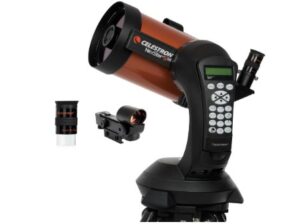 |
Celestron NexStar 5SE | 125mm aperture, 1250mm focal length, GoTo mount, 40,000 object database, SkyAlign technology, Schmidt-Cassegrain optics | Check Price |
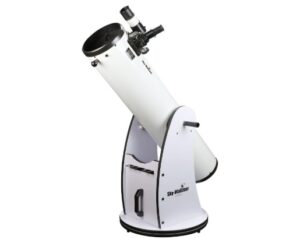 |
Sky-Watcher Classic 8″ Dobsonian | 203mm aperture, 1200mm focal length, f/5.9, parabolic mirror, 94% reflectivity, 2″ Crayford focuser, 9×50 finderscope | Check Price |
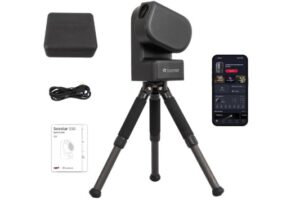 |
ZWO Seestar S50 | 50mm triplet APO, 250mm focal length, Sony IMX462 sensor, built-in light pollution filter, 6-hour battery, app-controlled | Check Price |
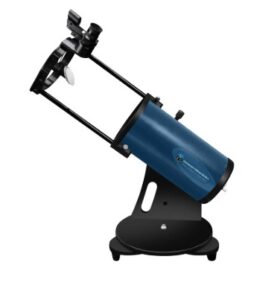 |
AWB OneSky Reflector | 130mm aperture, 650mm focal length, f/5, collapsible truss tube, 14lb weight, tabletop Dobsonian mount | Check Price |
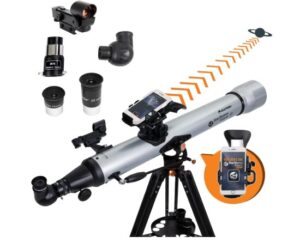 |
Celestron StarSense Explorer LT 80AZ | 80mm aperture, 900mm focal length, f/11, StarSense app integration, 9.2lb weight, includes 2x Barlow lens | Check Price |
Now that you have a bird’s eye view of the contenders, it is time to get into the detail. Each of the five scopes below has been selected because it genuinely excels in at least one area that matters to a beginner. I have broken down the performance, optics, ease of use, and value of each one so you can make a confident, informed decision before you spend a single dollar. Let us get into it.
1) Celestron NexStar 5SE (Best Telescope for Beginners Overall)
If I had to recommend just one telescope to a total beginner who is serious about getting into astronomy for the long haul, the Celestron NexStar 5SE would be at the top of my list every single time.
Celestron has been building telescopes since 1960 when founder Tom Johnson developed a revolutionary method for producing Schmidt corrector plates that brought high quality optics to the masses.
That founding mission, to make exceptional astronomy accessible without demanding a small fortune, is very much alive in the NexStar 5SE today.
At its core, the NexStar 5SE is a Schmidt-Cassegrain telescope with a 125mm aperture and a 1250mm focal length at f/10. What makes the Schmidt-Cassegrain design so compelling for beginners is its folded optical path.
By bouncing light between a primary and secondary mirror, Celestron fits a very long effective focal length into a compact, manageable tube. You get the magnification power of a much larger telescope in a package that fits in a backpack.
That is a genuine engineering achievement, and it matters enormously when you are hauling your scope out to a dark field at 10pm.
The real headline feature of the 5SE is the fully automated GoTo mount with SkyAlign technology. The database alone contains over 40,000 celestial objects including every Messier object, NGC and IC deep sky targets, and every planet in our solar system.
To align the scope, you simply center any three bright stars in the eyepiece and press align. You do not even need to know their names. The computer does that for you. From that point forward, the mount automatically slews to any target you select and tracks it as the Earth rotates.
For a beginner who would otherwise spend an entire night fumbling with star charts without finding a single object, this is an absolute game changer.
The optics are coated with Celestron’s proprietary StarBright XLT coatings, which push light transmission up to an impressive 97.4% on the Schmidt corrector lens. In practical terms that means brighter, crisper, higher contrast images than you would get from a comparable uncoated scope.
Views of Jupiter’s cloud bands, Saturn’s rings, and the cratered highlands of the Moon are genuinely breathtaking through the 5SE, particularly at 50x with the included 25mm Plossl eyepiece. The total kit weight comes in at around 8kg, and the single fork arm mount design breaks down into a handful of compact pieces for easy transport.
Key Features
| Specification | Detail |
|---|---|
| Optical Design | Schmidt-Cassegrain |
| Aperture | 125mm (5 inch) |
| Focal Length | 1250mm |
| Focal Ratio | f/10 |
| Mount Type | Fully automated GoTo single fork arm |
| Object Database | 40,000+ celestial objects |
| Optical Coating | StarBright XLT (up to 97.4% transmission) |
| Total Kit Weight | 8kg |
| Includes | 25mm eyepiece, red dot finderscope, star diagonal, NexStar+ hand controller |
Pros
- The fully automated GoTo mount with a 40,000 object database removes the biggest frustration beginners face, finding things in the first place
- SkyAlign technology gets you observing in minutes without requiring any prior knowledge of the night sky
- Schmidt-Cassegrain design delivers a long focal length in a compact, highly portable package
- StarBright XLT coatings provide exceptional light transmission for bright, high contrast planetary views
- Enormous upgrade path available including GPS, WiFi, autofocus motors, and camera adapters as your skills develop
Cons
- The f/10 focal ratio and alt-azimuth mount make long-exposure deep-sky astrophotography difficult without significant additional investment in accessories and an equatorial wedge
If you want to start your astronomy journey with a scope that will hold your hand through those first bewildering sessions and then grow with you for years to come, the Celestron NexStar 5SE is the one. Check it out and see why it has earned its reputation as the go-to recommendation for dedicated beginners who mean business.
2) Sky-Watcher Classic 8″ Dobsonian (Best Telescope for Beginners Who Want Maximum Light Gathering)
There is a reason astronomy enthusiasts refer to Dobsonian telescopes as “light buckets,” and the Sky-Watcher Classic 8 inch is one of the finest examples of why that nickname is so deserved. The Dobsonian design itself has a fascinating history.
It was invented by John Dobson, a Vedanta monk who spent decades building large aperture telescopes from salvaged materials including porthole glass, cardboard tubes, and plywood, and then wheeling them out onto San Francisco street corners to share the night sky with anyone who walked by. His goal was to bring astronomy to the masses at the lowest possible cost. The Sky-Watcher Classic 200P carries that democratic spirit directly into its design philosophy.
The defining feature of this scope is its 203mm primary mirror, which is an 8 inch aperture parabolic mirror constructed from borosilicate glass and coated with Sky-Watcher’s proprietary Radiant Aluminum Quartz coating that delivers a remarkable 94% reflectivity.
To put that in perspective, an 8 inch aperture gathers 816 times more light than the human eye. It is 78% brighter than a 6 inch mirror. At a dark sky site, this scope will reveal faint nebulae, galaxies, and globular clusters that simply do not exist in a smaller telescope.
The views of the Andromeda Galaxy, the Hercules Cluster, and the Ring Nebula are the kind of experiences that turn casual curiosity into a lifelong obsession with the night sky.
The focal length is 1200mm at a focal ratio of f/5.9, which is fast enough to give you genuinely wide, immersive fields of view for sweeping through star fields and open clusters. The 2 inch Crayford style focuser with a 1.25 inch adapter means you can use virtually any eyepiece on the market, giving you enormous flexibility as your collection grows.
The mount is a classic Dobsonian rocker box with Teflon bearings for smooth, effortless movement, and Sky-Watcher’s patented tension control handle lets you lock the tube in position or dial in the precise amount of resistance for your preferred eyepiece weight.
The trade-off with the Dobsonian design is that there is no computerized tracking here. You find objects by star-hopping, using a star chart to navigate from a bright anchor star to your target in a series of steps. Many experienced astronomers consider this skill the most rewarding part of the hobby, and a growing number of beginners are arriving at the same conclusion.
This scope ships with 25mm and 10mm Kellner eyepieces plus a 9×50 finderscope, giving you a solid starting kit that covers both wide-field sweeping and higher magnification planetary observation straight out of the box.
Key Features
| Specification | Detail |
|---|---|
| Optical Design | Newtonian Reflector |
| Aperture | 203mm (8 inch) |
| Focal Length | 1200mm |
| Focal Ratio | f/5.9 |
| Mirror Material | Borosilicate glass |
| Mirror Reflectivity | 94% (Radiant Aluminum Quartz coating) |
| Focuser | 2 inch Crayford style with 1.25 inch adapter |
| Mount Type | Manual Dobsonian rocker box with Teflon bearings |
| Includes | 25mm and 10mm Kellner eyepieces, 9×50 finderscope |
Pros
- The 8 inch aperture delivers more light gathering than almost any telescope in its price class, producing jaw dropping views of deep sky objects
- Borosilicate mirrors with 94% reflective coating produce sharp, high contrast images of both planets and faint deep sky targets
- The 2 inch Crayford focuser gives you compatibility with a vast range of eyepieces and accessories
- The manual Dobsonian mount teaches you to truly understand the night sky in a way that computerized scopes never can
- Outstanding value for money: no other telescope type delivers this much aperture per dollar
Cons
- The combination of a large solid tube and heavy rocker box base makes this telescope bulky and awkward to transport, which means it works best for people who have a dedicated observing spot at home rather than those who want to pack light and travel to dark sky sites
If you want to experience the night sky at its most breathtaking and you are happy to invest a little time in learning the art of star hopping, the Sky-Watcher Classic 8 inch Dobsonian will reward you like almost nothing else in this price range. Check it out and see exactly why it earns such passionate loyalty from the astronomy community.
3) ZWO Seestar S50 (Best Telescope for Beginners Who Want to Capture Images of the Night Sky)
The ZWO Seestar S50 is not a traditional telescope in any conventional sense. It does not have an eyepiece. You do not look through it. Instead, you point it at the sky, open an app on your smartphone, tap the object you want to photograph, and watch as the device automatically slews, focuses, and begins stacking exposures of nebulae, galaxies, and star clusters in real time.
What appears on your phone screen within minutes would have required thousands of dollars of equipment and months of learning to achieve just a decade ago. The Seestar S50 has genuinely changed the entry point for astrophotography.
At the heart of the Seestar is a 50mm triplet apochromatic refractor with a focal length of 250mm at f/5. Triplet APO lenses use three optical elements to virtually eliminate chromatic aberration, which is the colored fringing you commonly see in lower quality optics.
The color accuracy and sharpness this produces translates directly into the image quality you see on your phone. The sensor is a Sony IMX462, a high sensitivity CMOS chip with Starvis technology designed specifically for low light performance. Together, these components punch dramatically above their weight class.
The entire package integrates a telescope, an electric focuser, a camera, an alt-azimuth mount with tracking motors, a filter wheel, a dew heater, and an internal computer into a unit weighing just 2.5 kilograms.
The Seestar is controlled entirely through the companion app on iOS or Android, which gives you a planetarium interface for target selection, live stacking preview, and a community feed where other Seestar users share their images from around the world.
The built-in dual band light pollution filter covers OIII and H-alpha wavelengths, which means you can capture emission nebulae with impressive results even from a city backyard. The 6,000mAh internal battery provides around six hours of runtime per charge, and the scope recharges via USB-C, meaning a standard power bank keeps you running all night.
Setup takes under three minutes. The Seestar uses plate solving to identify its position in the sky automatically using your phone’s GPS data, so you never need to manually align on stars. From powering on to imaging your first target, the process is genuinely as simple as it sounds.
ZWO has also been consistently updating the firmware and app since the Seestar launched, adding new features, improving stacking algorithms, and expanding the object database, which currently covers over 4,000 celestial targets. It also includes a solar filter for daytime solar observation, making it a genuinely multi-purpose astronomical device.
Key Features
| Specification | Detail |
|---|---|
| Optical Design | 50mm Triplet APO Refractor |
| Aperture | 50mm (2 inch) |
| Focal Length | 250mm |
| Focal Ratio | f/5 |
| Image Sensor | Sony IMX462 CMOS (Starvis technology) |
| Battery Life | 6 hours (6,000mAh, USB-C rechargeable) |
| Built-in Filters | Dual-band light pollution filter (OIII 30nm and H-alpha 20nm), UV/IR cut, dark filter |
| Weight | 2.5kg |
| Object Database | 4,000+ celestial objects |
| Includes | Compact carbon fiber tripod, solar filter, USB-C charging cable, carry case |
Pros
- The simplest possible entry into astrophotography, eliminating polar alignment, manual focusing, stacking software, and star charts entirely
- Built-in dual band light pollution filter makes it usable from suburban and even urban locations where traditional telescopes struggle
- Triplet APO optics with a Sony Starvis sensor produce genuinely impressive deep sky images for the price
- Integrated dew heater, auto-focusing, and GPS plate solving make it a complete, self-contained system
- Regular firmware updates continue to improve performance and add features after purchase
Cons
- The 50mm aperture is modest by traditional telescope standards, which means the Seestar cannot match the detail levels of larger conventional scopes on planets and the Moon, and it has no eyepiece for traditional visual observing
If you have always wanted to capture your own images of distant galaxies and glowing nebulae but assumed the learning curve was too steep, the ZWO Seestar S50 exists to prove that assumption wrong. Check it out and discover how effortlessly it opens up the imaging side of astronomy to absolute beginners.
4) AWB OneSky Reflector (Best Telescope for Beginners on a Budget)
The Astronomers Without Borders OneSky is one of the most genuinely impressive budget telescope stories in the astronomy community. AWB is a California based nonprofit organization that operates under the motto “One People, One Sky,” using the proceeds from telescope sales to fund astronomy education programs in underserved countries around the world.
The OneSky itself is manufactured by Celestron specifically for AWB, which means the optical quality control meets Celestron’s standards while the pricing reflects a nonprofit model rather than a commercial one.
When you buy an OneSky, you are funding a child’s access to astronomy education somewhere in the world, which makes it feel like one of the more meaningful purchases you can make in this hobby.
The optical specification of the OneSky is genuinely impressive for its price bracket. It features a 130mm parabolic mirror with a focal length of 650mm at f/5.
A parabolic mirror is important because it focuses all wavelengths of incoming light to a single point, eliminating the spherical aberration you find in cheaper spherical mirror designs that cause stars at the edge of the field to appear distorted.
At 130mm of aperture, the OneSky is substantially more powerful than the typical beginner telescopes you find at department stores and toy retailers, which usually top out at 60 to 80mm. The difference in what you can see is dramatic.
The most clever design element of the OneSky is its collapsible truss tube. When collapsed, the tube reduces to just 14.5 inches, making it genuinely compact for a reflector of this aperture. Extend the truss and the scope opens up to its full operational length in seconds. This means you get the optical performance of a 5 inch telescope in a package that fits into a bag without difficulty.
The total weight of just 14 pounds makes it easy to carry out to a dark spot in the garden or load into the boot of a car. It ships with two Plossl eyepieces at 25mm and 10mm, a helical focuser, a red dot finder, a Vixen style dovetail plate, and a collimation cap.
The tabletop Dobsonian mount is solidly built and simple to use, sweeping smoothly in both altitude and azimuth with a tension control knob to dial in the right resistance. You do need a table, a wall, a car bonnet, or some other sturdy surface to set it on.
This is not a scope that comes with a full height tripod, though the dovetail plate makes it compatible with most equatorial and azimuth mounts if you want to add one later. For anyone who wants serious optical performance without a serious price tag, the OneSky delivers in a way that very few telescopes can match at this budget level.
Key Features
| Specification | Detail |
|---|---|
| Optical Design | Newtonian Reflector |
| Aperture | 130mm (5.1 inch) |
| Focal Length | 650mm |
| Focal Ratio | f/5 |
| Mirror Type | Parabolic primary mirror |
| Focuser | 1.25 inch helical focuser |
| Mount Type | Tabletop Dobsonian with tension control |
| Collapsed Length | 14.5 inches |
| Total Weight | 14 lbs |
| Includes | 25mm and 10mm Plossl eyepieces, red dot finder, collimation cap, Vixen dovetail plate |
Pros
- The 130mm parabolic mirror delivers genuinely impressive views of the moon, planets, star clusters, and bright deep sky objects at a price point that few competitors match
- The collapsible truss tube design reduces the scope to just 14.5 inches, making it one of the most portable 5 inch reflectors available
- Every purchase directly funds AWB’s global astronomy education programs, making this as meaningful a buy as it is practical
- Vixen dovetail compatibility means the optical tube can be moved to a more advanced mount as your interest grows
- The parabolic mirror eliminates the spherical aberration found in cheaper telescopes, delivering sharp, clean stars across the field of view
Cons
- The tabletop mount means you need a stable surface to place the scope on, and the absence of a full height tripod can feel restrictive if you prefer standing at the eyepiece during extended observing sessions
If you want the best possible optical performance for your budget while supporting a genuinely worthwhile global cause, the AWB OneSky is one of the most compelling purchases in beginner astronomy. Check it out and see what a 130mm parabolic mirror can reveal on your very first night out.
5) Celestron StarSense Explorer LT 80AZ (Best Telescope for Beginners Who Want App Guided Navigation on a Budget)
For anyone who wants the simplicity of guided navigation without the cost of a fully computerized GoTo telescope, the Celestron StarSense Explorer LT 80AZ is one of the most intelligently designed budget instruments I have come across in recent years.
Celestron developed the StarSense Explorer technology specifically to solve the single biggest problem beginners face with manual telescopes: not knowing where to point them. The solution is elegant and genuinely effective in a way that makes you wonder why no one thought of it sooner.
The StarSense system works by attaching your smartphone to a dedicated dock on the optical tube, with the rear camera pointed at a small angled mirror mounted beside the eyepiece. The StarSense Explorer app then uses your phone’s camera to photograph the star patterns reflected in that mirror and runs a Lost in Space Algorithm, the same type of calculation used by satellites to orient themselves in orbit, to determine exactly where the telescope is pointed in the night sky.
From that real-time position fix, the app overlays directional arrows on your screen to guide you toward any of the targets on its database. When the bullseye turns green, your target is in the eyepiece. The entire alignment process takes under two minutes and does not require you to identify a single star by name.
The optical tube itself is a refractor with an 80mm aperture and a 900mm focal length at f/11. The relatively long focal ratio for a refractor of this size actually works in your favor by reducing chromatic aberration, the color fringing you often see in short fast refractors.
While 80mm of aperture is not enough to reveal faint deep sky objects, it is more than sufficient for clear, satisfying views of the moon’s surface, the cloud bands of Jupiter, the rings of Saturn, and the phases of Venus. The scope is notably lightweight at just 9.2 pounds, making it one of the most portable options on this list.
The package includes a 25mm and 10mm eyepiece plus a 2x Barlow lens, which effectively doubles the magnification of each eyepiece and gives you four practical magnification options straight out of the box.
The alt-azimuth mount is straightforward to operate, moving in two axes to follow the app’s arrows as you push the tube toward your target. The StarSense Explorer app also includes a curated “Tonight’s Best Objects” list that flags targets as either city viewable or dark sky viewable, which is an incredibly thoughtful feature for beginners who are still figuring out what the limits of their local skies are.
Key Features
| Specification | Detail |
|---|---|
| Optical Design | Refractor |
| Aperture | 80mm (3.15 inch) |
| Focal Length | 900mm |
| Focal Ratio | f/11 |
| Navigation System | StarSense Explorer app with LISA star recognition |
| Mount Type | Manual alt-azimuth |
| Weight | 9.2 lbs |
| App Compatibility | iOS and Android |
| Includes | 25mm and 10mm eyepieces, 2x Barlow lens, StarSense smartphone dock, tripod |
Pros
- The StarSense Explorer app provides guided navigation that rivals computerized GoTo scopes at a fraction of the price, making object-finding effortless for complete beginners
- At 9.2 pounds it is one of the lightest, most portable telescopes on this list, making it genuinely easy to take anywhere on a clear night
- The f/11 focal ratio minimizes chromatic aberration, producing clean, color accurate views of planets and the moon
- The included Barlow lens doubles your magnification options, giving you four effective power settings straight out of the box
- The “Tonight’s Best Objects” feature in the app is a thoughtful guide that helps beginners set realistic expectations based on their light pollution levels
Cons
- The 80mm aperture is the smallest on this list, which means fainter deep sky objects like distant galaxies and dim nebulae are largely out of reach, making this primarily a solar system and moon telescope
If you want a lightweight, easy to use, app-guided telescope that gets you on target fast without the cost or complexity of a fully computerized mount, the Celestron StarSense Explorer LT 80AZ is a smart and satisfying choice. Check it out and see how effortlessly it guides you to the highlights of the night sky from the very first session.
Conclusion
The night sky is genuinely one of the most spectacular things a human being can experience, and the right telescope is all that stands between you and views that will genuinely take your breath away.
What I hope this guide has shown you is that the best telescope for beginners is not a single universal answer. It depends entirely on what kind of astronomer you want to be. Some of these scopes will hold your hand through every step of the journey with automated systems and app guided navigation.
Others will teach you to read the sky with your own eyes and reward that investment with image quality that money alone cannot buy. And one of them has reimagined what a beginner telescope can be entirely.
Wherever you land on that spectrum, there is something here that will get you out under the stars, and that is ultimately the only thing that matters.
See Also: 5 Best Telescopes for Viewing Planets and Stars

I’m John V. Howard, a dedicated shooter and hunter who has spent years testing rifles, scopes, and gear in the field. I write from real experience, sharing what truly works, not what’s trendy. My goal is to give you honest, practical insights that help you make the right choices for your adventures and pursuits.