
Bestscopesreviews.com is a participant in the Amazon Services LLC Associates Program, an affiliate advertising program designed to provide a means for sites to earn advertising fees by advertising and linking to Amazon.com. Read more.
Are you having a hard time finding the best telescopes for home use? I’ve been there too, and let me tell you, the search can feel overwhelming with hundreds of options flooding the market.
A good home telescope opens up an entirely new dimension of discovery, letting you peer at Saturn’s rings, trace the craters of the Moon, and hunt down distant galaxies right from your backyard.
Whether you are a curious first-timer or someone who has dabbled in stargazing before, having the right instrument makes all the difference between a frustrating night out and a jaw-dropping one.
In this guide, I’ve done the research and testing so you don’t have to. I’ll walk you through the top features to look out for, break down what makes each pick shine, and help you choose the one that fits your needs and your backyard perfectly.
Best Scopes Comparison
| Image | Name | Key Features | Check Price |
 |
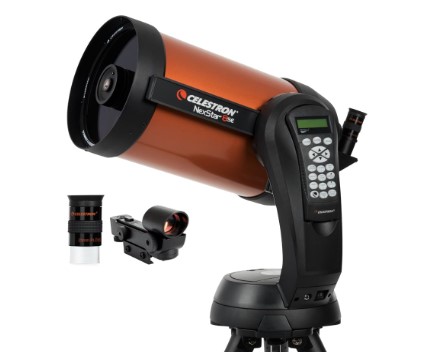
Celestron NexStar 8SE | 8-inch aperture, GoTo mount, 40,000+ objects database | Check on Amazon |
 |
Sky-Watcher 8″ Dobsonian | 8-inch mirror, simple alt-az, great light gathering | Check on Amazon |
 |
Celestron Inspire 100AZ | 4-inch refractor, altazimuth mount, beginner friendly | Check on Amazon |
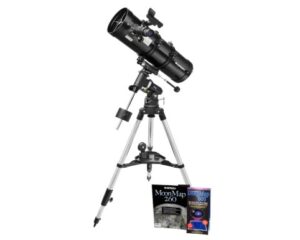 |
Orion SpaceProbe 130ST | 130mm mirror, equatorial mount, wide field views | Check on Amazon |
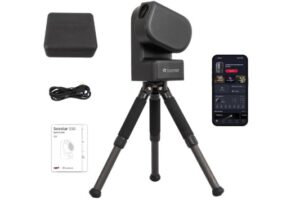 |
ZWO Seestar S50 | Smart telescope, app-controlled, built-in camera | Check on Amazon |
Now let’s get into the details. Each of these telescopes has earned its spot on this list for a specific reason, whether that’s sheer optical power, ease of use, or outstanding value. I’ve reviewed each one with the home astronomer in mind, so you know exactly what to expect before you buy. Let’s jump in.
1) Celestron NexStar 8SE (Best GoTo Telescope for Home Use)
The Celestron NexStar 8SE is the kind of telescope that makes you feel like a professional astronomer the moment you power it on. This is a Schmidt-Cassegrain reflector with an impressive 8-inch (203mm) aperture that gathers a tremendous amount of light, giving you sharp, bright views of planets, star clusters, and nebulae.
What truly sets it apart is the computerized GoTo mount, which automatically locates and tracks over 40,000 celestial objects in its database. You simply align it to two stars, punch in your target on the hand controller, and the telescope slews right to it.
For a home user this is a game-changer, because instead of spending 30 minutes star-hopping just to find something, you can jump from Jupiter to the Andromeda Galaxy in seconds.
The single-arm fork mount and collapsible design make it surprisingly compact and portable for an 8-inch scope. It sits on a sturdy adjustable tripod and breaks down into manageable pieces you can carry through a doorway without a struggle.
The optical tube weighs about 13.6 pounds, which is reasonable for what you are getting. Celestron’s StarBright XLT coatings on the optics boost light transmission significantly, so every photon counts.
The 8SE also pairs nicely with Celestron’s StarSense Explorer technology if you want to upgrade later, and it is compatible with a wide range of eyepieces and accessories. For anyone who wants a serious telescope at home without spending four figures, the NexStar 8SE is one of the most satisfying investments in amateur astronomy you can make.
Key Features
| Aperture | 8 inches (203mm) |
| Focal Length | 2032mm |
| Focal Ratio | f/10 |
| Mount Type | Computerized Single-Arm Alt-Azimuth GoTo |
| Objects Database | 40,000+ celestial objects |
| Optical Design | Schmidt-Cassegrain (SCT) |
| Tripod | Steel tripod, adjustable height |
| Weight | ~30 lbs (full setup) |
Pros
- The GoTo computerized mount automatically locates and tracks over 40,000 objects, making it incredibly user-friendly for beginners and experienced stargazers alike.
- The 8-inch aperture delivers excellent light-gathering power, producing bright and detailed views of planets, galaxies, and nebulae.
- StarBright XLT coatings on the optics improve light transmission, resulting in noticeably sharper and brighter images.
- The compact Schmidt-Cassegrain design folds a long optical path into a short tube, making storage and transport much easier than a traditional reflector of the same power.
- Strong upgrade path with compatibility for cameras, filters, and Celestron’s own StarSense technology.
Cons
- The single-arm GoTo mount can introduce minor vibrations during high magnification viewing, which may frustrate observers who want rock-solid planetary views.
If you are serious about exploring the night sky from home, the NexStar 8SE deserves a spot in your shortlist. Check it out and see why it consistently ranks among the top choices for home astronomers around the world.
2) Sky-Watcher 8″ Traditional Dobsonian (Best Dobsonian Telescope for Home Use)
There is a reason experienced astronomers always recommend a Dobsonian to anyone who wants the most telescope for their money, and the Sky-Watcher 8-inch Traditional Dobsonian is the perfect example of why. Named after its inventor John Dobson, who popularized astronomy among everyday people by building affordable reflectors on simple wooden mounts, this design has stood the test of time for decades.
The 8-inch (200mm) parabolic mirror at the heart of this telescope is an absolute light bucket, gathering enough light to reveal the cloud bands of Jupiter, the rings of Saturn with surprising clarity, and faint deep-sky objects like the Orion Nebula that seem to glow with three-dimensional depth.
The rocker box and altitude-azimuth mount are the soul of any Dobsonian. They allow smooth, intuitive movement so you can glide across the sky with just a gentle push. There is no motorized tracking here, but for visual astronomy at home that is rarely a deal-breaker.
The 1200mm focal length at f/6 gives you a versatile balance between wide-field views and planetary magnification. The tube features a dual-speed 2-inch focuser, which is a significant quality upgrade over budget telescopes, letting you nail precise focus easily.
Setup takes only minutes, the mirror is exposed so you can cool it down to ambient temperature quickly, and the whole thing breaks down into just two main pieces. For pure, unfiltered visual astronomy at home, it is difficult to beat the sheer satisfaction this scope delivers.
Key Features
| Aperture | 8 inches (200mm) |
| Focal Length | 1200mm |
| Focal Ratio | f/6 |
| Mount Type | Manual Alt-Azimuth Dobsonian (Rocker Box) |
| Mirror Type | Parabolic primary mirror |
| Focuser | 2-inch dual-speed Crayford focuser |
| Optical Design | Newtonian Reflector |
| Weight | ~35 lbs (total) |
Pros
- Outstanding aperture-to-price ratio makes it one of the best value telescopes you can buy for home use.
- The large parabolic mirror gathers exceptional amounts of light, producing vivid views of planets and deep-sky objects.
- Simple rocker box design means no complicated polar alignment or computerized setup, just point and observe.
- The dual-speed 2-inch Crayford focuser allows precise, smooth focusing that you rarely get on telescopes in this price range.
- Durable construction with quality optics that rival instruments costing significantly more.
Cons
- There is no motorized tracking, so objects slowly drift out of the field of view at high magnification, requiring occasional manual nudging.
The Sky-Watcher 8-inch Dobsonian is pure astronomy at its finest. If you want to be amazed night after night without complication, this scope delivers like few others. Check it out and discover why Dobsonians have a legendary reputation in the astronomy community.
3) Celestron Inspire 100AZ (Best Refractor Telescope for Home Use)
The Celestron Inspire 100AZ is the telescope that proves you do not need a massive tube or complicated electronics to have an outstanding stargazing experience at home. This is a 4-inch (100mm) achromatic refractor, which means it uses precision glass lenses rather than mirrors to bend and focus light.
Refractors have been the classic symbol of astronomy since Galileo pointed one at the moons of Jupiter back in 1610, and the design remains popular for good reason. With a 660mm focal length at f/6.6, the Inspire 100AZ is a versatile performer equally comfortable showing you the Moon’s rugged terrain, Saturn’s rings, and even some brighter deep-sky objects.
What makes this model particularly appealing for home use is its genuinely beginner-friendly nature. The altazimuth mount is smooth and intuitive to operate, and the panhandle control lets you lock the telescope precisely where you want it without any guesswork. It weighs only about 20 pounds with the tripod, making it easy to set up on a patio or in the backyard without much effort.
Celestron has also included an innovative phone adapter and mirror diagonal, so you can share the view with family or capture quick snapshots of the Moon. The StarPointer red-dot finder scope makes it easy to aim the telescope at bright targets quickly. While there is some achromatic chromatic aberration visible as a faint purple fringe on very bright objects like the Moon and Jupiter, at this price point it is entirely acceptable and hardly distracting for casual observing.
Key Features
| Aperture | 4 inches (100mm) |
| Focal Length | 660mm |
| Focal Ratio | f/6.6 |
| Mount Type | Manual Altazimuth with Panhandle |
| Optical Design | Achromatic Refractor |
| Finder Scope | StarPointer Red-Dot Finder |
| Included Eyepieces | 25mm and 10mm |
| Weight | ~20 lbs (full setup) |
Pros
- The refractor design requires virtually zero maintenance since there are no mirrors to collimate or cool down before observing.
- Lightweight and compact enough to set up and take down in minutes, making it perfect for spontaneous home stargazing sessions.
- Excellent views of the Moon and planets, with enough aperture to show Saturn’s rings and Jupiter’s cloud bands clearly.
- The built-in phone adapter is a thoughtful touch that lets you capture images and share the view with friends and family easily.
- Clean, sharp star images across the field of view make this a satisfying scope for both lunar and deep-sky browsing.
Cons
- Some achromatic chromatic aberration produces a faint purple fringe around bright objects like the Moon and Jupiter, which is a known optical limitation of this design at this price.
For anyone who wants a clean, low-maintenance telescope that is genuinely enjoyable to use right out of the box, the Celestron Inspire 100AZ is a fantastic choice. Check it out and see why it earns such positive reviews from home astronomers who just want to look up and enjoy the sky.
4) Orion SpaceProbe 130ST (Best Equatorial Telescope for Home Use)
The Orion SpaceProbe 130ST is one of those telescopes that genuinely punches above its weight class, and it has earned a devoted following among backyard astronomers for good reason.
The 130mm (5.1-inch) parabolic Newtonian reflector provides a healthy step up in light-gathering ability over smaller beginner scopes, and the short 650mm focal tube gives you a wide, generous field of view that is particularly fantastic for sweeping through star-rich regions of the Milky Way and hunting down large nebulae. The ‘ST’ in the name stands for Short Tube, and that compact design makes the whole telescope manageable and easy to store.
What sets the SpaceProbe 130ST apart from many beginner reflectors is that it comes on an equatorial mount rather than a basic altazimuth. An equatorial mount is aligned with the Earth’s rotational axis, which means once you have a target in the eyepiece you can track it with a single slow-motion control knob rather than constantly nudging the scope in two directions.
This makes a noticeable difference during planetary observing, where you want to study detail at high magnification for extended periods. The included EQ-2 mount is serviceable and steady enough for visual astronomy, and it includes slow-motion controls for both axes.
Orion is a respected name in amateur astronomy, and the glass quality in this reflector is genuinely impressive for the money. You will be amazed at the views of the Pleiades, the Andromeda Galaxy, and the Orion Nebula that this compact telescope can deliver on a clear night.
Key Features
| Aperture | 5.1 inches (130mm) |
| Focal Length | 650mm |
| Focal Ratio | f/5 |
| Mount Type | EQ-2 Equatorial with Slow-Motion Controls |
| Mirror Type | Parabolic primary mirror |
| Optical Design | Newtonian Reflector (Short Tube) |
| Included Eyepieces | 25mm Sirius Plossl and 10mm Sirius Plossl |
| Weight | ~26 lbs (full setup) |
Pros
- The wide f/5 focal ratio delivers a generous field of view, making the telescope excellent for sweeping rich star fields and large deep-sky objects.
- The equatorial mount allows smooth single-axis tracking to follow celestial objects, which is a significant advantage over basic altazimuth mounts for planetary observing.
- The 130mm parabolic mirror produces sharp, high-contrast images with minimal spherical aberration thanks to its parabolic figure.
- The included Sirius Plossl eyepieces are a quality optical accessory that most telescopes in this range do not include, giving you a noticeably better view right out of the box.
- Compact short-tube design makes it easy to store and transport without sacrificing aperture or performance.
Cons
- The EQ-2 mount, while functional, can feel a little light and wobbly with heavier eyepieces or at high magnifications, and an upgrade to a sturdier mount is recommended as you develop your skills.
The Orion SpaceProbe 130ST is a brilliant choice for home astronomers who want more optical power and a proper equatorial mount without breaking the bank. Check it out and experience why this telescope has introduced so many people to the joy of deep-sky observing.
5) ZWO Seestar S50 (Best Smart Telescope for Home Use)
The ZWO Seestar S50 represents the new generation of home telescopes, and it is the kind of device that would have seemed like science fiction just a few years ago. This is a fully automated smart telescope that combines optics, motorized tracking, and a built-in astronomical camera into a single palm-sized unit.
You connect it to your smartphone via the Seestar app, choose a target from the built-in catalog, and the telescope automatically slews, focuses, stacks images, and delivers a processed astrophoto of your chosen object to your phone in real time. No eyepiece required. This approach to astronomy is genuinely thrilling because you can be capturing a detailed image of the Andromeda Galaxy within minutes of setting up.
The S50 features a 50mm f/5 refractor paired with a Sony IMX462 CMOS sensor and a motorized alt-azimuth mount with auto-alignment and auto-tracking built in. It has an internal dual-band narrowband filter that cuts through light pollution, which is a major advantage for home astronomers who live in cities or suburbs where the sky glow washes out faint objects.
The onboard battery lasts around three hours of imaging, and the whole unit weighs just over one kilogram, making it as portable as a water bottle. The Seestar app is intuitive and polished, with a live view mode and a mosaic function for capturing wide-field panoramas of large targets.
While the 50mm aperture is modest by traditional standards, the long-exposure stacking more than compensates, pulling out details from nebulae and galaxies that a traditional visual telescope of the same size could never show.
For someone who wants instant, stunning astrophotos from their home without any of the complexity of traditional astronomy setups, the Seestar S50 is the most exciting telescope on this list.
Key Features
| Aperture | 50mm |
| Focal Length | 250mm |
| Focal Ratio | f/5 |
| Sensor | Sony IMX462 CMOS |
| Mount Type | Motorized Alt-Azimuth with Auto-Tracking |
| Connectivity | Wi-Fi (smartphone app control) |
| Filters | Built-in dual-band narrowband filter |
| Battery Life | ~3 hours |
| Weight | ~1.1 kg |
Pros
- Fully automated from alignment to imaging means virtually anyone can capture stunning astrophotos on their very first night out with no prior astronomy experience.
- The built-in dual-band narrowband filter is a significant advantage for home astronomers dealing with light-polluted suburban or urban skies.
- Real-time image stacking through the app produces detailed, processed astrophotos of nebulae and galaxies that a traditional visual telescope of the same size cannot match.
- Compact and lightweight at just over one kilogram, making it easy to set up in a small garden, balcony, or even travel with it.
- The Seestar app is intuitive and well-designed, offering mosaic imaging, solar observing mode, and a large catalog of objects for all experience levels.
Cons
- The 50mm aperture limits the detail you can extract on planetary targets, and traditional planetary observers who want crisp views of Mars, Jupiter, and Saturn at high power will find this scope underwhelming for that specific use case.
If you want a telescope that makes the universe feel instantly accessible and delivers beautiful results from your first session, the ZWO Seestar S50 is genuinely in a class of its own. Check it out and discover why it has taken the amateur astronomy world by storm.
Conclusion
Selecting the right telescope for home use comes down to what kind of astronomer you want to be. Each of the five telescopes reviewed here offers a distinct and rewarding way to explore the night sky, from the immersive, hands-on experience of tracking targets manually to the effortless wonder of automated imaging that delivers finished astrophotos to your phone.
What they all share is the ability to transform an ordinary evening at home into something genuinely extraordinary. The universe is vast, beautiful, and endlessly surprising, and having the right telescope by your side means you will never run out of things to discover.
No matter which option you go with, the night sky will never look the same again. Now all you need to do is pick your telescope, step outside, and start exploring.
See Also: Best Telescope Under $1000

I’m John V. Howard, a dedicated shooter and hunter who has spent years testing rifles, scopes, and gear in the field. I write from real experience, sharing what truly works, not what’s trendy. My goal is to give you honest, practical insights that help you make the right choices for your adventures and pursuits.