Bestscopesreviews.com is a participant in the Amazon Services LLC Associates Program, an affiliate advertising program designed to provide a means for sites to earn advertising fees by advertising and linking to Amazon.com. Read more.
If you want to find the best thermal monoculars for deer hunting and want answers that go beyond recycled spec sheets, you are reading the right guide. Thermal monoculars have become one of the most transformative tools available to deer hunters, and not just for the obvious reason of seeing in the dark.
A quality thermal monocular changes how you approach your stand in the dark without bumping deer, how you survey a field before you commit to a crossing, how you identify whether that silhouette at last light is a doe or a buck, and how you recover a hit deer after shooting light ends. These are real, hunt-determining advantages that conventional optics cannot provide.
I have selected five of the most capable and field-validated thermal monoculars specifically suited to deer hunting, covering every budget tier from accessible entry-level to flagship performance, and I break down exactly what each one delivers for the specific demands of this application.
Best Monoculars Comparison
| Image | Name | Key Features | Check Price |
|---|---|---|---|
 |
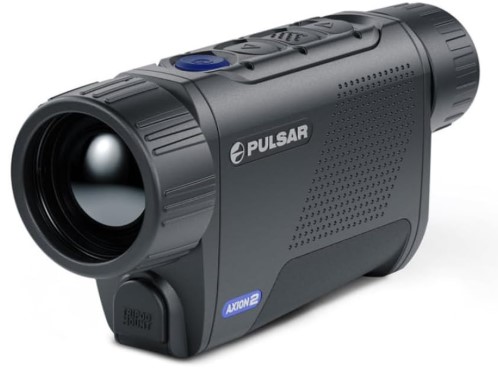
Pulsar Axion 2 XG35 | 384×288 sensor, 17 micron, sub 25mK NETD, 35mm lens, 2-16x, AMOLED 1024×768, 8.5hr battery, IPX7, 64GB, Wi-Fi, Stream Vision 2, magnesium body, 1400 yd detection | Check Price |
 |
Pulsar Telos LRF XP50 | 384×288 sensor, sub 25mK NETD, 50mm F1.0, 2.5-10x, 1024×768 AMOLED, built-in LRF, ballistic calculator, 8.5hr battery, IPX7, 64GB, dual Wi-Fi, Stream Vision 2, 1800m detection | Check Price |
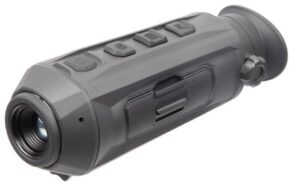 |
AGM Taipan TM15-384 | 384×288 sensor, 15mm F1.0, 1x base, 19 degree FOV, sub 35mK NETD, 708m detection, IP67, 7.5hr battery, video recording, USB-C, 9.5 oz, 3yr warranty | Check Price |
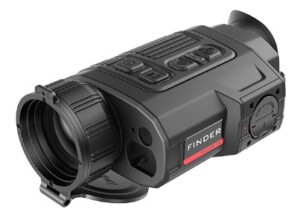 |
InfiRay Finder FH35R V2 LRF | 640×512 sensor, 12 micron, sub 20mK NETD, 35mm lens, 2-8x, built-in LRF, OLED display, Wi-Fi, video recording, IP67, 7hr battery, 640-class resolution with integrated rangefinder | Check Price |
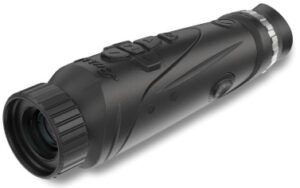 |
Burris Thermal Handheld 35mm | 400×300 VOX sensor, 17 micron, 50Hz, 35mm F1.0, 1-8x zoom, 750 yd detection, 5 color palettes, BurrisConnect app, tripod receiver, 5hr battery, 3yr warranty | Check Price |
The table gives you the key numbers at a glance. What it cannot give you is the context for what those numbers mean on an actual deer hunt, which is what the detailed reviews below provide. Here is everything you need to know about each option before spending your money.
1) Pulsar Axion 2 XG35 (Best Overall Thermal Monocular for Deer Hunting)
The Pulsar Axion 2 XG35 has earned the title of best overall thermal monocular from Field and Stream after hands-on testing, and the specific strengths that earn that title align almost perfectly with what deer hunting demands from a thermal monocular. Pulsar is a Lithuanian company with global distribution and a development philosophy built around the proposition that thermal optics for civilian hunters should match the performance standards of professional-grade equipment. The Axion 2 XG35 is the product that most convincingly makes that argument at its price point. If you hunt deer across a full season, in varying conditions, at realistic distances from 50 to 400 yards, the Axion 2 XG35 performs with a consistency and reliability that defines what the segment should look like.
The sub 25mK NETD sensitivity rating on the Axion 2 XG35’s 384×288 sensor is the specification that matters most for deer identification at distance. NETD measures how small a temperature difference the sensor can detect between adjacent pixels. A lower number means the sensor sees finer thermal gradients, which in deer hunting terms means you detect a bedded deer that has been lying in a spot long enough to partially equalize temperature with the ground, you identify whether a distant thermal blob is a deer or a coyote with enough image detail to make a confident call, and you spot deer in the thermoregulatory transition period at last light when animals are neither hot nor cold relative to their background. The 35mm lens and 2x to 16x magnification range give you efficient scanning at low power and meaningful zoom for close inspection at higher power without requiring you to carry a separate device for each task.
Deer hunting with thermal serves three distinct purposes that the Axion 2 XG35 handles equally well: pre-approach field assessment in complete darkness to avoid bumping deer on the walk to your stand, active scanning of fields and treelines during hunting hours to locate animals before they detect you, and post-shot recovery of wounded deer using the animal’s residual heat signature to track movement. Each of these applications requires different things from the thermal system. The wide low-end magnification covers field scanning efficiently. The 16x zoom enables close inspection of distant deer for antler assessment. The sub 25mK sensitivity picks up heat trails and residual body heat during recovery tracking in a way that less sensitive sensors cannot reliably reproduce.
The 8.5-hour battery, 64GB internal storage for video capture, IPX7 waterproofing, and magnesium alloy housing make the Axion 2 XG35 field complete and durable across the wet, cold conditions that define productive deer hunting weather. Stream Vision 2 app integration via Wi-Fi allows footage sharing and remote live viewing. Field and Stream testers operating on a South Texas ranch specifically noted identifying deer at moderate to long distances with clear heat signature detail, which directly validates the Axion 2’s performance for the deer identification application that matters most to hunters making shot decisions.
Key Features
| Sensor Resolution | 384×288 |
| Pixel Pitch | 17 micron |
| Sensitivity | Sub 25mK NETD |
| Lens | 35mm |
| Magnification | 2-16x |
| Detection Range | 1400 yards |
| Display | AMOLED 1024×768 |
| Battery Life | 8.5 hours |
| Storage | 64GB internal |
| Weatherproofing | IPX7 |
| Housing | Magnesium alloy |
| Connectivity | Wi-Fi, Stream Vision 2 app |
Pros
- Sub 25mK sensitivity enables detection of bedded deer, low-thermal-contrast subjects, and post-shot heat trails that less sensitive sensors miss
- 2-16x magnification handles both wide-area field scanning and close detail inspection of distant deer from the same unit
- Field and Stream best overall thermal monocular pick validated through hands-on testing in real deer hunting conditions
- AMOLED 1024×768 display renders deer body shape and movement detail with vivid clarity at practical hunting distances
- 8.5-hour battery and 64GB internal storage cover full-day hunts and capture every significant thermal detection on video
- Magnesium alloy IPX7 housing handles rain, dew, and cold weather without performance degradation
Cons
- The premium pricing is justified by the performance but represents a significant investment that requires an honest assessment of how regularly you hunt and whether the capability upgrade matches the frequency of use
The Pulsar Axion 2 XG35 is the thermal monocular that serious deer hunters buy and keep for years. Best-in-class sensitivity, versatile magnification, proven by independent field testing. Go check it out and see what sub 25mK thermal detection does to the quality of your deer hunting intelligence.
2) Pulsar Telos LRF XP50 (Best Long-Range Premium Thermal Monocular for Deer Hunting)
The Pulsar Telos LRF XP50 is the flagship thermal monocular in Pulsar’s lineup and it is purpose built for exactly the deer hunting application that demands the most: identifying deer at long range, judging antler size in total darkness, and making rangefinder-supported shot decisions before ever picking up a rifle. Telos is the product that serious deer hunters save up for, and the combination of a large 50mm F1.0 germanium objective lens, a highly sensitive 384×288 sensor with sub 25mK NETD, and a built-in precision laser rangefinder in a single package creates a thermal system that removes the distance estimation guesswork from after-dark deer hunting in a way no other product on this list can match.
The 50mm objective lens is the critical difference between the Telos LRF XP50 and the Axion 2 XG35 above it. A larger objective gathers more thermal energy, which produces a brighter, more detailed image at any given distance. At 200 yards, the difference between a 35mm and 50mm lens in low thermal contrast conditions is the difference between a deer-shaped thermal blob and a thermal image with enough detail to assess antler mass and confirm a shooter. The 1800 meter rated detection range gives the Telos substantial operational headroom at the distances where serious deer hunters are making decisions, typically 100 to 500 yards across open fields and ag edges. Field reporters who use the Telos specifically for deer identification confirm that antler structure and body shape are visible at ranges that no 35mm thermal can match in equivalent conditions.
The built-in laser rangefinder is where the Telos LRF XP50 changes from a superior observation tool to a complete pre-shot hunting system. You spot a buck at the far edge of a field, range it at 340 yards, assess the antlers, confirm it is a legal target, and call your partner on the rifle to the exact distance before the deer ever detects your presence. That sequence happens silently, in total darkness, with one device. The Telos LRF integrated ballistic calculator accepts your ammunition data and provides an adjusted aiming point at the ranged distance, adding another layer of shot preparation capability. The 1024×768 AMOLED display and 2.5x to 10x magnification range are well optimized for this observation and assessment workflow, and the 8.5-hour battery and IPX7 construction make it field reliable across the conditions deer hunters actually encounter.
Pulsar backs the Telos with a three-year factory warranty and provides ongoing firmware support through Stream Vision 2. The compact and ergonomically refined housing is described by regular users as one of the most comfortable long-session thermal monoculars to hold, which matters for the stand hunter who spends hours glassing a field before a target appears.
Key Features
| Sensor Resolution | 384×288 |
| Sensitivity | Sub 25mK NETD |
| Objective Lens | 50mm F1.0 Germanium |
| Magnification | 2.5-10x |
| Detection Range | 1800 meters |
| Display | AMOLED 1024×768 |
| Laser Rangefinder | Built-in precision LRF |
| Smart Features | Ballistic calculator, LRF integration |
| Battery Life | 8.5 hours |
| Storage | 64GB internal |
| Weatherproofing | IPX7 |
| Warranty | 3-year factory warranty |
Pros
- 50mm lens gathers more thermal energy than 35mm alternatives, producing noticeably brighter and more detailed deer images at long range in low thermal contrast conditions
- Built-in precision LRF provides exact distance data before committing to a shot without requiring a separate rangefinder device
- Integrated ballistic calculator uses ranged distance data for adjusted aiming point support
- 1800 meter detection range and sub 25mK sensitivity combine to deliver the most capable deer identification system on this list at practical hunting distances
- Ergonomic design confirmed by regular users as comfortable for extended stand-based observation sessions
- Pulsar three-year warranty and Stream Vision 2 firmware support provide long-term product confidence
Cons
- The larger 50mm body is heavier and less compact than the Axion 2 XG35, which makes it slightly less suited for mobile spot-and-stalk hunting where weight and packability are priorities
The Pulsar Telos LRF XP50 is the thermal monocular that makes trophy deer hunting in total darkness feel like a controlled, intelligence-driven operation rather than guesswork. If you hunt open country or agricultural fields where long-range deer assessment determines your season, this is the tool built for that job. Go check it out and see what integrated ranging and premium thermal imaging delivers for serious deer hunters.
3) AGM Taipan TM15-384 (Best Mid-Range Thermal Monocular for Deer Hunting)
The AGM Taipan TM15-384 occupies the most practical price bracket for the serious deer hunter who has done the research and concluded that 384-class sensor resolution is the correct minimum for confident deer identification at field distances. The deer hunting community’s consensus around the 384×288 sensor as the minimum acceptable resolution for ethical hunting use is well-established and documented in hunting forums, and the Taipan TM15-384 delivers that resolution at a price that positions it as the accessible gateway to capable deer hunting thermal without the premium pricing of Pulsar’s lineup. AGM hunters field-testing the 384 Taipan describe reliable deer detection at up to 850 yards and confident identification at 300 yards as practical real-world performance figures, which covers the scenarios that most deer hunters encounter in the typical stands and fields they hunt.
The 15mm F1.0 lens with 1x base magnification and 19-degree horizontal field of view makes the TM15-384 one of the best deer hunting approach tools available at any price. Walking to your stand in complete darkness with a thermal monocular that covers nearly 20 degrees of horizontal field is a fundamentally different experience from walking without one. You detect deer in your approach path before you are close enough to bump them, you identify safe crossing points, and you arrive at your stand with no deer alert and no blown opportunity before legal shooting light even begins. That one application alone justifies the thermal investment for many deer hunters, and the TM15-384 performs it with the wide FOV and 384-class identification resolution that makes every detection actionable rather than ambiguous.
The 7.5-hour battery life covers the full hunting window from pre-dawn approach through morning sit and into the afternoon without recharging. The IP67 waterproof rating handles the rain, fog, and heavy dew that define the most productive deer hunting conditions in the fall and early winter. The 9.5 oz weight and compact body travel in a chest pocket or harness pouch without adding meaningful bulk to your hunting setup. The tripod thread is a practical addition for stand hunters who want to glass a field from a fixed elevated position for extended periods without arm fatigue.
The sub 35mK NETD sensitivity, while one full tier below the sub 25mK of the Pulsar options, is entirely workable for deer detection and identification at the ranges and conditions that the TM15-384 is optimized for. The 708-meter detection range on a deer-sized target gives you enough reach to cover most stand hunting situations, and the 1x base magnification with digital zoom covers both broad field scanning and closer target inspection from the same unit. For a deer hunter who wants to get into the 384-class thermal bracket at the most accessible price, the AGM Taipan TM15-384 is the most field-validated option available.
Key Features
| Sensor Resolution | 384×288 |
| Lens | 15mm F1.0 |
| Base Magnification | 1x |
| Field of View | 19 degrees horizontal |
| Sensitivity | Sub 35mK NETD |
| Detection Range | 708 meters |
| Weight | 9.5 oz |
| Battery Life | 7.5 hours |
| Weatherproofing | IP67 |
| Warranty | AGM 3-year limited warranty |
Pros
- 384×288 resolution provides confident deer identification at the minimum resolution tier that the hunting community considers reliable for ethical shot decision support
- 19-degree FOV is the most effective configuration for dark approach navigation and stand access without bumping deer
- Real-world identification range of up to 300 yards validated by field hunters covers the distance bracket of most stand hunting scenarios
- 7.5-hour battery covers full-day hunting sessions from pre-dawn approach through the full sit
- Most accessible 384-class thermal price point from a manufacturer with a strong independent review track record
- Tripod thread supports extended stand-based field glassing without arm fatigue
Cons
- The sub 35mK sensitivity falls one tier below the sub 25mK Pulsar options, which creates detection gaps during the most thermally challenging conditions like warm evenings when deer body temperature relative to background is lowest
The AGM Taipan TM15-384 is the thermal that gets more deer hunters into the 384-class performance bracket than any other option. It delivers what matters most for the money: reliable identification, wide approach navigation FOV, and all-day battery life. Go check it out and see what 384-class thermal detection changes about your deer hunting.
4) InfiRay Finder FH35R V2 LRF (Best Value 640 Sensor Thermal for Deer Hunting)
The InfiRay Finder FH35R V2 LRF is the thermal monocular that puts a 640×512 resolution sensor with a built-in laser rangefinder in front of deer hunters at a price below most competing 640-class units without a rangefinder. InfiRay is a Chinese manufacturer that entered the civilian thermal market with a clear value proposition: deliver the sensor quality of premium brands at prices that the mid-range buyer can access. The FH35R V2 LRF has been specifically validated by hunters in forum discussions and independent reviews as a genuine performance upgrade over 384-class sensors for deer identification at extended ranges, and the integrated LRF adds hunting utility that makes the FH35R V2 a complete pre-shot system in a compact handheld package.
The 640×512 sensor with 12 micron pixel pitch and sub 20mK NETD is where the FH35R V2 LRF separates from every other option on this list below the Pulsar Telos. A 640×512 sensor contains more than twice the pixels of a 384×288 unit, and the combination with 12 micron pixel pitch and sub 20mK sensitivity produces a thermal image that deer hunters describe in qualitatively different terms than 384-class products. At 200 yards, you see deer body shape, leg movement, and head orientation clearly enough to make buck versus doe identification from posture and silhouette rather than just heat blob size. At 400 yards, you see enough detail to assess antler presence and rough mass. The sensitivity advantage at sub 20mK means the FH35R V2 detects deer in bed, in brush, and in the thermally flat conditions around dawn and dusk when 384-class and lower sensors struggle most.
The 2x to 8x magnification range with the 35mm lens covers the practical deer hunting distance bracket efficiently. At 2x the image is wide for scanning, and at 6x to 8x the 640-class resolution maintains enough detail for identification and antler assessment that would require 10x or more on a lower-resolution sensor to achieve comparable clarity. The built-in LRF removes the separate rangefinder from the gear list entirely, a practical simplification that most hunters appreciate when they are already managing rifle, pack, calls, and other hunting equipment. The OLED display, Wi-Fi app connectivity, video recording, and IP67 weatherproofing complete a package that is as field-ready and technology-complete as units costing significantly more from better-known brands.
Battery life at 7 hours is slightly below the Pulsar options on this list but adequate for a standard hunting day from pre-dawn through morning or afternoon hunt. The proprietary battery is noted by some users as a consideration compared to standard cell options, and InfiRay’s warranty and support infrastructure, while improving, is less established than Pulsar or AGM for the American market.
Key Features
| Sensor Resolution | 640×512 |
| Pixel Pitch | 12 micron |
| Sensitivity | Sub 20mK NETD |
| Lens | 35mm |
| Magnification | 2-8x |
| Laser Rangefinder | Built-in LRF |
| Display | OLED |
| Battery Life | 7 hours |
| Connectivity | Wi-Fi app integration |
| Weatherproofing | IP67 |
Pros
- 640×512 sensor delivers identification-level deer detail at extended ranges that 384-class sensors cannot match, including visible antler presence at 400 yards in good conditions
- Sub 20mK sensitivity detects bedded deer and low-contrast thermal subjects that less sensitive sensors lose in the most challenging hunting conditions
- Built-in LRF eliminates a separate rangefinder from the gear list and integrates distance data into the observation workflow
- Best price-to-640-sensor-with-LRF ratio on this list, positioning it as the most accessible route to 640-class thermal hunting performance
- 12 micron pixel pitch produces finer detail per unit of image area than larger pixel sensors at equivalent resolution
- Wi-Fi connectivity and video recording match the feature set of competing options from more established brands
Cons
- InfiRay’s warranty infrastructure and customer service presence in the American market is less established than Pulsar, AGM, and Burris, which is a real consideration for buyers who prioritize after-sale support on a premium investment
The InfiRay Finder FH35R V2 LRF is the thermal monocular for the deer hunter who wants 640-class sensor performance and an integrated rangefinder at the most accessible price on this list. Go check it out and discover what 640×512 resolution and sub 20mK sensitivity reveals at the ranges where deer hunting decisions are made.
5) Burris Thermal Handheld 35mm (Best American Brand Thermal for Deer Hunting)
Burris Optics was founded in 1971 in Greeley, Colorado, and has spent over 50 years building a reputation as one of the most trusted American optics brands in the hunting market. The Burris Thermal Handheld 35mm is the company’s answer to the growing demand for a premium American-backed thermal monocular that prioritizes field usability, build quality, and brand support over specification sheet optimization. For deer hunters who value buying from a company with proven American customer service, strong warranty backing, and a track record in the hunting optics market that spans half a century, the Burris Thermal Handheld is the most confident purchase on this list from a brand trust perspective.
The 400×300 VOX sensor at 17 micron pixel pitch and 50Hz refresh rate is Burris’s mid-class thermal sensor, sitting between the 384×288 and 640-class options on this list in resolution terms. In practice, the 400×300 performs well for deer hunting at distances up to 300 yards where the sensor produces a clear enough image to distinguish deer from other thermal subjects and assess basic body shape. The Target Tamers independent field review validates detection beyond 750 yards for deer-sized targets, with identification capability at the 200 to 300 yard range that covers most stand hunting scenarios effectively. The 50Hz refresh rate keeps moving deer sharp and trackable without the motion blur that slower refresh rates create.
The BurrisConnect app integration is one of the most practically useful connectivity implementations in the thermal monocular market. The app provides live video streaming to a phone, photo capture, and the ability to load custom ballistic profiles that translate ranging data from a companion LRF device into adjusted aiming points. The five color palettes cover the environmental variety that deer hunters encounter across early season warmth, cold fronts, foggy mornings, and clear cold nights. The included tripod receiver is a feature that Target Tamers specifically highlights as a competitive advantage, noting that not every thermal monocular includes this despite its usefulness for stand-based long-period glassing.
The internal battery provides approximately five hours of runtime, which is shorter than most competing units on this list. For morning hunts from pre-dawn approach through mid-morning it is adequate. For full-day sits, an external USB power bank is a practical solution. The three-year Burris thermal warranty is standard for the category and the Burris customer service reputation makes any warranty claims straightforward. For the deer hunter who hunts close to moderate range, wants a trusted American brand behind their purchase, and values app connectivity and tripod stability in a well-built package, the Burris Thermal Handheld 35mm is the natural choice.
Key Features
| Sensor Resolution | 400×300 VOX |
| Pixel Pitch | 17 micron |
| Refresh Rate | 50Hz |
| Lens | 35mm F1.0 |
| Zoom Range | 1-8x |
| Detection Range | 750 yards |
| Color Palettes | 5 palettes |
| App Connectivity | BurrisConnect app, live streaming, ballistic profiles |
| Tripod Receiver | Included |
| Battery Life | Approximately 5 hours internal |
| Warranty | 3-year Burris thermal warranty |
Pros
- American brand heritage and customer service reputation provides the most straightforward warranty and support experience on this list
- 400×300 sensor performs well for deer identification at close to moderate range with 50Hz smooth tracking of moving animals
- BurrisConnect app with live streaming and custom ballistic profile integration is among the most practically useful app implementations in the category
- Included tripod receiver enables stable long-period field glassing from a stand without requiring aftermarket accessories
- 1-8x zoom range handles both wide field scanning and target inspection efficiently
- 50 years of Burris hunting optics brand trust behind a product backed by their three-year thermal warranty
Cons
- The approximately 5-hour internal battery is the shortest runtime on this list and will require a USB power bank for full-day hunts that extend beyond the morning or evening sit
The Burris Thermal Handheld 35mm is the thermal monocular for the deer hunter who values an American brand with proven field support and a hunting optics heritage behind their investment. It delivers capable mid-range thermal performance with strong app integration and tripod-ready stability. Go check it out and see what 50 years of Burris hunting optics experience produces in a thermal handheld.
Conclusion
A thermal monocular changes deer hunting at every stage of the process. It transforms the dark walk to your stand from a liability into a managed, intelligent approach. It turns last light field scanning from a guessing game into a confident identification process. It converts post-shot recovery from a stressful flashlight search into a directed heat-trail track.
The five monoculars in this guide deliver those advantages across every budget tier from mid-range to flagship, with different combinations of sensor resolution, sensitivity, ranging capability, and brand support suited to different hunters and different hunting situations.
Whether you hunt thick timber at close range or agricultural fields at 400 yards, whether you prioritize a trusted American brand or maximum sensor resolution per dollar, there is a thermal monocular on this list that makes your deer hunting more effective and more ethical from the first time you take it into the field.
Choose the one that matches your hunting, and stop leaving deer on the table because you could not see them in the dark.
See Also: 5 Best Thermal Monoculars for Squirrel Hunting

I’m John V. Howard, a dedicated shooter and hunter who has spent years testing rifles, scopes, and gear in the field. I write from real experience, sharing what truly works, not what’s trendy. My goal is to give you honest, practical insights that help you make the right choices for your adventures and pursuits.