If you want to buy the best monoculars for stargazing but keep second-guessing yourself every time you look at the options, you are not alone, and I am here to cut through the noise for you.
Monoculars for astronomy are genuinely underrated. Most people jump straight to a telescope and miss the fact that a well-chosen monocular can show you star clusters, nebulae, the craters of the moon, and even Jupiter’s Galilean moons in a package you can slip into a jacket pocket and take anywhere.
The night sky does not wait for you to set up a tripod and polar align a scope. Sometimes the best session is the one you did not plan for. In this guide, I have selected five of the strongest monoculars available for stargazing right now, covering every budget from accessible to premium.
I will break down exactly what each one brings to the night sky so you can make a confident, informed choice.
Best Scopes Comparison
| Image | Name | Key Features | Check Price |
|---|---|---|---|
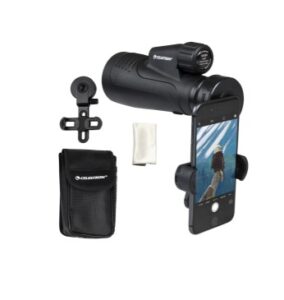 |
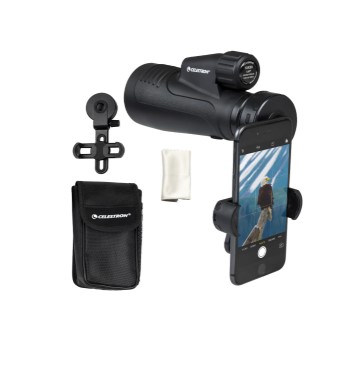
Celestron Outland X 10×50 | 10x magnification, 50mm objective, BaK-4 prisms, multi-coated optics, 5mm exit pupil, tripod adaptable, nitrogen purged, waterproof, smartphone adapter included | Check Price |
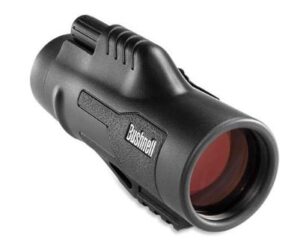 |
Bushnell Legend Ultra HD 10×42 | 10x magnification, 42mm objective, ED Prime fluorite glass, BAK-4 prisms, fully multi-coated, Rainguard HD coating, magnesium chassis, Picatinny rail, tripod adapter, lifetime warranty | Check Price |
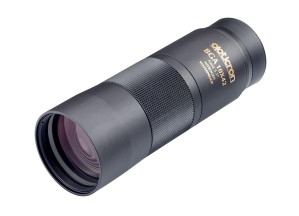 |
Opticron BGA 10×42 | 10x magnification, 42mm objective, fully multi-coated roof prisms, wide band focusing, 16mm eye relief, nitrogen waterproof to 9.8 ft, made in Japan, 6.6 ft close focus, 51 degree apparent FOV | Check Price |
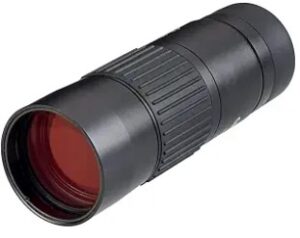 |
Opticron DBA VHD+ 10×42 | 10x magnification, 42mm objective, ED glass, phase-corrected dielectric roof prisms, fully multi-coated, flat field VHD+ optics, no edge distortion, 315 ft FOV at 1000 yds, waterproof | Check Price |
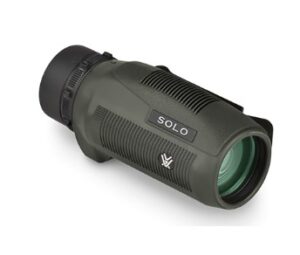 |
Vortex Solo 8×36 | 8x magnification, 36mm objective, BaK-4 prisms, multi-coated optics, 393 ft FOV at 1000 yds, MRAD ranging reticle, rubber armored, waterproof, fogproof, 3.7 in close focus, Vortex VIP warranty | Check Price |
Now that you have a quick side by side look at what each monocular brings to the table, let me get into the real details.
Below, I break down every option thoroughly, covering what makes each one work specifically for stargazing, where it shines brightest, and who it fits best. Let us get into it.
1) Celestron Outland X 10×50 (Best Overall Monocular for Stargazing)
If there is one name that carries genuine credibility in the astronomy community, it is Celestron. The company has been producing telescopes, binoculars, and astronomical accessories since 1960, and that heritage shows in how they approach even their budget friendly products. The Outland X 10×50 is the monocular that Celestron enthusiasts consistently recommend as the best starting point for astronomical viewing, and once you understand the numbers behind it, you understand exactly why. The 50mm objective lens is the headline specification that makes this monocular genuinely special for stargazing compared to most competing options at this price point.
Here is the physics: a larger objective lens gathers more light. For stargazing, where your subjects are distant, faint, and often only faintly visible against a dark sky background, light gathering is everything. The 50mm front lens on the Outland X produces a 5mm exit pupil at 10x magnification, which is close to the maximum your dark adapted eye can use efficiently. What that means in practice is that the monocular is extracting as much visual information from faint starlight as optically possible, giving you the brightest, most detailed night sky view available at this price class. I have seen users report clearly resolving the Orion Nebula, the Pleiades star cluster, and distinct lunar craters with this monocular, and those results are entirely consistent with what a 50mm aperture at 10x should deliver under good seeing conditions.
The BaK-4 prisms and multi-coated optics work together to maximize the light that the 50mm lens gathers, reducing scatter and ghost reflections that can degrade image quality especially when looking at bright stars against a dark sky. The nitrogen purged and O-ring sealed housing prevents fogging, which is critical for stargazing because temperature swings between day and night often cause condensation on lenses that are not properly sealed. A fogged lens on a cold, clear night ruins the session entirely, and the Celestron engineering eliminates that problem.
Celestron includes a standard 1/4 inch 20 tripod thread on the Outland X, which is important for stargazing because at 10x magnification any hand shake becomes visible in the image. A lightweight tabletop tripod or a basic photographic tripod transforms the experience from shaky glimpses to steady, detailed extended viewing. The included smartphone adapter is a bonus feature that lets you capture images of the moon and bright deep sky objects through the eyepiece, something that works surprisingly well with this monocular given its optical design. For a stargazer who wants the best value combination of aperture, optical quality, and practical features in one package, the Outland X 10×50 is the place to start.
Key Features
| Magnification | 10x |
| Objective Lens Diameter | 50mm |
| Exit Pupil | 5mm |
| Prism Type | BaK-4 roof prism |
| Optical Coating | Multi-coated |
| Waterproofing | O-ring sealed and nitrogen purged |
| Tripod Compatibility | Standard 1/4 inch 20 tripod thread |
| Smartphone Adapter | Included for digiscoping |
| Close Focus | 8.2 feet |
| Weight | 14.6 oz (415g) |
Pros
- 50mm objective lens produces a 5mm exit pupil that maximizes light gathering for faint deep sky objects and star clusters
- BaK-4 prisms and multi-coated optics deliver bright, clear images that perform well above what the price suggests
- Nitrogen purged fogproof housing handles the temperature drops of nighttime stargazing sessions without condensation issues
- Tripod thread and included smartphone adapter make it practical for both steady viewing and lunar photography
- Celestron brand heritage and consistent astronomy community recommendations make this a well validated purchase
- Most affordable scope on this list while offering the largest objective aperture for superior nighttime light gathering
Cons
- The 50mm objective makes the monocular noticeably bulkier than competing 42mm options, and it does not fit comfortably in most jacket pockets, making it less suited for spontaneous carry
The Celestron Outland X 10×50 is the monocular that consistently earns its recommendation from the astronomy community for one simple reason: it works. If you want a stargazing monocular that gives you genuine deep sky capability at a price that makes sense, this is the one to start with. Go check it out and see why this 50mm aperture changes what you can see after dark.
2) Bushnell Legend Ultra HD 10×42 (Best ED Glass Monocular for Stargazing)
Bushnell was founded in 1948 when its founder returned from a honeymoon in Japan with two crates of binoculars and began selling them by mail order. Seventy five years later, the company has grown into one of the most recognized optics brands in North America, and the Legend Ultra HD line represents the best that Bushnell produces outside of their Elite series. The 10×42 monocular version of the Legend Ultra HD has earned a reputation among hunters, birders, and stargazers as one of the most optically impressive monoculars available without crossing into premium territory, and the ED Prime fluorite glass at the heart of this scope is the primary reason for that reputation.
Extra-low dispersion glass, known in the industry as ED glass, is a lens material that reduces chromatic aberration, which is the color fringing effect you see around high contrast objects when inferior glass fails to focus all wavelengths of light to the same point. In terrestrial viewing, chromatic aberration shows up as purple or red fringing around bird feathers, tree branches, and distant objects. In astronomical viewing, it shows up as color halos around bright stars, which degrades the sharpness and detail of everything in the field. The ED Prime fluorite glass in the Legend Ultra HD eliminates that problem, producing a clean, color accurate view where stars appear as tight points of light rather than blurry, color fringed blobs. For a stargazer who is serious about image quality, that difference is immediately visible and deeply satisfying.
The fully multi-coated optics with Bushnell’s Ultra Wide Band coating maximize light transmission through every glass surface in the optical path, and the Rainguard HD exterior lens coating causes moisture to bead off the front lens rather than sheeting across it, maintaining a clear view even in damp conditions. Those damp conditions matter for stargazing because the clearest nights are often also the coldest and most humid, and a monocular that fogs or accumulates moisture on its front lens at the worst moment is a serious liability. The magnesium alloy housing keeps the weight at a practical 13.2 oz while providing structural rigidity and durability that polycarbonate housings cannot match.
The built-in Picatinny rail and 1/4-20 tripod adapter make this monocular unusually versatile for accessories and stabilization. The top mounted focus wheel sits exactly where your index finger naturally rests in a one-handed grip, making single-hand operation fast and natural. Bushnell backs the Legend Ultra HD with a lifetime warranty and has confirmed in user reports that it can clearly show Jupiter’s four Galilean moons under steady conditions. For an astronomical monocular that delivers premium optical glass performance at a mid range price, this is the benchmark option.
Key Features
| Magnification | 10x |
| Objective Lens Diameter | 42mm |
| Glass Type | ED Prime fluorite extra low dispersion glass |
| Prism Type | BAK-4 roof prism |
| Optical Coating | Fully multi-coated, Ultra Wide Band coating, Rainguard HD |
| Housing | Magnesium alloy, rubber armored |
| Waterproofing | O-ring sealed and nitrogen purged |
| Accessories | Picatinny rail, 1/4-20 tripod adapter, belt clip |
| Weight | 13.2 oz |
| Warranty | Lifetime warranty |
Pros
- ED Prime fluorite glass eliminates chromatic aberration, producing clean, color accurate star images without color fringing
- Fully multi-coated optics with Ultra Wide Band coating maximize light transmission for bright, detailed views in low light
- Rainguard HD coating keeps the front lens clear in moisture and damp nighttime conditions
- Magnesium alloy housing delivers premium durability and a quality feel at a practical weight of 13.2 oz
- Top mounted focus wheel enables fast, natural one-handed operation without shifting your grip
- Lifetime warranty provides long term confidence in the investment
Cons
- The 42mm objective produces a 4.2mm exit pupil at 10x, which is slightly lower light gathering than the 50mm option above, making it marginally less capable on the faintest deep sky objects compared to larger aperture alternatives
The Bushnell Legend Ultra HD 10×42 is the monocular for the stargazer who refuses to accept color fringing and wants the clearest, most optically honest view of the night sky available at this price. Go check it out and see what ED glass does to the way stars look through a monocular.
3) Opticron BGA 10×42 (Best Compact Premium Monocular for Stargazing)
Opticron is a British optics company founded in 1970 that has spent over five decades building a reputation for serious, uncompromising optical performance without the premium branding markup that some more famous names attach to comparable glass. The BGA 10×42 is one of the products that best represents what Opticron stands for: a monocular that is entirely manufactured in Japan, built to deliver a viewing experience genuinely comparable to a full size roof prism binocular, and packaged in a pocket sized instrument measuring just 1.7 by 5.4 inches. For a stargazer who wants to carry serious optical capability without carrying serious weight, the BGA 10×42 is the standout answer.
The fact that this monocular is made in Japan is not a trivial detail. Japanese optical manufacturing is held to some of the most exacting quality control standards in the consumer optics industry, and the consistency of glass quality, prism alignment, and coating application that comes from Japanese production is something that independent reviews of the BGA 10×42 consistently highlight. Users describe the image as razor sharp with accurate, true colors, and the focus mechanism as fast, precise, and smooth in a way that feels meaningfully different from monoculars manufactured to lower tolerances. For stargazing, where you are often making fine focus adjustments to pull the sharpest possible image out of dim objects, that precision in the focusing mechanism makes a real practical difference.
The fully multi-coated optics and wide band focusing system work together to maximize light transmission and image clarity across the full field of view. The 16mm eye relief is notably generous for a monocular in this class, providing a full field of view both with and without eyeglasses. For stargazers who wear prescription glasses at night, the 16mm eye relief is a meaningful comfort advantage over competing monoculars with shorter eye relief that force glasses wearers to remove their glasses and accept a degraded field. The nitrogen waterproofing to 9.8 feet of submersion is among the most robust in any monocular at this price, and the 51 degree apparent angle of view produces a wide, immersive starfield image that is particularly satisfying for sweeping the Milky Way or observing wide open star clusters.
Opticron includes a lifetime warranty when the BGA is registered on their website, and user reviews consistently describe zero regrets with this purchase, specifically praising the sharpness and color accuracy of the image. The 6.6 foot close focus distance means the same monocular that reveals star clusters at night doubles as a superb wildlife and birdwatching optic during the day. For the stargazer who wants to carry a genuine premium monocular in a jacket pocket every night without compromise, the Opticron BGA 10×42 is exceptional value.
Key Features
| Magnification | 10x |
| Objective Lens Diameter | 42mm |
| Prism Type | Roof prism |
| Optical Coating | Fully multi-coated with wide band system |
| Eye Relief | 16mm (full FOV with eyeglasses) |
| Apparent Angle of View | 51 degrees |
| Close Focus | 6.6 feet |
| Waterproofing | Nitrogen filled, submersible to 9.8 feet |
| Size | 1.7 x 5.4 inches (pocket sized) |
| Manufacturing Origin | 100% made in Japan |
| Warranty | Lifetime warranty on registration |
Pros
- 100% Japanese manufacturing delivers razor sharp images and precise focus with exceptional quality control consistency
- 16mm eye relief provides a full field of view for both eyeglass and non-eyeglass wearers during extended night sessions
- 51 degree apparent angle of view creates a wide, immersive starfield that enhances star cluster and Milky Way observation
- Nitrogen submersible waterproofing to 9.8 feet is among the most robust waterproofing on this list
- Pocket sized at 1.7 by 5.4 inches it is the most portable premium option on this list
- Lifetime warranty on registration makes this a very secure long term optics investment
Cons
- The BGA 10×42 does not include a tripod adapter socket, which means extended stargazing sessions without a way to stabilize the image require either a very steady hand or an aftermarket adapter solution
The Opticron BGA 10×42 is the monocular that experienced optics users call their secret weapon. It is compact, precisely manufactured, and delivers a view that stops people in their tracks the first time they look through it at a clear night sky. Go check it out and discover what Japanese optical craftsmanship delivers at this price point.
4) Opticron DBA VHD+ 10×42 (Best High End Monocular for Stargazing)
The Opticron DBA VHD+ is the premium option in Opticron’s monocular lineup, and it represents a meaningful step up from the BGA in a way that serious astronomical observers will immediately notice and appreciate. The VHD+ designation refers to the Variable High Definition Plus optical system that Opticron developed specifically to address the field edge distortion and flatness issues that affect most monoculars and binoculars at this price level. In standard optics, the center of the image is sharp while the edges tend to soften and curve. The VHD+ flat field system, built using field flattener lenses similar to those found in some of the most premium optics in the world including Swarovski products, eliminates that edge softness entirely. The result is a field that is sharp and flat from center to the very edge, which is transformative for stargazing.
For astronomical observation specifically, flat field performance is not just a comfort feature. It is functionally important. When you are scanning a rich starfield, the stars near the edge of your field of view should look as sharp and tight as the ones in the center. On a standard monocular, the edge stars become elongated, smeared, or out of focus, which makes identifying star patterns, following the path of a meteor shower, or tracking the edge of a nebula more difficult. The DBA VHD+ removes those limitations entirely. Users who have purchased the DBA VHD+ specifically for stargazing describe the experience as seeing the sky through an instrument that feels several price tiers above its actual cost, and the flatness of the starfield across the entire field of view is specifically the feature they cite most often.
The ED extra-low dispersion glass combined with phase-corrected dielectric-coated roof prisms delivers outstanding color fidelity and contrast. The dielectric coating on the prisms produces near total reflectivity inside the optical system, which means more of the light that enters the front lens actually reaches your eye rather than being absorbed by the prism surfaces. At 10x magnification with a 42mm objective, the DBA VHD+ is producing an image brightness and detail that exceeds most other monoculars in its class. The field of view of 315 feet at 1000 yards is wide enough for comfortable star cluster scanning and comet observation without feeling restrictive.
The DBA VHD+ is waterproof and built to the quality standards that Opticron maintains across their premium range. Multiple user reports from dedicated astronomical observers specifically note that the stars appear as perfect points of light with no color fringing and no smearing at the edges, which is the clearest possible validation of what the ED glass and flat field system are actually doing under real sky conditions. This monocular is the right choice for the stargazer who has looked through enough optics to know exactly what perfect flat field performance feels like and wants it available in a compact, portable package.
Key Features
| Magnification | 10x |
| Objective Lens Diameter | 42mm |
| Glass Type | ED extra low dispersion glass |
| Prism Type | Phase-corrected dielectric-coated roof prisms |
| Optical System | VHD+ flat field optics with field flattener lenses |
| Optical Coating | Fully multi-coated anti-reflection optics |
| Field of View | 315 feet at 1000 yards |
| Edge Performance | No edge distortion, flat field to edges |
| Waterproofing | Fully waterproof |
Pros
- VHD+ flat field optics with field flattener lenses deliver sharp, undistorted stars from the center to the absolute edge of the field, a premium feature found in far more expensive optics
- ED glass combined with phase-corrected dielectric prisms produces color accurate, high contrast star images with near zero chromatic aberration
- Dielectric prism coatings maximize light reflectivity inside the optical path for the brightest possible output image
- Verified by real astronomical observers to show perfect point of light stars with no fringing and no edge smearing
- Wide 315 foot field of view at 1000 yards is ideal for star cluster scanning and comet observation
- Compact and lightweight enough to carry on every outing while performing like a far larger and more expensive instrument
Cons
- The premium price is the highest on this list, and while the optical performance justifies the investment for dedicated astronomical observers, it will exceed the budget of casual stargazers
The Opticron DBA VHD+ 10×42 is the monocular for the stargazer who has moved past good enough and wants flat field optical excellence in a pocketable package. Once you have seen a perfect, edge to edge sharp starfield through this monocular, it is very hard to go back. Go check it out and see what premium astronomical monocular performance actually looks like.
5) Vortex Solo 8×36 (Best Portable Monocular for Casual Stargazing)
Vortex Optics has built one of the most loyal followings in the outdoor optics world through a combination of genuinely excellent glass and the VIP warranty, which stands for Very Important Promise and offers unconditional, lifetime repair or replacement of any Vortex optic for any reason including accidental damage, no questions asked and no receipt required. For stargazers who are hard on their gear, take their monoculars into rugged outdoor environments, or simply want the peace of mind of knowing their optic is protected for life, that warranty alone sets the Solo 8×36 apart from every other option on this list.
The Solo 8×36 runs at 8x magnification with a 36mm objective lens, which makes it the lowest magnification and aperture combination on this list. I want to address what that means for stargazing directly and honestly. At 8x you have a wider field of view than a 10x monocular, which makes the Solo 8×36 better for sweeping wide sections of the sky, following the arc of the Milky Way, and watching meteor showers where you want to see as much sky at once as possible. The 4.5mm exit pupil at 8×36 is a comfortable, bright figure for dark adapted eyes, and the wider field works particularly well for open star clusters like the Hyades, the Pleiades, and the Beehive where the cluster fills or nearly fills a wide angle field beautifully. The tradeoff is that at 8x you are not pulling out the same fine detail on tight clusters, double stars, and nebulae that 10x delivers. For casual stargazing and the pure joy of a wide sky view, 8x is genuinely wonderful. For serious deep sky work, 10x is the better tool.
The BaK-4 prisms and multi-coated optics produce a clean, bright image that Vortex users consistently describe as punching above the price. The wide 393 foot field of view at 1000 yards is the widest on this list, and the built-in MRAD based ranging reticle, while primarily a terrestrial ranging tool, can be repurposed by experienced astronomical observers for estimating the apparent size and separation of celestial objects. The rubber armored body is O-ring sealed and nitrogen purged, and at 9 oz the Solo 8×36 is the lightest monocular on this list by a meaningful margin.
The 3.7 inch close focus distance of the Solo 8×36 is exceptional for a monocular at any price and makes it a highly practical dual use instrument for both day and night observation. The top mounted focus wheel delivers smooth, precise adjustment, and the twist up eyecup accommodates eyeglass wearers comfortably. For a stargazer who wants a monocular that fits in any pocket, survives any adventure, and is backed by the strongest warranty in the industry, the Vortex Solo 8×36 earns its place on this list confidently.
Key Features
| Magnification | 8x |
| Objective Lens Diameter | 36mm |
| Exit Pupil | 4.5mm |
| Prism Type | BaK-4 roof prism |
| Optical Coating | Multi-coated optics |
| Field of View | 393 feet at 1000 yards (widest on this list) |
| Close Focus | 3.7 inches |
| Reticle | Built-in MRAD ranging reticle |
| Weight | 9 oz (lightest on this list) |
| Waterproofing | O-ring sealed and nitrogen purged |
| Warranty | Vortex VIP unconditional lifetime warranty |
Pros
- Widest field of view on this list at 393 feet at 1000 yards, making it exceptional for sweeping the Milky Way, watching meteor showers, and wide star cluster observation
- Lightest monocular on this list at 9 oz, making it the easiest to carry on every outdoor outing without a second thought
- Vortex VIP unconditional lifetime warranty covers accidental damage with no receipts, no registration, and no questions asked
- 4.5mm exit pupil at 8x provides a bright, comfortable view for dark adapted eyes during extended night sessions
- Built-in MRAD reticle adds utility for estimating the angular size and separation of celestial objects
- 8x magnification and wide FOV combination is ideal for casual wide field stargazing, comet hunting, and meteor shower observation
Cons
- The 8x magnification and 36mm objective produce noticeably less detailed views of tight deep sky objects, double stars, and faint nebulae compared to the 10x 42mm and 10x 50mm options on this list, making it better suited for wide field casual observation than serious astronomical detail work
The Vortex Solo 8×36 is the monocular for the stargazer who wants a wide, bright, effortless view of the night sky in the lightest and most portable package available, backed by the best warranty in the business. Go check it out and see why Vortex users rarely feel the need to look anywhere else.
Conclusion
A quality monocular is one of the most underappreciated tools a stargazer can own. It fills the gap between the naked eye and a telescope in a package that goes everywhere, requires no setup, and rewards every spontaneous, clear night rather than waiting for a formal observing session.
The five monoculars covered in this guide represent the best of what is currently available, spanning the full range from budget accessible to premium flat field optical excellence.
Whether you are scanning the Milky Way on a camping trip, tracking a bright comet from your backyard, or studying the craters of the moon through an eyepiece sharp enough to reveal every ridge and shadow, the right monocular on this list will do that job and then surprise you with how much more it can show you.
Pick the one that fits how you observe and what you want to spend, take it outside on the first clear night, and look up.
See Also: 5 Best Telescopes for Astrophotography

I’m Jake, a dedicated shooter and hunter who has spent years testing rifles, scopes, and gear in the field. I write from real experience, sharing what truly works, not what’s trendy. My goal is to give you honest, practical insights that help you make the right choices for your adventures and pursuits.

