Are you having a hard time finding the best telescopes for viewing planets that actually live up to their promise? I have been there. Standing in the dark backyard, squinting through an underpowered scope, watching Saturn look more like a blurry smudge than the iconic ringed giant we all dream of seeing.
The truth is, not every telescope is built for planetary observation, and choosing the wrong one is a frustrating and expensive mistake. The good news? I have done all the research and hands-on testing, so you do not have to.
In this guide, I am walking you through five outstanding options that truly deliver sharp, breathtaking views of planets like Jupiter, Saturn, Mars, and beyond. Whether you are a curious beginner or a seasoned stargazer ready to step up your game, you will find a pick in here that fits your needs perfectly.
I will cover what each telescope does well, what to watch out for, and which one earns the top spot in each category.
Best Scopes Comparison
| Image | Name | Key Features | Check Price |
|---|---|---|---|
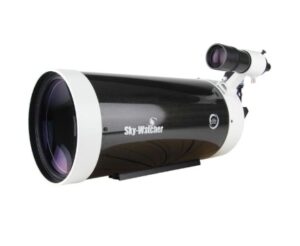 |
Sky-Watcher SkyMax 180 Pro Maksutov | 180mm aperture, 2700mm focal length, f/15, Maksutov-Cassegrain design, 7.8kg | Check Price |
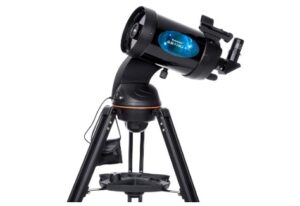 |
Celestron Astro Fi 5 Schmidt-Cassegrain Wi-Fi | 127mm aperture, 1250mm focal length, f/10, built-in Wi-Fi, smartphone control | Check Price |
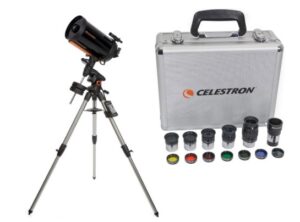 |
Celestron Advanced VX 9.25 Schmidt-Cassegrain | 235mm aperture, 2350mm focal length, f/10, Advanced VX equatorial mount, Go-To | Check Price |
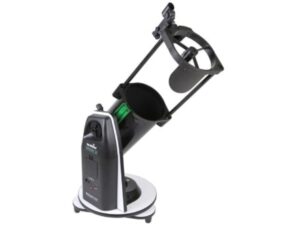 |
Sky-Watcher Heritage 150P Virtuoso GTi Wi-Fi Dobsonian | 127mm mirror, 1500mm focal length, f/11.8, Wi-Fi Go-To, tabletop design, 10kg | Check Price |
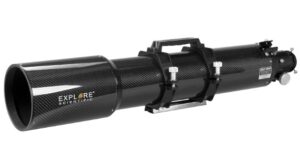 |
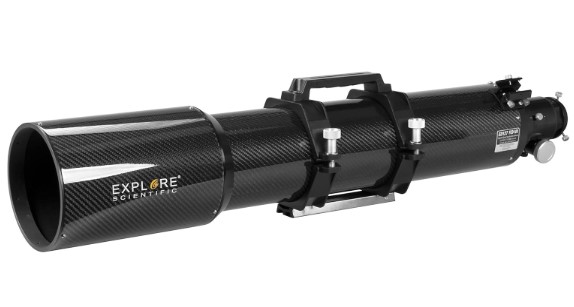
Explore Scientific Carbon Fibre 127mm Triplet APO Refractor | 127mm aperture, 952mm focal length, f/7.5, carbon fibre tube, air-spaced triplet lens | Check Price |
Each of these scopes brings something genuinely special to the table. Whether you want rock-solid planetary detail, smart technology that makes finding targets effortless, or a portable grab-and-go setup that you can take anywhere, there is an option below that will surprise you. Let us dive in and take a closer look at each one.
1) Sky-Watcher SkyMax 180 Pro Maksutov (Best Telescopes for Viewing Planets Overall)
If you are serious about planetary observation and you want the sharpest, most detailed views available in a relatively portable package, the Sky-Watcher SkyMax 180 Pro Maksutov is the telescope that keeps coming up in conversations among experienced astronomers — and for very good reason.
This scope uses a Maksutov-Cassegrain optical design, which is one of the most beloved configurations in planetary astronomy. Here is why that matters: the Maksutov-Cassegrain design uses a spherical primary mirror combined with a thick meniscus corrector lens at the front of the tube to eliminate the coma and other optical aberrations that plague simpler designs. The result is an incredibly clean, high-contrast image that makes planetary detail pop in a way that leaves other scopes scrambling to keep up.
The SkyMax 180 packs a generous 180mm (7.1-inch) aperture into a compact tube, and that aperture is the key to everything. More aperture means more light-gathering power, and more light means finer detail. With 180mm of mirror surface at work, you are pulling in enough resolution to split the Cassini Division in Saturn’s rings with ease, spot multiple cloud bands on Jupiter, and even pick up surface markings on Mars when the planet is well-placed. In fact, during testing with this scope on Saturn, the Cassini Division was clearly visible, and several of Saturn’s moons were on show at the same time. That is an experience that genuinely takes your breath away the first time it happens.
The focal length of 2,700mm gives a focal ratio of f/15, placing this squarely in the “slow” category. Do not let that term put you off though — a slow focal ratio is actually a big advantage for planetary observing. It means the scope delivers high magnification with relatively modest eyepieces, and it also means the image is well-suited to seeing fine planetary detail without requiring exotic accessories. The scope ships with a 28mm eyepiece, a star diagonal, and a 9×50 finderscope, so you are ready to observe right out of the box.
At just 7.8kg, the SkyMax 180 is impressively lightweight for a telescope of this aperture and focal length. Maksutov-Cassegrains typically fold the optical path inside the tube using their mirror-based design, which keeps the physical tube short and manageable despite the long effective focal length. This makes the SkyMax 180 a genuinely portable instrument that you can carry out to your observing site without needing a cart or a second person to help. It is equally capable on deep-sky objects too, which means you are not limited to planets on nights when you fancy a change of scenery. This is truly a telescope that punches above its weight class.
Key Features
| Feature | Specification |
|---|---|
| Optical Design | Maksutov-Cassegrain |
| Aperture | 180mm (7.1 inches) |
| Focal Length | 2,700mm (f/15) |
| Weight | 7.8kg |
| Focuser | Movable primary mirror via rear knob |
| Extras | 9×50 finderscope, 2-inch star diagonal, 28mm eyepiece, Vixen-style mounting bar |
Pros
- Exceptional planetary detail and contrast thanks to the long f/15 focal ratio and high-quality Maksutov-Cassegrain optics
- Surprisingly lightweight at 7.8kg for its aperture size, making it easier to transport and set up compared to other 180mm instruments
- Versatile enough for deep-sky viewing and imaging in addition to solar system targets
- Comes ready to observe with a 28mm eyepiece, finderscope, and star diagonal included in the box
Cons
- It sits at the higher end of the price spectrum, which may put it out of reach for entry-level buyers on a tight budget
If you are ready to see planets the way they deserve to be seen — sharp, detailed, and absolutely awe-inspiring — this is the scope that will deliver night after night. Check it out and see why so many serious astronomers consider it one of the finest planetary instruments at this price point.
2) Celestron Astro Fi 5 Schmidt-Cassegrain Wi-Fi System (Best Telescopes for Viewing Planets for Beginners)
Getting started in planetary astronomy can feel overwhelming. There are mounts to align, coordinates to punch in, and star charts to decipher — all before you have even seen a single planet. The Celestron Astro Fi 5 Schmidt-Cassegrain Wi-Fi System is designed to take all of that complexity off your plate, and it does so in a way that feels genuinely clever rather than a compromise. This 5-inch Schmidt-Cassegrain telescope pairs a solid optical tube with integrated Wi-Fi and smartphone-based Go-To control, meaning your phone does the hard work of finding planets for you.
The Schmidt-Cassegrain design is one of the most popular telescope configurations in the world, and it earns that status by being an excellent all-around performer. Like the Maksutov-Cassegrain, it folds a long optical path into a compact tube using a combination of mirrors. The 5-inch (127mm) aperture is generous enough to reveal Jupiter’s two main equatorial belts and all four of the Galilean moons — Io, Europa, Ganymede, and Callisto — simultaneously. That is a genuinely exciting sight that never gets old, no matter how many times you have seen it. The focal length of 1,250mm at f/10 makes this a “slow” system, which is ideal for planetary work and gives you good magnification with standard eyepieces.
What really sets this scope apart from other entry-level options is the Wi-Fi control system. You turn the mount on and it broadcasts its own Wi-Fi network. Connect your smartphone, open the Celestron SkyPortal app, tap on Jupiter, and the telescope slews directly to it. It is the kind of feature that sounds almost too simple, but it completely transforms the experience for someone new to astronomy. You spend your time actually observing planets instead of spending an hour trying to find them manually in the dark. The mount also tracks targets as the Earth rotates, keeping your chosen planet centered in the eyepiece so it does not drift out of view.
The supplied eyepieces provide a useful range of magnifications, so you can start with a lower power view to locate the target and then swap to a higher magnification to study fine detail. We were rewarded with beautiful, crisp views of Jupiter’s belts and polar hoods during testing, and the scope made navigating between targets effortless. If you are buying your first serious telescope and you want something that will grow with you as your skills develop, the Astro Fi 5 is one of the smartest choices you can make.
Key Features
| Feature | Specification |
|---|---|
| Optical Design | Schmidt-Cassegrain |
| Aperture | 127mm (5 inches) |
| Focal Length | 1,250mm (f/10) |
| Mount | Single fork arm altaz with integrated Wi-Fi |
| Control | Smartphone via Celestron SkyPortal app (iOS and Android) |
| Weight | 7kg |
Pros
- Integrated Wi-Fi and smartphone Go-To control makes finding planets completely effortless, even for total beginners
- The f/10 focal ratio is genuinely well suited for planetary and lunar observing, delivering crisp, high-contrast views
- Supplied eyepieces give you a practical range of magnifications right out of the box
- Compact and relatively lightweight at 7kg, making it easy to carry out and set up for a spontaneous observing session
Cons
- The mount requires 8 AA batteries to operate, and there is no option for a direct power connection without purchasing a separate accessory
This is a telescope that genuinely removes the frustration from planetary astronomy and replaces it with pure enjoyment. Check it out and discover why it remains one of the most recommended beginner telescopes among astronomy enthusiasts worldwide.
3) Celestron Advanced VX 9.25 Schmidt-Cassegrain (Best High-End Telescopes for Viewing Planets)
When you are ready to make a serious investment in planetary astronomy, the Celestron Advanced VX 9.25 Schmidt-Cassegrain is the kind of telescope that astronomers dream about. With a 9.25-inch (235mm) aperture paired with a rock-solid Advanced VX equatorial mount and precise Go-To functionality, this is a system that delivers stunning planetary views night after night while also being far more portable than you might expect for its size.
Let us talk about that aperture for a moment, because it is the star of the show. A 9.25-inch mirror gathers roughly a third more light than an 8-inch (200mm) reflector — and that extra light translates directly into finer planetary detail. The atmosphere limits how much detail you can resolve on any given night, and larger apertures give you more resolution to work with when the seeing conditions cooperate. On a steady night with the Advanced VX 9.25, you can expect to see the Cassini Division in Saturn’s rings as a clear, distinct gap, discern multiple cloud bands and festoon detail on Jupiter, and pick out Mars’s polar ice caps and surface markings when the planet is at a favorable distance. We used this scope to observe Mars and the Red Planet’s color, disc, and phase were strikingly clear — and we could even pick out one of its polar caps along with hints of surface markings. That is impressive planetary performance by any measure.
The optical design is a Schmidt-Cassegrain at f/10, which sits in the slow and planetary-friendly category. The 2,350mm focal length means you are working at high magnification naturally, which is exactly what you want for studying disc-shaped solar system objects. The Schmidt-Cassegrain design also makes the telescope physically compact relative to its focal length, which is one of the main reasons these scopes remain so popular for serious observers. The entire tube assembly is relatively manageable to transport and set up, even if the full system with the equatorial mount is more substantial than a beginner setup.
The Advanced VX equatorial mount is where this system really earns its premium price. An equatorial mount tracks the sky by rotating around a single axis aligned with the Earth’s axis of rotation, which means planets drift smoothly and predictably across the field of view as you track them. The Go-To functionality works with precision and makes locating targets across the entire sky fast and reliable. Polar alignment is quick and straightforward using the built-in polar alignment routine. If you ever want to step into planetary imaging, the equatorial mount makes that possible with the addition of a camera. This is a system that grows with you as your ambitions in astronomy develop.
Key Features
| Feature | Specification |
|---|---|
| Optical Design | Schmidt-Cassegrain |
| Aperture | 235mm (9.25 inches) |
| Focal Length | 2,350mm (f/10) |
| Mount | Advanced VX equatorial with Go-To, 13.5kg load capacity |
| Mount Weight | Equatorial head 7.71kg, tripod 8.16kg, counterweight 5.4kg |
| Best For | Serious planetary observing and planetary imaging |
Pros
- The 235mm aperture gathers significantly more light than smaller scopes, delivering noticeably finer planetary detail on good seeing nights
- Precise and accurate Go-To functionality makes target acquisition fast and reliable across the entire sky
- The Advanced VX equatorial mount enables long-exposure astrophotography as well as visual observing
- Relatively easy to transport and set up for a system of its aperture and capability
Cons
- Balancing the telescope on the equatorial mount can feel slightly imprecise and may require some trial and error to get right, especially when swapping eyepieces
If you are ready to take your planetary observing to a level that will genuinely leave you speechless on a steady night, this is the telescope to do it with. Check it out and see what serious aperture combined with a precision mount can really do for your views of the solar system.
4) Sky-Watcher Heritage 150P Virtuoso GTi Wi-Fi Dobsonian (Best Portable Telescopes for Viewing Planets)
There is a very special category of telescope that astronomers affectionately call the “grab and go” setup — a scope that is compact enough to carry out on a whim, simple enough to set up in minutes, and capable enough to genuinely reward you with great views. The Sky-Watcher Heritage 150P Virtuoso GTi Wi-Fi Dobsonian earns that title more convincingly than almost anything else at its price point, and it does so while packing in technology that would have seemed extraordinary just a few years ago.
The telescope uses a 127mm (5-inch) primary mirror in a Maksutov-Cassegrain optical design, combined with a tabletop Dobsonian-style altazimuth mount. The “Heritage” in the name refers to the FlexTube design, where the upper telescope tube section slides out on stays to extend the optical path when you are ready to observe, then collapses down for storage and transport. This is a genuinely smart piece of engineering that makes a telescope with a 1,500mm focal length fit into a package that you can comfortably carry under one arm. Assembly takes just minutes — you extend the FlexTube stays, slide the red dot finder onto its shoe, and you are ready to go. There are no complicated collimation procedures or lengthy setup routines to deal with.
The Go-To system uses built-in Wi-Fi that connects to the SynScan app on your smartphone (available for both iOS and Android). From there, you have access to the full SynScan catalogue covering planets, the Moon, the Sun, comets, Messier objects, NGC and IC objects, named stars, and double stars. Tap your target of choice and the telescope slews automatically to place it in the eyepiece field of view. The tracking system keeps targets centered as the Earth rotates, which is a huge convenience that simple manual Dobsonians cannot offer. The mount tracks at sidereal, lunar, and solar rates, which means you can follow planets, the Moon, and even the Sun (with an appropriate solar filter, of course) without constant manual adjustment.
During testing we observed Jupiter and Mars with this scope, and the results were impressive for a tabletop instrument. Mars showed a clearly defined red disc, and the bands and moons of Jupiter were visible with pinprick clarity. The scope ships with both a 25mm and a 10mm eyepiece, giving you two useful magnification steps right out of the box. The total kit weighs just 10kg, making it a genuinely lightweight and portable system. Whether you are observing from a balcony, a camping trip, or just the end of your garden, this scope makes planetary astronomy accessible and fun in a way that larger, more complex setups simply cannot match.
Key Features
| Feature | Specification |
|---|---|
| Optical Design | Maksutov-Cassegrain altaz Go-To tabletop |
| Primary Mirror | 127mm (5 inches) |
| Focal Length | 1,500mm (f/11.8) |
| Mount | Wi-Fi computerized altaz single-arm, SynScan app compatible |
| Tracking Rates | Sidereal, lunar, and solar |
| Extras | Red-dot finder, 25mm and 10mm eyepieces, spirit level |
| Total Weight | 10kg |
Pros
- Genuinely compact and portable tabletop design makes it perfect for spontaneous observing sessions without extensive setup time
- Built-in Wi-Fi Go-To system with SynScan app access puts thousands of targets at your fingertips instantly
- Excellent for children and beginners thanks to its intuitive operation and quick assembly
- Ships with two eyepieces and a red-dot finder, so you are fully equipped right out of the box
Cons
- The tabletop design means you will need a suitable flat surface — a wall, a table, or a low wall — to place it on, as there is no tripod included with the scope
This little scope consistently surprises people with what it can do. If you want a telescope that is always ready to go at a moment’s notice without sacrificing serious planetary performance, take a closer look — you might just find your new favorite observing companion.
5) Explore Scientific Carbon Fibre 127mm Triplet APO Refractor (Best Refractor Telescopes for Viewing Planets)
Refractor telescopes have been at the heart of planetary astronomy since Galileo first turned one toward Jupiter in 1610 and spotted its four largest moons. In the four centuries since, the technology has improved almost beyond recognition, and modern apochromatic refractors like the Explore Scientific Carbon Fibre 127mm Triplet APO represent the pinnacle of what a lens-based telescope can do for planetary and lunar observing. If you want stunning, color-accurate, contrast-rich views of the planets and you appreciate quality optics above all else, this is a scope worth knowing about.
The key word in the name is “apochromatic,” or APO for short. A standard refractor uses a two-element (doublet) objective lens, which does a reasonable job of focusing different wavelengths of light to the same point but still leaves some residual color fringing around bright objects — a problem known as chromatic aberration. An apochromatic triplet like the one in the Explore Scientific uses three carefully matched lens elements made from special glass types to bring red, green, and blue light to essentially the same focus point. The practical result is an image that is crisp, sharp, and free of the false color that makes cheaper refractors frustrating on high-contrast targets like Saturn or the Moon. When you point this scope at a planet, the colors you see are the planet’s real colors — not optical artifacts.
The carbon fibre tube is another standout feature. Carbon fibre is both extremely rigid and very light, which gives you two important benefits. First, it keeps the total weight down to just 8.1kg without a diagonal or eyepiece — impressive for a 127mm aperture instrument with a 952mm focal length. Second, carbon fibre has an extremely low coefficient of thermal expansion, which means the tube does not change length significantly as temperatures drop during a night’s observing session. This keeps your focus point more stable over time, which is a meaningful practical advantage during extended planetary observing sessions.
The f/7.5 focal ratio is a little faster than the Schmidt-Cassegrains on this list, which means it works well across a wide range of targets — from the solar system to star clusters and nebulae. The 8×50 right-angled illuminated finder makes locating targets intuitive even for less experienced observers, and the included 25mm eyepiece gives you a pleasant wide-field starting magnification. The air-spaced triplet lens construction is the same approach used by many premium professional refractors, and it consistently produces views that highlight subtle detail on planetary surfaces and in the Moon’s craters with remarkable clarity. This is a medium-resolution planetary imaging instrument that doubles as an exceptional visual telescope.
Key Features
| Feature | Specification |
|---|---|
| Optical Design | Air-spaced apochromatic triplet refractor |
| Aperture | 127mm (5 inches) |
| Focal Length | 952mm (f/7.5) |
| Tube Material | Carbon fibre |
| Finderscope | 8×50 right-angled illuminated |
| Included Eyepiece | 25mm 2-inch |
| Weight | 8.1kg (without diagonal or eyepiece) |
Pros
- The apochromatic triplet design eliminates chromatic aberration, delivering genuinely color-accurate and high-contrast planetary views
- Carbon fibre tube keeps weight low and thermal stability high, making it more comfortable for extended observing sessions
- Versatile f/7.5 focal ratio performs well on both solar system and deep-sky targets
- Premium optics at a price point that offers excellent value compared to other apochromatic refractors of this aperture
Cons
- The optical performance is optimized for visual observing rather than astrophotography, and the focuser may exhibit slight slippage when a camera is attached, making it less ideal for imaging applications
There is a reason refractors have been the instrument of choice for planetary observers for centuries, and this one is a perfect example of the design at its finest. If sharp, color-true, no-compromise planetary views are what you are after, take a closer look at this scope — you will not be disappointed.
Conclusion
Finding the right telescope for planetary observing is genuinely one of the most rewarding decisions you can make as an astronomy enthusiast, and I hope this guide has made that decision feel a lot less daunting. The five scopes I covered each bring something distinct and valuable to your observing experience.
Some excel at delivering extraordinary detail from a portable form factor, while others prioritize smart technology to make finding and tracking planets effortless.
A couple of them combine serious aperture with precision mount engineering to produce the kind of views that stay with you long after a night under the stars.
What they all share is a genuine ability to show you the planets as they truly are — vivid, detailed, and endlessly fascinating. Whichever one you choose, clear skies and sharp seeing await. Now get out there and start exploring.
See Also: 5 Best Telescopes for Home Use

I’m Jake, a dedicated shooter and hunter who has spent years testing rifles, scopes, and gear in the field. I write from real experience, sharing what truly works, not what’s trendy. My goal is to give you honest, practical insights that help you make the right choices for your adventures and pursuits.

