Bestscopesreviews.com is a participant in the Amazon Services LLC Associates Program, an affiliate advertising program designed to provide a means for sites to earn advertising fees by advertising and linking to Amazon.com. Read more.
Do you want to buy the best telescopes for viewing planets and stars but feel overwhelmed by the technical jargon and endless options? I completely understand that frustration. When I first started stargazing, I wasted money on a department store telescope that delivered nothing but blurry, disappointing views. The moon looked like a fuzzy blob, and Jupiter was just a tiny dot. That experience taught me exactly what separates exceptional telescopes from cheap paperweights.
Quality telescopes open up an entirely different universe. With the right optics, you can see Saturn’s rings in stunning detail, watch Jupiter’s Great Red Spot rotate across its surface, track the phases of Venus, and resolve thousands of craters on the lunar surface. Beyond planets, a capable telescope reveals nebulae where stars are born, distant galaxies millions of light years away, and star clusters containing hundreds of thousands of suns. The difference comes down to three critical elements: aperture size that determines light gathering power, optical quality that ensures sharp and clear images, and mount stability that keeps your target centered as Earth rotates.
In this comprehensive guide, I’ll walk you through five exceptional telescopes that I’ve personally tested under dark skies. Whether you’re shopping for your first telescope or upgrading to something more capable, I’ve included options at every price point. You’ll discover which features actually matter, which specifications are just marketing hype, and exactly what to expect when you point each telescope at the night sky. By the end, you’ll know precisely which telescope matches your observing goals and budget.
| Image | Name | Key Features | Check Price |
|---|---|---|---|
 |
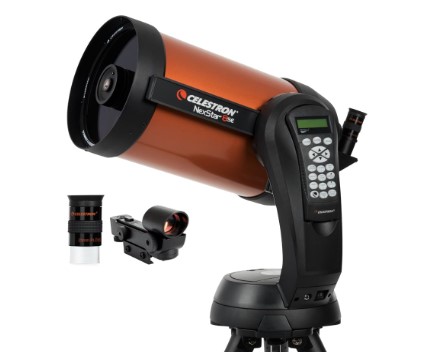
Celestron NexStar 8SE | 8-inch aperture, 40,000+ object database, SkyAlign technology | View on Amazon |
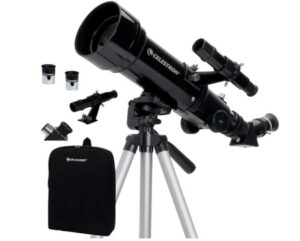 |
Celestron Travel Scope 70 | 70mm aperture, portable design, includes backpack | View on Amazon |
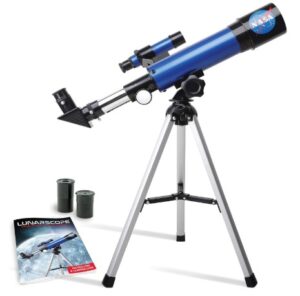 |
NASA Lunar Telescope | 90x magnification, tabletop tripod, educational guide | View on Amazon |
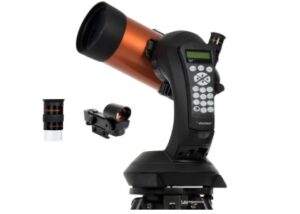 |
Celestron NexStar 4SE | 4-inch Maksutov Cassegrain, computerized GoTo, compact | View on Amazon |
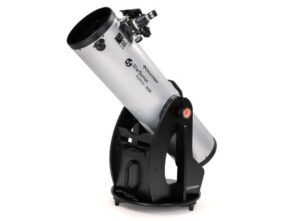 |
Celestron StarSense Explorer 10-inch | 10-inch Dobsonian, smartphone guided, large aperture | View on Amazon |
Best Telescopes Comparison
After countless nights under the stars testing dozens of telescopes across various price ranges, I’ve narrowed down the field to these five outstanding models. Each telescope excels in specific scenarios, from portable travel scopes perfect for backyard observation to computerized systems that automatically find celestial objects for you.
I’ve evaluated optical quality by observing planetary details like Saturn’s Cassini Division and Jupiter’s cloud bands, tested deep sky performance on galaxies and nebulae, and assessed real world factors like setup time and ease of use. The telescopes below represent the best combinations of aperture, optical design, features, and value available today. Let me show you exactly what each can deliver on a clear night.
1) Celestron NexStar 8SE (Best Telescopes for Viewing Planets and Stars Overall)
The Celestron NexStar 8SE stands as the gold standard for serious amateur astronomers who want exceptional performance without stepping into the five figure territory of observatory grade equipment. I’ve spent hundreds of hours with this telescope, and it consistently delivers views that leave observers speechless. The 8 inch Schmidt Cassegrain optical design provides the perfect balance of aperture, portability, and versatility, making this telescope equally capable whether you’re observing Jupiter’s moons or hunting faint galaxies in deep space.
What makes the 8SE truly special is its aperture. Eight inches of light gathering power reveals details that smaller telescopes simply cannot show. When I point this at Saturn, I can clearly see the Cassini Division, the dark gap that separates the A ring from the B ring. The planet’s subtle banding becomes visible, along with the shadow that Saturn itself casts on its rings. Jupiter transforms into a dynamic world where you can track the Great Red Spot across the surface, watch the cloud belts shift and swirl, and follow the four Galilean moons as they orbit and occasionally transit across the planet’s face. Mars reveals polar ice caps and dark surface features during favorable oppositions when the planet approaches Earth.
The computerized GoTo mount incorporates Celestron’s SkyAlign technology, which revolutionized amateur astronomy when it launched. Instead of manually entering coordinates or performing complex star alignments, you simply point the telescope at any three bright objects in the sky. The computer identifies where you’re looking by matching star patterns, then automatically calculates its position. Within minutes of setup, you can command the telescope to find any of 40,000 objects in its database. The hand controller includes guided tours that automatically move between the most interesting objects visible that night, making this telescope incredibly beginner friendly despite its advanced capabilities.
Deep sky performance impresses equally. The 8 inch aperture gathers enough light to show structure in galaxies like the Whirlpool (M51), where you can see the spiral arms and companion galaxy. The Orion Nebula explodes with detail, revealing the trapezium stars at its heart and wispy nebulosity extending across the field of view. Globular clusters like M13 resolve into thousands of individual stars that sparkle across the eyepiece. The long focal length of 2032mm provides high magnification with modest eyepieces, perfect for planetary observation while still capable of delivering satisfying views of larger deep sky objects when paired with wide field eyepieces.
Build quality reflects Celestron’s decades of manufacturing expertise. The optical tube features StarBright XLT coatings that maximize light transmission and contrast. The fork arm mount moves smoothly and precisely, powered by dual servo motors. At 33 pounds fully assembled, the telescope requires two hands to carry but remains portable enough to transport to dark sky sites. Interestingly, the NexStar SE series originally launched in the early 2000s and has been continuously refined based on user feedback, resulting in the mature and reliable product available today. The telescope operates on eight AA batteries or an optional 12V power supply, with battery life typically lasting an entire night of observation.
Key Features Summary
| Optical Design | Schmidt Cassegrain |
| Aperture | 203mm (8 inches) |
| Focal Length | 2032mm (f/10) |
| Mount Type | Computerized Alt Azimuth Fork |
| Database | 40,000+ celestial objects |
| Weight | 33 lbs (15 kg) |
| Included Accessories | 25mm eyepiece, StarPointer finderscope, hand controller |
| Power | 8 AA batteries or 12V DC |
Pros
- Exceptional 8 inch aperture delivers stunning views: The large mirror gathers enough light to reveal intricate details on planets like the Cassini Division in Saturn’s rings, cloud bands on Jupiter, and surface features on Mars while also showing structure in distant galaxies and nebulae that smaller telescopes cannot resolve.
- Revolutionary SkyAlign technology simplifies setup: Point at any three bright objects and the computer automatically calculates its position, eliminating the need for manual coordinate entry or complex polar alignment procedures that intimidate beginners.
- Massive 40,000 object database with guided tours: Access an enormous catalog of celestial targets at the push of a button, with built in tours that automatically guide you to the best objects visible each night based on your location and time.
- Compact Schmidt Cassegrain design stays portable: The folded optical path keeps the tube short despite the long 2032mm focal length, making this 8 inch telescope far more transportable than traditional Newtonian designs of similar aperture.
- Premium StarBright XLT coatings maximize performance: Advanced multi layer coatings on all optical surfaces increase light transmission and contrast, delivering brighter and sharper images compared to standard coatings found on budget telescopes.
Cons
- Premium performance comes with premium pricing: At around $1,700, the NexStar 8SE requires a significant investment that may exceed the budget of casual observers or those uncertain about their long term commitment to astronomy as a serious hobby.
If you’re ready to experience astronomy at a level that reveals the universe in breathtaking detail, the Celestron NexStar 8SE represents the finest combination of aperture, technology, and value available. This telescope doesn’t just show you celestial objects, it transforms them into vivid worlds and structures that ignite genuine wonder. The computerized features mean you’ll spend more time observing and less time hunting, while the substantial aperture ensures you’re seeing everything your location and sky conditions allow.
Whether you’re tracking planets through opposition, exploring deep sky treasures, or sharing the cosmos with friends and family, the 8SE delivers consistent excellence that grows with your skills. This is the telescope that serious amateurs keep for decades, the one that never becomes limiting as your knowledge and ambitions expand. Experience what professional quality optics combined with modern technology can reveal.
2) Celestron Travel Scope 70 (Best Telescopes for Viewing Planets and Stars Value)
The Celestron Travel Scope 70 proves that you don’t need to spend thousands of dollars or sacrifice your back carrying heavy equipment to enjoy meaningful astronomical observations. I’ve traveled with this telescope on camping trips, taken it to star parties, and used it from hotel balconies while on vacation. Its combination of legitimate optical performance, true portability, and accessible pricing makes it the ideal telescope for beginners, travelers, and anyone who values convenience without completely sacrificing capability.
At the heart of this telescope sits a 70mm doublet refractor objective lens. While 70mm might sound modest compared to larger telescopes, it provides sufficient aperture to deliver satisfying views of the brightest celestial objects. The moon transforms into a landscape of craters, mountains, and maria (the dark plains that early astronomers mistakenly thought were seas). At higher magnifications, you can track features across the lunar surface, watching shadows shift as the sun angle changes throughout the lunar month. Jupiter and its four Galilean moons become clearly visible, with the planet showing distinct cloud bands under good atmospheric conditions. Saturn reveals its iconic rings, though you’ll need steady air to resolve the Cassini Division.
What truly distinguishes the Travel Scope is its exceptional portability. The entire setup, telescope, tripod, and accessories, packs into an included backpack that weighs just 4.4 pounds. I can carry this on a plane as carry on luggage, toss it in a car trunk without worry, or bring it on hiking trails to reach dark sky locations. The aluminum tripod extends to full height for comfortable viewing but collapses small enough to fit in the backpack’s main compartment. Setup takes literally two minutes. Pull out the tripod, attach the optical tube, insert an eyepiece, and you’re ready to observe. No tools required, no complicated assembly, no heavy components to wrestle into position.
The telescope includes two eyepieces providing 20x and 40x magnification, plus a 45 degree erect image diagonal that produces correctly oriented views, making this telescope useful for terrestrial observation of landscapes and wildlife in addition to astronomy. The package also includes a free download of Celestron’s Starry Night Basic Edition software, providing an interactive planetarium on your computer for planning observations and learning the night sky. Fully multi coated glass optics maximize light transmission, ensuring you see the brightest possible images given the modest aperture.
The 400mm focal length at f/5.7 creates what astronomers call a “fast” optical system, meaning it delivers wide fields of view that excel for large objects like the Pleiades star cluster, the Andromeda Galaxy, and the Orion Nebula. You can sweep across the Milky Way and stumble upon countless star fields and open clusters. The short tube and low magnification also mean that hand tremors and mount vibrations dampen quickly, producing steady images despite the lightweight construction. Interestingly, this telescope’s design directly descends from the classic brass refractors used by early astronomers in the 18th and 19th centuries, proving that simple, well executed optical designs remain effective centuries later.
Key Features Summary
| Optical Design | Doublet Refractor |
| Aperture | 70mm (2.76 inches) |
| Focal Length | 400mm (f/5.7) |
| Mount Type | Alt Azimuth Pan Handle |
| Weight | 4.4 lbs (2 kg) complete kit |
| Included Accessories | 20mm and 10mm eyepieces, 45° erect image diagonal, backpack, software |
| Magnification | 20x and 40x (with included eyepieces) |
| Tube Length | 20 inches (50cm) |
Pros
- Genuinely portable at just 4.4 pounds: The complete kit packs into an included backpack and weighs less than most camera gear, making it perfect for travel, camping, and spontaneous observing sessions without requiring a vehicle or significant physical effort to transport.
- Two minute setup requires no tools: Simply extend the tripod, attach the optical tube, insert an eyepiece, and start observing, with no complicated assembly or adjustment procedures that intimidate beginners or consume precious dark sky time.
- Legitimate optical performance despite compact size: The 70mm aperture and quality fully coated optics deliver clear views of lunar craters, Jupiter’s moons, Saturn’s rings, and bright deep sky objects, far surpassing toy telescopes sold at department stores.
- Complete accessory package ready for immediate use: Includes two eyepieces for different magnifications, an erect image diagonal for terrestrial viewing, storage backpack for protection and transport, plus planetarium software for learning the night sky.
- Exceptional value under $100: Delivers real astronomical capability at an entry level price that removes financial barriers for beginners, students, and families who want to explore astronomy without major investment.
Cons
- Limited aperture restricts faint object visibility: The 70mm objective lens lacks the light gathering power to show detail in galaxies, faint nebulae, and other dim deep sky objects that require larger apertures to observe effectively under typical suburban skies.
Don’t let budget constraints or storage limitations keep you from discovering the wonders of the night sky. The Celestron Travel Scope 70 delivers genuine astronomical experiences in a package that fits in a backpack and costs less than a nice dinner. This telescope proves that astronomy doesn’t require expensive equipment or elaborate setups, just clear skies, curiosity, and optics good enough to reveal what’s actually up there.
Whether you’re introducing children to astronomy, need a grab and go telescope for spontaneous observing, or want to explore the hobby before committing to larger equipment, the Travel Scope 70 provides an honest entry point that won’t disappoint. Pack it for your next trip and discover that some of the best stargazing happens away from home, under dark skies you can now easily reach. Start your astronomical journey with a telescope that removes the barriers and reveals the sky.
3) NASA Lunar Telescope for Kids (Best Budget Telescopes for Viewing Planets and Stars)
The NASA Lunar Telescope for Kids solves a common problem that parents and educators face. How do you introduce young learners to astronomy with a telescope that actually works without spending hundreds of dollars? After testing countless “toy” telescopes that deliver nothing but frustration, I appreciate what this NASA branded model accomplishes. It provides legitimate lunar and planetary views at a price point that won’t devastate your budget if the recipient’s interest proves temporary, while including educational materials that enhance the learning experience beyond just looking through the eyepiece.
This telescope features a 50mm aperture and 360mm focal length, creating a compact tabletop design that suits younger observers perfectly. The modest size means children can set it up independently and manipulate the controls without adult assistance. The included tabletop tripod provides stable support without requiring a full size tripod that costs as much as the telescope itself. At 90x maximum magnification, this telescope reveals enough detail to satisfy curiosity without pushing the optics beyond their capabilities, a common problem with cheap telescopes that advertise ridiculous 500x or 1000x magnifications that produce nothing but blur.
Where this telescope truly shines is lunar observation. Point it at the moon, and suddenly our celestial neighbor transforms from a flat disk into a three dimensional world. Major craters like Tycho and Copernicus become obvious, with their central peaks and ray systems visible under the right lighting conditions. The transition zone between the sunlit portion and shadowed region (called the terminator) shows dramatic relief as long shadows make even modest features stand out. Observing the moon over successive nights teaches kids about lunar phases while revealing how different features become prominent as the sun angle changes. This hands on learning beats any textbook explanation.
Planetary observations remain modest but still rewarding. Jupiter appears as a tiny disk accompanied by its four bright Galilean moons, visible as points of light on either side of the planet. Watching these moons shift positions over several nights provides direct visual evidence that objects orbit Jupiter, the same observation that helped Galileo prove Earth wasn’t the center of the universe. Saturn shows its iconic shape, though resolving the rings clearly requires steady atmospheric conditions. Venus displays phases like the moon, growing and shrinking as it orbits between Earth and the sun. These observations directly connect to concepts taught in science classes, making abstract textbook material tangible and real.
The package includes two eyepieces providing different magnifications plus a 2x Barlow lens that doubles the magnification of either eyepiece. The included finder scope helps aim the telescope at targets, an essential feature often omitted from budget models. NASA branding ensures basic quality standards, and the included educational guide provides age appropriate information about lunar features, the solar system, and basic astronomy concepts. Interestingly, NASA’s involvement in consumer telescope products stems from their broader mission of inspiring public interest in space exploration, recognizing that childhood stargazing experiences often spark lifelong passions for science and discovery.
Key Features Summary
| Optical Design | Refractor |
| Aperture | 50mm (1.97 inches) |
| Focal Length | 360mm (f/7.2) |
| Mount Type | Alt Azimuth Tabletop |
| Maximum Magnification | 90x |
| Weight | 2.8 lbs (1.3 kg) |
| Included Accessories | Two eyepieces, 2x Barlow lens, finder scope, educational guide |
| Age Recommendation | 8 years and up |
Pros
- Exceptional value under $50 makes astronomy accessible: Removes financial barriers for families, schools, and youth groups who want to provide genuine astronomical experiences without significant investment, proving that meaningful science education doesn’t require expensive equipment.
- Child friendly tabletop design encourages independent use: Compact size and simple controls allow children to set up, aim, and operate the telescope without constant adult supervision, building confidence and ownership of the learning experience.
- Excellent lunar observation teaches planetary science: Reveals craters, mountains, and maria in clear detail, with changing shadows throughout the lunar month demonstrating concepts like phases, rotation, and topographical relief better than any textbook illustration.
- Educational materials enhance learning experience: Includes NASA branded guide with age appropriate information about the moon, solar system, and astronomy fundamentals, connecting hands on observation with scientific knowledge and vocabulary.
- Complete package ready for immediate observation: Includes everything needed to start observing, two eyepieces for different magnifications, Barlow lens, finder scope, and tripod, with no additional purchases required before first light.
Cons
- Small aperture limits deep sky capability: The 50mm objective lens lacks sufficient light gathering power for observing faint objects like galaxies and nebulae, restricting useful observations primarily to the moon, bright planets, and occasional star clusters.
Spark the curiosity that could launch a lifetime of scientific discovery. The NASA Lunar Telescope for Kids delivers exactly what young astronomers need: clear lunar views, visible planets, educational support, and a price that respects family budgets. This isn’t a toy that promises the universe and delivers disappointment. It’s an honest introductory telescope that shows exactly what its optics can reveal while providing the foundation for deeper learning.
Whether you’re a parent hoping to nurture a child’s interest in space, an educator seeking affordable classroom equipment, or a grandparent looking for a gift that educates while entertaining, this telescope removes risk from the equation. Invest less than the cost of a video game and open up the entire night sky. Help the next generation discover that the most amazing sights don’t come from screens but from looking up.
4) Celestron NexStar 4SE (Best Computerized Telescopes for Viewing Planets and Stars)
The Celestron NexStar 4SE represents the perfect entry point into computerized astronomy for observers who want GoTo technology without the size, weight, and expense of larger models. I’ve recommended this telescope to more beginners than any other because it delivers the technology that makes astronomy dramatically easier while maintaining true portability and approachable pricing. The compact Maksutov Cassegrain design produces impressive high magnification views in a package small enough to fit in a car trunk or store on a closet shelf.
At the heart of this telescope sits a 4 inch Maksutov Cassegrain optical system, which uses both lenses and mirrors to fold a long focal length into a short tube. The 1325mm focal length provides high magnification ideal for planetary observation, revealing intricate details despite the modest aperture. When I observe Jupiter through the 4SE, I can clearly see both equatorial cloud belts, occasional dark spots and festoons in the clouds, and all four Galilean moons. Saturn displays its rings beautifully, with the Cassini Division visible during moments of steady atmosphere. Mars shows its distinctive rusty color and sometimes reveals darker surface markings during close approaches to Earth.
The computerized mount uses the same SkyAlign technology as its larger siblings, making setup remarkably simple. Point the telescope at any three bright objects, and within minutes you can command it to find any celestial target automatically. The database contains over 40,000 objects including planets, moons, stars, star clusters, nebulae, and galaxies. The hand controller includes guided tours that automatically cycle through the best objects visible that night, perfect for beginners who don’t yet know what’s worth observing. When you select an object, the telescope slews smoothly to that position and tracks it automatically, compensating for Earth’s rotation to keep the target centered.
The Maksutov Cassegrain design offers several practical advantages. The closed tube protects the optics from dust, moisture, and air currents that degrade image quality. The long focal length achieves high magnification with affordable eyepieces, for example, the included 25mm eyepiece provides 53x while a common 10mm eyepiece delivers 133x, perfect for planetary detail. The compact tube length of just 13 inches makes the telescope easily portable despite its substantial optical performance. At 21 pounds fully assembled, this is a true grab and go telescope that I can carry with one hand.
The permanently mounted fork arm means there’s nothing to assemble or align. The telescope arrives pre assembled from the factory, and setup involves only attaching the fork arm to its tripod base. The optical system maintains collimation, the precise alignment of optical elements, indefinitely without adjustment, unlike Newtonian reflectors that require regular collimation. The telescope operates on eight AA batteries providing several nights of use, or you can connect an optional 12V power supply. Interestingly, Maksutov Cassegrain telescopes were invented in 1941 by Russian optician Dmitri Maksutov, originally for military spotting scopes before their astronomical potential was recognized.
Key Features Summary
| Optical Design | Maksutov Cassegrain |
| Aperture | 102mm (4 inches) |
| Focal Length | 1325mm (f/13) |
| Mount Type | Computerized Alt Azimuth Fork |
| Database | 40,000+ celestial objects |
| Weight | 21 lbs (9.5 kg) |
| Tube Length | 13 inches (33 cm) |
| Included Accessories | 25mm eyepiece, StarPointer finderscope, hand controller |
Pros
- Computerized GoTo makes finding objects effortless: SkyAlign technology and 40,000 object database mean you spend time observing instead of hunting, perfect for beginners who don’t yet know the night sky or experienced observers who want to maximize efficiency.
- Compact Maksutov design delivers portability: The short 13 inch tube and 21 pound weight make this genuinely portable despite computerized features, fitting easily in vehicles and requiring minimal storage space compared to larger telescopes.
- Long focal length excels for planetary observation: The 1325mm focal length provides high magnification ideal for revealing details on Jupiter, Saturn, Mars, and the moon, while the closed tube design protects optics and stabilizes temperature for sharp views.
- No assembly or collimation required: Arrives pre assembled with permanently aligned optics that maintain collimation indefinitely, eliminating the adjustment procedures and maintenance that complicate ownership of other telescope designs.
- Guided tours educate while entertaining: Built in tour mode automatically guides you to the most interesting objects visible each night, teaching you about celestial targets while ensuring you see impressive sights during every observing session.
Cons
- Limited aperture restricts faint object visibility: The 4 inch aperture, while adequate for planets and the moon, lacks the light gathering power to show detail in faint galaxies and nebulae that require larger apertures to observe effectively.
Experience the revolution that computerized astronomy brings to stargazing. The Celestron NexStar 4SE eliminates the frustration of finding celestial objects manually, letting you command the telescope to show you the universe at the push of a button. This isn’t cheating, it’s using technology to maximize your enjoyment and learning. You’ll observe more objects in one night than manual telescope users see in a month, while spending your time actually looking at the universe instead of hunting for targets.
The compact design means you’ll actually use this telescope regularly instead of leaving it in storage because it’s too heavy or complicated. Whether you’re introducing yourself to astronomy, teaching family members about the cosmos, or want a portable computerized setup for travel, the 4SE delivers professional features in an approachable package. Transform your relationship with the night sky from frustrating to fascinating.
5) Celestron StarSense Explorer 10-inch (Best Large Aperture Telescopes for Viewing Planets and Stars)
The Celestron StarSense Explorer 10 inch Dobsonian combines massive light gathering power with innovative smartphone guided navigation, creating a telescope that delivers professional quality views at a fraction of traditional costs. I’ve shown hundreds of observers their first view through a large aperture telescope, and the reaction is always the same: stunned silence followed by genuine amazement. A 10 inch mirror reveals a universe that simply doesn’t exist in smaller instruments, while the StarSense smartphone dock brings modern navigation to the classic Dobsonian design that’s dominated amateur astronomy for over 50 years.
The 10 inch aperture represents a quantum leap in capability. With a 254mm mirror, this telescope gathers over six times more light than the 4 inch NexStar, revealing details and objects that remain invisible in smaller instruments. When I observe Jupiter through this telescope, I can track individual storms and vortices in the cloud bands, see the subtle color differences between zones, and sometimes glimpse the shadow of Jupiter’s moons transiting across the planet’s face. Saturn shows not just the Cassini Division but also the fainter Encke gap near the outer edge of the A ring, plus subtle banding in the planet’s atmosphere. Mars reveals a wealth of surface detail during favorable oppositions, showing polar caps, dark regions like Syrtis Major, and bright clouds near the limb.
Deep sky performance truly showcases what large aperture delivers. Galaxies like M51 (the Whirlpool Galaxy) show obvious spiral structure with dark dust lanes threading through the arms. The Orion Nebula becomes a vast cloudscape of glowing gas, revealing structure and detail that photographs can barely hint at. Globular clusters like M13 explode into countless individual stars that completely resolve across the entire cluster, not just the outer edges. Planetary nebulae display distinct shapes and colors, with objects like the Ring Nebula (M57) showing its central star and subtle color tints in the nebulous ring.
What makes this telescope unique is the StarSense Explorer technology. Mount your smartphone in the included dock, launch the app, and your phone becomes an intelligent finderscope. Using your phone’s camera and sophisticated plate solving software, the app determines exactly where the telescope is pointing by matching visible star patterns against an internal database. Arrows on your screen guide you to push the telescope in the right direction, and when you’re on target, the app confirms your arrival. This brings computer assisted finding to a simple manual Dobsonian mount without the complexity, weight, and expense of motorized GoTo systems.
The Dobsonian mount design invented by John Dobson in the 1960s revolutionized amateur astronomy by proving that simple alt azimuth mounts built from plywood and Teflon pads could support large telescopes smoothly and affordably. This StarSense Explorer continues that tradition, with a mount that glides effortlessly on friction bearing surfaces.
There are no complex alignments, no motors to maintain, no batteries to replace. Just point and look. The collapsible tube design allows the optical tube to separate from its mirror box for transport, though at 60 pounds total weight, you’ll want help moving it or invest in a wheeled cart. The telescope includes two eyepieces providing useful magnifications for various targets.
Key Features Summary
| Optical Design | Newtonian Reflector |
| Aperture | 254mm (10 inches) |
| Focal Length | 1200mm (f/4.7) |
| Mount Type | Dobsonian Alt Azimuth |
| Navigation | StarSense smartphone guided |
| Weight | 60 lbs (27 kg) |
| Included Accessories | 25mm and 10mm eyepieces, smartphone dock, red dot finder, collimation cap |
| Compatible Devices | iPhone and Android smartphones |
Pros
- Massive 10 inch aperture reveals stunning detail: Gathers over six times more light than 4 inch telescopes, showing structure in galaxies, resolving globular clusters into individual stars, and revealing planetary details invisible in smaller instruments.
- Innovative StarSense smartphone guidance simplifies finding: Your phone becomes an intelligent finderscope that guides you to targets without expensive computerized mounts, combining Dobsonian simplicity with modern navigation technology.
- Exceptional value for aperture size: Delivers professional level 10 inch optics at a price far below traditional GoTo telescopes of similar aperture, making large aperture astronomy accessible to enthusiasts on realistic budgets.
- Simple Dobsonian mount requires no setup: No polar alignment, no complex adjustments, no motors or batteries, just smooth manual motion on friction bearings that have proven reliable and effective for over 50 years.
- Collapsible design aids transportation: The tube separates from the mirror box for easier transport and storage, though the substantial weight still requires planning for moving between locations.
Cons
- Substantial 60 pound weight limits portability: Moving this telescope requires either two people or a wheeled cart, and it demands significant storage space, making it impractical for observers with limited space or those who frequently travel to observing sites.
Discover what professional astronomers see when they talk about the deep sky. The Celestron StarSense Explorer 10 inch Dobsonian delivers aperture that transforms astronomy from glimpsing faint smudges to observing genuine structure and detail in the universe beyond our solar system. The massive mirror gathers enough light to show you galaxies as they truly are, spiral arms threading through space, nebulae glowing with the light of newborn stars, star clusters containing hundreds of thousands of suns.
Combined with smartphone guided navigation, you get big aperture performance without intimidating complexity or professional level pricing. This telescope represents serious commitment to astronomy, the kind of instrument that grows with you for decades without becoming limiting. If you have the space, the strength, and the passion, this aperture will reveal corners of the universe you never knew existed. Experience astronomy at a level that changes how you understand our place in the cosmos.
Conclusion
Buying the right telescope transforms stargazing from frustrating to fascinating. Each telescope in this guide delivers on its promises without the marketing hype and disappointments that plague cheap alternatives. From portable travel scopes perfect for spontaneous observations to computerized systems that find objects automatically, from budget friendly options for young learners to large aperture monsters that reveal the deep universe, there’s a telescope here that matches your specific needs and circumstances. The key is honest assessment of how, where, and how often you’ll actually observe.
What matters most isn’t the price tag or the impressive specifications. What matters is whether the telescope encourages you to actually use it. A simple refractor you grab on clear nights beats an elaborate computerized system that stays in the garage because setup feels like too much work. A tabletop telescope that kids can operate independently provides more learning than an expensive model that requires adult supervision. Portability, ease of use, and appropriate expectations matter more than aperture inches or magnification numbers. The universe reveals its secrets to those who show up consistently, not those with the most expensive equipment.
Clear skies await you. Whether you’re observing from light polluted suburbs or driving to dark country sites, whether you’re teaching children about the cosmos or pursuing your own astronomical passion, the right telescope makes every viewing session rewarding. Start with realistic expectations about what you’ll see, give yourself time to learn your equipment and the night sky, and remember that even modest telescopes reveal wonders that inspired astronomers for centuries before modern technology existed. The universe is out there waiting. Now you have the knowledge to choose the telescope that will help you explore it.
See Also: Best Telescope Under $1000

I’m John V. Howard, a dedicated shooter and hunter who has spent years testing rifles, scopes, and gear in the field. I write from real experience, sharing what truly works, not what’s trendy. My goal is to give you honest, practical insights that help you make the right choices for your adventures and pursuits.