The best scope for AR-15 depends heavily on what you actually do with the rifle, since this platform covers everything from home defense and competition to hunting and dedicated long range precision work, and no single optic style serves all of those jobs equally well.
A rifle used mostly inside 100 yards benefits from a fast red dot or holographic sight, while a rifle asked to reach out past 300 or 400 yards genuinely needs magnification.
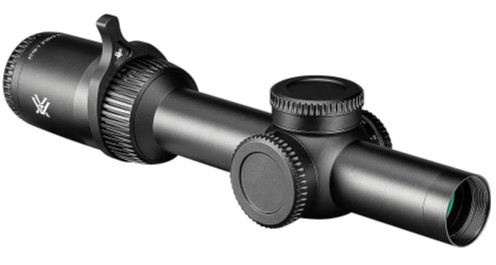
Our top pick for most AR-15 owners is the Vortex Strike Eagle 1-8×24, a low power variable optic that covers the widest range of realistic AR-15 use cases in a single scope without forcing a hard tradeoff between speed and reach.
Best Scopes for AR-15 Comparison
| Image | Name | Key Features | Check Price |
|---|---|---|---|
 |
Vortex Strike Eagle 1-8×24 | True 1x low end, illuminated reticle, genuine versatility | Check Price |
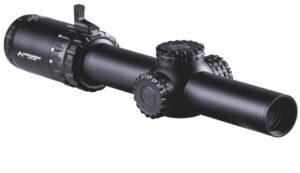 |
Primary Arms SLx 1-6×24 Gen IV | ACSS Nova reticle, strong value, simple controls | Check Price |
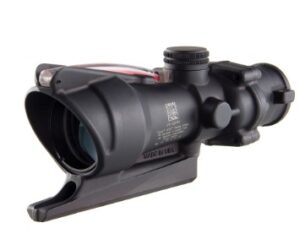 |
Trijicon ACOG TA31 | No battery required, chevron BDC to 800 yards | Check Price |
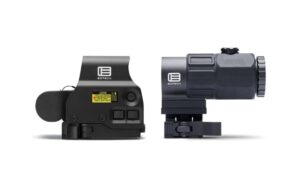 |
EOTECH EXPS3 HWS | Large window, fast target transitions, night vision compatible | Check Price |
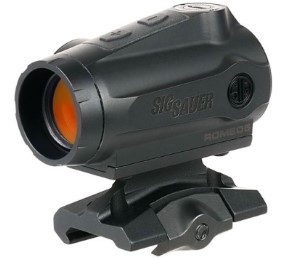 |
Sig Sauer Romeo5 Gen II | Budget red dot, 40,000+ hour battery life | Check Price |
Each of these optics serves a genuinely different AR-15 role, from a versatile do it all LPVO through dedicated close range speed. Here is how to think about which one fits your rifle’s actual job.
1) Vortex Strike Eagle 1-8×24 – Best Overall
The Vortex Strike Eagle earns the top spot for general purpose AR-15 use because its true 1x low end keeps both eyes open for fast, close range target acquisition, while the 8x top end gives genuinely useful capability out past 300 yards, a range spread that covers the large majority of what an AR-15 owner actually asks their rifle to do. The illuminated reticle adds real usability in low light without pushing the price into premium LPVO territory.
For a shooter who wants one optic that handles home defense, a range day, and the occasional hunting or longer distance opportunity without owning multiple rifles or swapping optics, this is a genuinely smart middle ground.
Key Features
| Spec | Detail |
|---|---|
| Magnification | 1-8x |
| Objective | 24mm |
| Reticle | Illuminated |
Pros
- Genuinely versatile across close, moderate and longer range use
- True 1x low end for fast, both eyes open target acquisition
- Backed by Vortex’s comprehensive VIP warranty
Cons
- A dedicated single purpose optic will outperform it at either extreme
Read our full Vortex Strike Eagle review for a deeper look at this scope.
2) Primary Arms SLx 1-6×24 Gen IV – Best Value
The Primary Arms SLx brings a genuinely capable low power variable optic to a price point noticeably below premium competitors, with the ACSS Nova reticle providing fast, intuitive holdover and ranging references without a steep learning curve. For an AR-15 owner setting up a rifle on a real budget, this scope removes optic quality as a limiting factor.
Simple, straightforward controls and a proven Primary Arms track record for reliability make this a genuinely safe choice for a first serious optic on an AR-15 build.
Key Features
| Spec | Detail |
|---|---|
| Magnification | 1-6x |
| Objective | 24mm |
| Reticle | ACSS Nova |
Pros
- Genuinely strong value for a low power variable optic
- Intuitive ACSS Nova reticle
- Simple, reliable controls
Cons
- 6x top end trails the Strike Eagle’s reach for longer shots
Budget conscious AR-15 owners should give this scope a close look.
3) Trijicon ACOG TA31 – Best for Reliability Without a Battery
The Trijicon ACOG solves a genuine concern for anyone who wants their optic to work regardless of battery status, using fiber optic and tritium illumination that requires no battery at all. The chevron BDC reticle offers holds out to 800 yards, and this design has been genuinely combat tested across military and law enforcement use for decades, a track record few competitors can match.
Fixed at 4x magnification, this scope trades the versatility of a variable power optic for extreme reliability and a proven, rugged design that holds up to serious abuse.
Key Features
| Spec | Detail |
|---|---|
| Magnification | 4x fixed |
| Reticle | Chevron BDC, illuminated without a battery |
| Range references | Holds to 800 yards |
Pros
- Genuinely never fails due to a dead battery
- Combat tested, extremely rugged design
- Useful holdover references to 800 yards
Cons
- Fixed 4x magnification trails a variable optic’s versatility
Shooters who want battery independent reliability above all else should check this out.
4) EOTECH EXPS3 HWS – Best for Fast Close Range Transitions
The EOTECH EXPS3 is built specifically for the close quarters scenario where speed matters more than anything else, with a genuinely large 1.2 by 0.85 inch window and a clever reticle design that makes transitioning between multiple close targets noticeably faster than a smaller window optic allows. A dedicated night vision compatibility button adds real utility for anyone running the rifle after dark with NV gear.
The holographic reticle’s slightly grainy appearance is actually a genuine benefit for shooters with astigmatism, who often struggle to get a clean dot with standard red dot sights.
Key Features
| Spec | Detail |
|---|---|
| Magnification | 1x |
| Window size | 1.2 x 0.85 inches |
| Reticle options | Five available |
Pros
- Genuinely fast target transitions with a large window
- Works well for shooters with astigmatism
- Night vision compatible with a dedicated button
Cons
- No magnification limits use beyond close to moderate range
Shooters who prioritize close quarters speed above all else should give this a close look.
5) Sig Sauer Romeo5 Gen II – Best Budget Red Dot
The Sig Sauer Romeo5 Gen II brings genuinely dependable red dot performance to an AR-15 at a price point well below premium competitors, with a published battery life exceeding 40,000 hours that means you will likely upgrade the rifle before you replace the battery. For a home defense rifle, a range gun, or a budget conscious first AR build, this red dot delivers real value.
Ambidextrous controls and available red or green reticle options add genuine flexibility for a range of shooters and preferences.
Key Features
| Spec | Detail |
|---|---|
| Magnification | 1x |
| Objective | 20mm |
| Battery life | Approximately 40,000 hours |
Pros
- Genuinely strong value for a reliable red dot
- Outstanding published battery life
- Ambidextrous controls
Cons
- No magnification limits use to close and moderate range only
Budget conscious AR-15 owners building a home defense or range rifle should check this out.
What to Look For in a Scope for AR-15
Your rifle’s actual job should drive this decision more than any single feature. A home defense or close quarters competition rifle is best served by a red dot or holographic sight with no magnification, since speed at close range is the entire point. A general purpose rifle that needs to handle both close and moderate distance shooting benefits most from a low power variable optic in the 1-6x or 1-8x range. A rifle built specifically for hunting or longer range precision work needs real magnification, typically 4-16x or higher, and a first focal plane reticle if you plan to shoot past 400 or 500 yards.
Battery independence is worth considering if your rifle serves a defensive role, since a battery powered optic that dies at the wrong moment is a genuine liability. Fiber optic and tritium illuminated optics like the ACOG solve this at the cost of magnification flexibility.
Mounting matters as much as the optic itself on an AR-15, since the rail space behind the ejection port is limited. A magnified scope often needs a cantilever mount to achieve correct eye relief, while a red dot typically mounts directly with a standard riser or co-witness height mount.
Frequently Asked Questions
Should I get a red dot or a scope for my AR-15?
This depends entirely on your rifle’s purpose. A red dot suits close range defensive or competition use where speed matters most, while a magnified scope adds real value for hunting or any shooting past 100 to 150 yards.
What magnification range is best for a general purpose AR-15?
A 1-6x or 1-8x low power variable optic covers the widest range of realistic uses, combining a fast 1x setting for close range work with genuine magnification for moderate distance shots.
Do I need a cantilever mount for my AR-15 scope?
Often yes, since standard rings placed at the rearmost rail position frequently leave a magnified scope too close to your eye for proper eye relief on an AR-15. A cantilever mount extends the scope forward to solve this.
Is a battery free optic like the ACOG worth it?
For a defensive rifle where reliability is paramount, yes, since it removes battery failure as a possible point of failure entirely. For a range or hunting rifle, a battery powered optic’s added versatility usually outweighs this concern.
Conclusion
The best scope for AR-15 is the one that actually matches how you use your rifle, and there is no single correct answer across every use case. The Vortex Strike Eagle earns our top recommendation for its genuine versatility across most real world scenarios, the Primary Arms SLx delivers strong value for a budget build, the Trijicon ACOG offers unmatched battery free reliability, the EOTECH EXPS3 wins for pure close range speed, and the Sig Sauer Romeo5 gives budget conscious shooters a dependable red dot. Match your choice to your rifle’s actual job rather than chasing the most feature rich option available.
See Also: 5 Best Scopes for Ruger 10/22

I’m Jake, a dedicated shooter and hunter who has spent years testing rifles, scopes, and gear in the field. I write from real experience, sharing what truly works, not what’s trendy. My goal is to give you honest, practical insights that help you make the right choices for your adventures and pursuits.

