
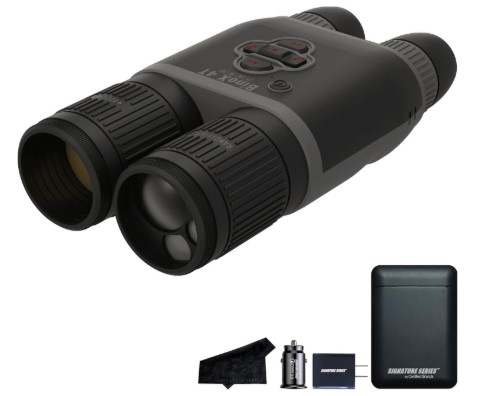
The ATN BinoX 4T packs more smart features into a thermal binocular than almost anything else on the market, and this review covers the 640×480 2.5-25x configuration, the flagship model at the top of a BinoX 4T lineup that spans six different sensor and magnification combinations at very different price points. ATN built its reputation on smart optics loaded with sensors and connectivity, and the BinoX 4T leans into that identity fully, layering a laser rangefinder, e-compass, barometer and ballistic data exchange on top of a genuinely capable Gen 4 thermal sensor.
Specifications
| Spec | Detail |
|---|---|
| Sensor resolution (this config) | 640×480, Gen 4 thermal sensor, 60Hz |
| Magnification | 2.5x to 25x |
| Detection range | Approximately 1,950 yards |
| Laser rangefinder | 5 to 1,000 yards, plus or minus 1 yard |
| Display | Dual 1280×720 screens |
| Battery | 16+ hours, USB-C rechargeable |
| Smart sensors | 3D magnetometer, e-compass, barometer, accelerometer, gyroscope |
| Other lineup configs | 384×288 and 640×480 sensors across six magnification tiers |
Optical Performance
The Gen 4 640×480 sensor in this top tier configuration delivers a genuinely strong thermal image with a published detection range around 1,950 yards for a typical animal sized heat signature, and the 60Hz refresh rate handles moving targets smoothly even at higher magnification. As always, that detection figure describes spotting a heat source rather than confirming species, with practical recognition happening considerably closer.
Buyers should note the BinoX 4T lineup spans a genuinely wide range, from a 384×288 sensor at 1.25x to 5x magnification up through this 640×480 2.5x to 25x flagship, with detection range and price increasing substantially at each step. Confirm the exact model number before buying, since the difference in capability and cost between the entry and flagship configurations is considerable.
Rangefinder and Smart Features
The integrated laser rangefinder ranging from 5 to 1,000 yards with plus or minus 1 yard precision is genuinely competitive with dedicated standalone rangefinders, and ATN’s ballistic information exchange technology lets the unit pass range data to compatible ATN riflescopes for an automatic ballistic solution, a feature that has no real equivalent among competing thermal binoculars.
The e-compass, barometer, accelerometer and gyroscope add genuine situational awareness features beyond simple observation, useful for anyone navigating unfamiliar terrain at night or logging precise location data alongside recorded footage. Dual stream video lets you record to a memory card and stream over WiFi simultaneously, a genuinely useful touch for anyone documenting hunts in real time.
Build Quality and Durability
Built and assembled in the USA with a weather resistant rating and an operating range from negative 20 to positive 120 degrees Fahrenheit, this is a durable unit built for real field use across seasons. At 2.5 pounds it is noticeably heavier than a comparable monocular, a fair tradeoff for the binocular format and the substantial feature set packed inside.
Who Should Buy This Scope
The flagship 640×480 2.5-25x configuration suits a serious hunter, professional guide or tactical user who wants the smart feature ecosystem ATN builds around its thermal line and is willing to pay a genuine premium for the combination of sensor performance, integrated rangefinder and situational awareness sensors.
A buyer on a tighter budget should look at the lower tier 384×288 configurations in the same BinoX 4T family, which retain the smart feature set at a meaningfully lower price and shorter detection range, or consider a simpler thermal binocular from Pulsar or AGM if the smart sensor ecosystem is not a priority.
Pros
- Genuinely comprehensive smart feature set unmatched by most competing thermal binoculars
- Ballistic information exchange technology pairs with compatible ATN riflescopes
- Strong 16+ hour battery life with USB-C charging
- Wide lineup lets you match sensor and price to your actual needs, if you pick the right one
Cons
- Flagship configuration commands a genuinely premium price, and the six model lineup makes it easy to order the wrong tier for your budget and needs
If a thermal binocular loaded with smart features and a genuine rangefinder is what your hunting demands, the BinoX 4T is worth serious consideration. Check the current listing for the configuration that fits your budget.
Alternatives to Consider
| Alternative | When it’s the better choice |
|---|---|
| Pulsar Merger LRF XP50 | You want a simpler, more focused feature set with strong optics |
| HikMicro Habrok | You want fused thermal and daytime color imaging in one unit |
| AGM Taipan V2 | You want a lower price and a monocular rather than binocular format |
Frequently Asked Questions
What is the difference between the BinoX 4T configurations?
The lineup spans six sensor and magnification combinations, from a 384×288 sensor at 1.25x to 5x magnification up to the 640×480 2.5x to 25x flagship covered in this review, with detection range and price increasing substantially at each tier.
What is ballistic information exchange?
It is ATN’s system for passing range data from the BinoX 4T’s laser rangefinder to a compatible ATN riflescope, letting the scope calculate an automatic ballistic solution rather than requiring manual input.
How accurate is the built in laser rangefinder?
ATN states plus or minus 1 yard precision across a 5 to 1,000 yard range, genuinely competitive with dedicated standalone laser rangefinders.
How long does the battery last?
ATN states over 16 hours of runtime, and the unit charges via USB-C, making it straightforward to top off with a portable power bank during a long session in the field.
Verdict
The ATN BinoX 4T earns its place among the most feature loaded thermal binoculars available by combining a genuinely capable Gen 4 sensor with a real laser rangefinder and a full suite of situational awareness sensors. For a hunter or professional user who wants that complete package and picks the right configuration for their budget, it delivers strong value across a wide price range.
See Also: Pulsar Telos LRF XP50 Review

I’m Jake, a dedicated shooter and hunter who has spent years testing rifles, scopes, and gear in the field. I write from real experience, sharing what truly works, not what’s trendy. My goal is to give you honest, practical insights that help you make the right choices for your adventures and pursuits.

