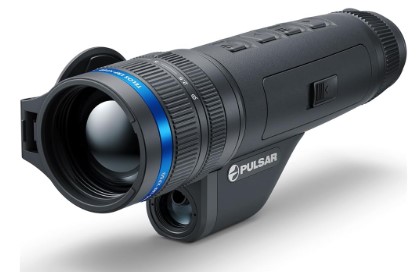
The Pulsar Telos is not a single thermal monocular but a modular platform sold across seven different sensor and rangefinder combinations, and this review focuses on the Telos LRF XP50, the 640×480 configuration with a built in laser rangefinder that sits in the practical middle of the lineup. Before buying, confirm exactly which Telos configuration a listing describes, since the line spans everything from the compact XQ35 up through the flagship XT50, and detection range, sensor resolution and price shift meaningfully between them.
Specifications
| Spec | Detail |
|---|---|
| Sensor resolution (this config) | 640×480, 17 micron pixel pitch |
| Magnification | 2.5x to 10x |
| Detection range | Approximately 1,969 yards |
| Laser rangefinder | Built in on LRF variants |
| Design | Modular architecture, built for future sensor upgrades |
| Other lineup configs | XQ35, XG50, XL50, XT50, each with different sensor and price |
Optical Performance
The XP50 sensor configuration reviewed here delivers the same genuinely sharp thermal image Pulsar is known for across its product range, with a published detection range around 1,969 yards for a typical animal sized target. As with any thermal spec, that figure describes detecting a heat signature rather than confirming what you are looking at, with recognition happening at a meaningfully closer distance. Buyers who need longer detection range should look specifically at the XT50 or XL50 configurations, which use larger, higher resolution sensors and push detection range out past 2,500 yards according to Pulsar’s own published figures.
Where the Telos platform distinguishes itself is the stated modular design, built with future serviceability and potential sensor upgrades in mind rather than as a fixed, disposable unit. For a buyer planning to own the device for years, this is a genuinely different value proposition than a sealed unit that cannot be serviced or upgraded down the line.
Rangefinder and Controls
The LRF equipped configurations, including the XP50 reviewed here, add genuinely precise laser rangefinding that Pulsar positions as a bridge between handheld observation and dialing a riflescope, letting you range a target with the monocular before making a shot with a separate optic. Buyers who do not need integrated ranging can choose the non-LRF version of the same sensor configuration at a lower price.
Build Quality and Durability
Pulsar’s build quality reputation carries through the Telos line, and the monocular format keeps weight and pack size down compared with a binocular unit like the Merger. The modular architecture Pulsar describes is intended to extend the useful service life of the unit beyond what a fixed sensor design offers, though as with any newer modular platform, long term third party feedback on the upgrade process itself is still limited.
Who Should Buy This Scope
This suits a hunter who wants a genuinely capable handheld thermal monocular with integrated ranging, values Pulsar’s sensor quality and app ecosystem, and likes the idea of a platform built for future upgrades rather than a sealed unit. Confirm you are ordering the specific sensor and LRF combination that matches your detection range needs and budget.
A hunter who does a lot of extended glassing sessions and wants the reduced eye fatigue of a binocular format should look at the Merger LRF XP50 instead, reviewed separately on this site.
Pros
- Genuinely sharp Pulsar sensor performance across the lineup
- Modular design intended for long term serviceability and future upgrades
- Integrated laser rangefinder on LRF configurations bridges observation and shooting
- Multiple sensor and price tiers let you match the unit to your actual hunting distances
Cons
- Seven different configurations across the lineup make it genuinely easy to buy the wrong one, so confirm the exact model before ordering
If a modular thermal monocular built for the long haul fits how you hunt, the Telos platform is worth a close look. Check the current listing for the configuration that matches your needs.
Alternatives to Consider
| Alternative | When it’s the better choice |
|---|---|
| Pulsar Merger LRF XP50 | You want a binocular format for long glassing sessions |
| AGM Taipan | You want a lower entry price in a handheld monocular |
| Pulsar Axion 2 XG35 | You want a simpler, non modular handheld at a lower price |
Frequently Asked Questions
What is the difference between the Telos XQ35, XP50, XG50, XL50 and XT50?
Each name refers to a different sensor resolution and pixel pitch combination, ranging from the compact 384×288 XQ35 up to the 1280×1024 flagship XT50, with detection range and price increasing accordingly. This review covers the 640×480 XP50 configuration.
Does every Telos model include a laser rangefinder?
No, most sensor options are available in both an LRF equipped version and a version without one at a lower price. Confirm which one a listing describes before buying.
What does modular architecture actually mean for a buyer?
Pulsar designed the Telos platform with future serviceability and potential upgrades in mind rather than as a sealed, fixed sensor unit, which may extend the useful life of the device compared with older handheld designs.
Is the Telos better than the Pulsar Axion line?
The Telos is a newer, more modular platform with a wider range of sensor and rangefinder options, while the Axion line is a simpler, well established handheld. Which is better depends on whether you value the upgrade path or a lower price on a proven design.
Verdict
The Pulsar Telos platform delivers genuinely strong thermal performance with a forward looking modular design, though the sheer number of configurations means doing your homework before ordering matters more here than with most thermal monoculars. For a buyer who confirms the right sensor and rangefinder combination for their needs, it is a strong long term choice in the handheld category.
See Also: Burris BTS35 v3 Review

I’m Jake, a dedicated shooter and hunter who has spent years testing rifles, scopes, and gear in the field. I write from real experience, sharing what truly works, not what’s trendy. My goal is to give you honest, practical insights that help you make the right choices for your adventures and pursuits.

