
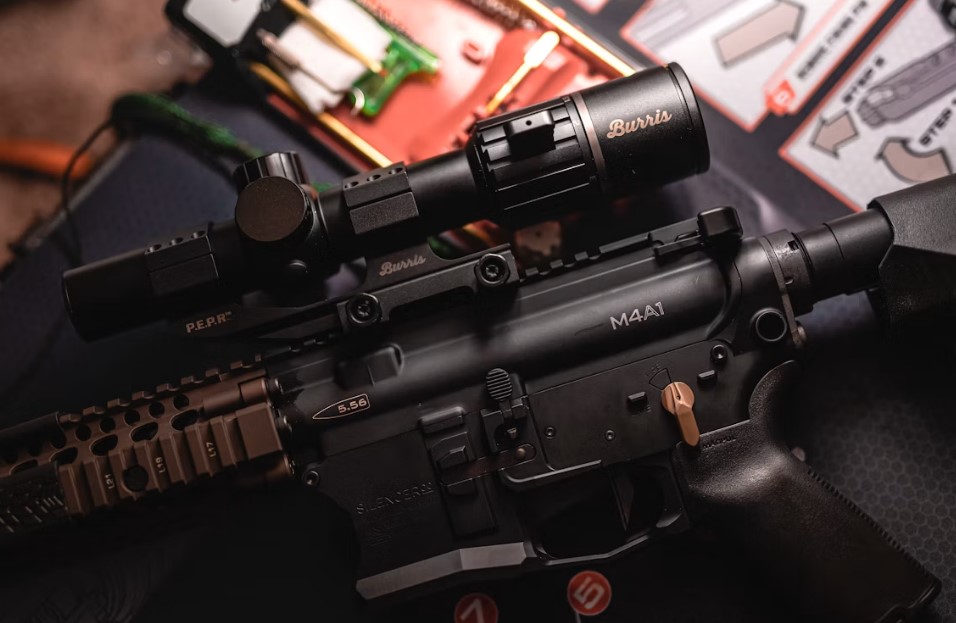
Knowing how to clean a rifle scope properly protects an investment that often costs more than the rifle it sits on, and it takes only a few minutes once you know the right order to do things in. The instinct most people have is to wipe the lenses the same way they would a pair of sunglasses, and that instinct is exactly what causes the scratches, the smeared coatings and the ruined optical performance that a fifteen minute job was supposed to prevent. Scope glass carries delicate anti reflective and light transmission coatings on its surface, and those coatings are considerably softer than the glass beneath them. Clean it the wrong way a few times and you will permanently dull an expensive optic.
What You Need
A rocket blower or a can of compressed air designed for optics. This does most of the real work and it does it without touching the glass at all.
A soft optics brush, the kind sold for camera lenses, with fine natural or synthetic bristles that will not scratch coated glass.
A microfibre cloth kept exclusively for optics, or better still, lens cleaning tissue designed to be used once and discarded. A cloth that has been used on anything else, including your phone screen, may carry grit that will scratch a lens.
A proper lens cleaning solution formulated for coated optics. Household glass cleaners, alcohol wipes and anything containing ammonia can strip or damage modern lens coatings and should never go near a scope.
A soft bristled brush for the exterior body and turrets, and a silicone cloth for the metal housing.
Step One: Remove Loose Debris First
This is the step almost everyone skips, and skipping it is the single biggest cause of scratched glass.
Dust, sand and grit sitting on the lens surface are abrasive. Wipe a cloth across them before removing them and you are effectively dragging sandpaper across a soft coating. Every scratch you will ever put in a scope lens starts with this mistake.
Use the rocket blower first, holding it close and blasting air across the lens surface at an angle rather than straight on. This dislodges the majority of loose particles without any contact at all. Follow with gentle sweeps of the soft brush for anything the air did not shift, brushing lightly and never pressing down.
Step Two: Clean the Lens Surface
Only once the loose debris is gone should anything wet touch the glass.
Apply a small amount of lens cleaning solution to a fresh piece of lens tissue or a clean section of microfibre cloth, not directly onto the lens. Wipe in a single gentle spiral, starting at the centre and working outward in one continuous motion, rather than scrubbing back and forth. Scrubbing regrinds any remaining particles against the coating.
Use minimal pressure. The glass does not need force, it needs the solvent to do the work of lifting oil and residue.
Finish with a dry section of clean lens tissue to remove any remaining streaks, again working from centre outward. If a lens tissue starts to look dirty partway through, switch to a fresh one rather than continuing with a contaminated surface.
Repeat for the objective lens at the front, the ocular lens at the eyepiece, and if your scope has an illuminated reticle with an additional lens, that surface too.
Step Three: The Body and Turrets
The metal tube and turret housings are far more forgiving than the glass, but they still deserve care, particularly around the seams where the turret caps meet the body.
A soft brush clears dust and debris from the turret grooves and the knurled surfaces where grip patterns trap grit. A silicone cloth wiped over the tube brings back the finish without leaving residue that could later migrate onto the lenses.
Check the turret caps are seated properly and that the seals around them look intact. This is also a sensible moment to glance at your ring screws, since a periodic check costs nothing and catches problems early.
Cleaning in the Field
Full cleaning is a home task, but a scope needs quick attention in the field far more often, usually because of rain, snow, or an unexpected splash of mud.
Carry a small blower or at minimum a soft lens pen, and a couple of individually wrapped lens tissues in your pack. Blow off loose material first exactly as you would at home, then use a lens tissue dry if the surface is merely dusty, or with a drop of solution if something has actually smeared onto the glass. Resist the urge to use your shirt tail. It seems harmless and it is one of the more common ways a lens picks up fine scratches in the field.
If the scope gets genuinely soaked, wipe what you can in the field and give it a proper clean at home once you are back, checking carefully for any moisture that may have found its way past a seal.
Common Mistakes
- Wiping before blowing off debris. This is responsible for the majority of scratched lenses. Always remove loose particles with air or a brush before anything touches the glass.
- Using household glass cleaner. Ammonia based cleaners can strip anti reflective coatings, sometimes visibly and sometimes in a way that only shows up as reduced brightness over time.
- Using a shirt tail or a paper towel. Clothing carries oils and fine grit, and paper towel is abrasive enough to mark coated glass. Neither belongs anywhere near a lens.
- Scrubbing in circles or back and forth. This regrinds trapped particles against the coating instead of lifting them away. A single gentle pass from centre to edge does the job with far less risk.
- Breathing on the lens to fog it before wiping. This is an old habit that adds moisture and does nothing useful. Use proper solution instead.
- Over cleaning. A scope that is only lightly dusty does not need solution and a full wipe down. A quick pass with a blower is often all that is required, and unnecessary wiping is unnecessary risk.
Frequently Asked Questions
Can I use rubbing alcohol on scope lenses?
It is best avoided. Rubbing alcohol can be too aggressive for some modern lens coatings and may cause streaking or, over repeated use, degrade the coating. A cleaning solution specifically formulated for coated optics is a small purchase that removes the risk entirely.
How often should I clean my rifle scope?
Only when it actually needs it. A blast of air before and after a hunt to clear dust is good practice every time. A full solution based clean is only necessary when the lens has visible smudges, water spots or residue, which for most people is a handful of times per season rather than after every outing.
What if moisture gets inside the scope?
A quality modern scope is sealed and purged with nitrogen or argon specifically to prevent internal fogging, so genuine internal moisture usually indicates a failed seal. If you see fogging or condensation on the inside of the glass rather than the outside, that is a seal problem rather than a cleaning problem, and it needs a manufacturer repair rather than home cleaning.
Can I clean the inside of the lens?
No, and you should not attempt to open a sealed scope to do so. If dust or fogging appears on an internal surface, the scope needs to go back to the manufacturer, since opening it yourself will void any warranty and risks compromising the seal permanently.
Is it safe to use a lens pen on a rifle scope?
Yes, a quality lens pen designed for optics is a good field tool. It combines a soft retractable brush with a cleaning tip, and it is compact enough to carry every time. Use the brush end first to clear loose debris, exactly as you would with a blower, before using the cleaning tip.
Summary
Cleaning a rifle scope safely comes down to one sequence, which is remove loose debris first with air or a soft brush, then clean the glass with proper solution and lens tissue using light pressure in a single pass from centre to edge, then finish the body with a soft brush and silicone cloth.
Never wipe a dry lens with debris still on it, never use household glass cleaner or clothing, and never scrub. A scope only needs a full clean occasionally, and a quick air blast before and after most outings will keep it in good condition between those sessions. Handled this way, good glass will stay clear and scratch free for a very long service life.
See Also: Roof Prism vs Porro Prism Binoculars

I’m Jake, a dedicated shooter and hunter who has spent years testing rifles, scopes, and gear in the field. I write from real experience, sharing what truly works, not what’s trendy. My goal is to give you honest, practical insights that help you make the right choices for your adventures and pursuits.

