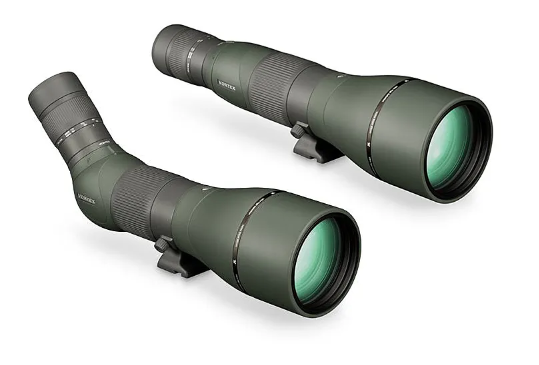
Learning how to use a spotting scope for target shooting properly turns an expensive accessory into one of the most genuinely useful tools on the firing line, letting you read your own impacts, call corrections for a shooting partner, and spot mirage long before it becomes visible through a rifle scope. A spotting scope left in its case, or set up incorrectly, delivers almost none of this value, which is why the setup and technique matter just as much as the quality of the glass itself.
Setting Up Your Position
Position the spotting scope to one side of the shooter, not directly behind, since a scope placed directly behind the muzzle can be affected by the muzzle blast on some rifles and puts the spotter in an awkward viewing position relative to the shooter’s own sight line. Slightly offset and roughly level with the shooter’s eye height works well for most bench or prone setups.
A stable tripod matters more than most people expect. Spotting scope magnification is high enough that even small vibrations or an unstable tripod will visibly degrade the image, undermining the entire purpose of the instrument. A quality tripod with a fluid or smooth panning head, rather than a cheap photo tripod, will make tracking impacts and following a partner’s shots considerably easier.
Focusing Correctly
Start at your scope’s lowest magnification to locate the target, since the wider field of view at low power makes finding the target itself much easier than starting at high magnification with its narrow window.
Once the target is centred, focus using the scope’s focus ring while at low power, then increase magnification gradually, refining focus again as you zoom in, since focus at one magnification setting is not always perfectly maintained at another, particularly on scopes without fully parfocal optics.
Many shooters make the mistake of jumping straight to maximum magnification, which narrows the field of view so much that relocating a target you have lost becomes frustrating, and which also makes any focus imprecision far more visible.
Reading Your Own Shots
At typical target distances, a quality spotting scope at sufficient magnification will let you see your own bullet holes appear in the target, which is the primary reason serious shooters use one rather than walking downrange after every shot or every group.
For paper targets, look for the small dust or paper displacement that occurs at the moment of impact, which is often easier to catch in the instant it happens than to find afterward on a target already full of holes. For steel targets, watch for the visible flash and the characteristic dust or paint chip reaction, along with listening for the distinct impact sound compared with a miss.
Adequate magnification for reading holes in paper at typical rifle distances often runs in the range of 20x to 40x depending on exact distance and target size, though this varies with conditions and personal eyesight.
Calling Corrections
If you are spotting for a shooting partner rather than reading your own shots, develop a consistent, clear system for communicating corrections before you start, since ambiguous communication under time pressure leads to confusion and wasted rounds.
Standard practice is to call corrections in the same units the shooter’s turrets use, typically MOA or MIL, along with clock direction or simple up, down, left, right terminology agreed upon beforehand. Calling a miss as two o’clock, half a mil communicates both direction and magnitude clearly and quickly, provided both shooter and spotter have agreed on this system in advance.
Reading Mirage
One of the most valuable and underused capabilities of a spotting scope is reading mirage, the visible shimmer caused by heat rising off the ground or off a heated surface like a road or rock face between you and the target. This shimmer is actually a wind indicator, and experienced long range shooters read its direction and speed of movement to estimate wind conditions along the bullet’s path, often more precisely than a single point wind meter at the firing line can tell you.
To read mirage effectively, focus the spotting scope slightly short of your actual target, onto the ground or a consistent background roughly halfway to two thirds of the way to the target, where the mirage effect is often more visible and more representative of conditions along the bullet’s flight path. A boiling, vertical mirage generally indicates little to no wind, while a mirage clearly running at an angle indicates wind moving across your line of sight, with faster moving mirage generally indicating stronger wind.
This is a skill that takes genuine practice to read accurately, and pairing consistent mirage observation with a chronograph and a ballistic app over time builds the experience needed to translate what you see into an accurate wind call.
Working With Multiple Shooters or Multiple Targets
If you are spotting for several shooters or watching multiple targets, a scope with a wider field of view at your working magnification, or one with an easy, smooth panning head on the tripod, will save considerable time and frustration compared with constantly refocusing and relocating between narrow views.
Some shooters find it useful to briefly zoom out between shots to maintain broader situational awareness, then zoom back in only when watching for a specific impact, rather than staying at maximum magnification throughout an entire session.
Protecting the Scope and Maintaining the View
Keep the objective lens shaded from direct sun when possible, since glare and internal reflections can meaningfully reduce image contrast and make reading impacts harder, particularly at higher magnification. A simple lens shade or sunshade accessory, or even careful positioning relative to the sun, makes a real practical difference over a long session on the range.
Between uses, keep the lens caps on and store the scope properly, since the same lens coatings that make the image bright and clear are vulnerable to scratching from dust and careless handling exactly as they are on a rifle scope.
Common Mistakes
- Starting at maximum magnification. This makes finding the target far harder than necessary. Always locate at low power first, then zoom in once the target is centred.
- Using an unstable tripod. High magnification amplifies even small vibrations, and a wobbling image undermines the entire purpose of the instrument regardless of glass quality.
- Positioning the scope directly behind the muzzle. This can expose it to muzzle blast on some rifles and creates an awkward viewing angle. A slight offset to the side works better.
- Not agreeing on a communication system before spotting for a partner. Ambiguous corrections called under time pressure waste rounds and cause frustration on both ends.
- Focusing directly on the target when reading mirage. Mirage is often more informative and more visible when observed partway between the shooter and the target rather than focused precisely on the target itself.
Frequently Asked Questions
What magnification do I need to see bullet holes in paper?
This depends on distance and target size, but somewhere in the range of 20x to 40x is commonly needed to reliably see individual bullet holes in paper at typical rifle distances. Longer distances or smaller aiming points push this requirement higher, while closer distances allow lower magnification.
How do I read mirage through a spotting scope?
Focus the scope slightly short of your actual target, roughly partway along the bullet’s path, and observe the shimmer of rising heat. A mostly vertical, boiling mirage suggests light or minimal wind, while mirage clearly angled and moving across your view indicates wind pushing in that direction, with faster movement generally suggesting stronger wind. This skill takes practice to translate into an accurate correction.
Where should I position a spotting scope relative to the shooter?
Slightly to one side of the shooter rather than directly behind, positioned at a comfortable height for the spotter, is standard practice. This avoids potential muzzle blast exposure and gives the spotter a workable viewing angle relative to the shooter’s own position.
Do I need a tripod for a spotting scope?
Yes, essentially always. The magnification levels involved are high enough that handheld use is impractical for serious target shooting purposes, and a stable, quality tripod is necessary to get a usable, steady image for reading impacts or calling corrections.
How do I communicate corrections to a shooter effectively?
Agree on a system before shooting begins, typically combining clock direction with a distance measurement in the same units, MOA or MIL, that the shooter’s turrets use. Consistent, pre agreed terminology avoids confusion and wasted rounds when calling corrections under time pressure.
Summary
Getting real value from a spotting scope comes down to correct setup and consistent technique. Position it to the side of the shooter on a stable tripod, locate targets at low magnification before zooming in, and refine focus at each power setting as you go. Learn to read your own impacts on paper or steel, agree on a clear communication system before spotting for a partner, and practise reading mirage by focusing partway along the bullet’s path rather than directly on the target.
Handled this way, a spotting scope becomes one of the most genuinely useful tools on the range, letting you read conditions, confirm impacts and call corrections far more effectively than relying on a rifle scope or walking downrange after every group.
See Also: How to Choose Binoculars for Hunting

I’m Jake, a dedicated shooter and hunter who has spent years testing rifles, scopes, and gear in the field. I write from real experience, sharing what truly works, not what’s trendy. My goal is to give you honest, practical insights that help you make the right choices for your adventures and pursuits.

