
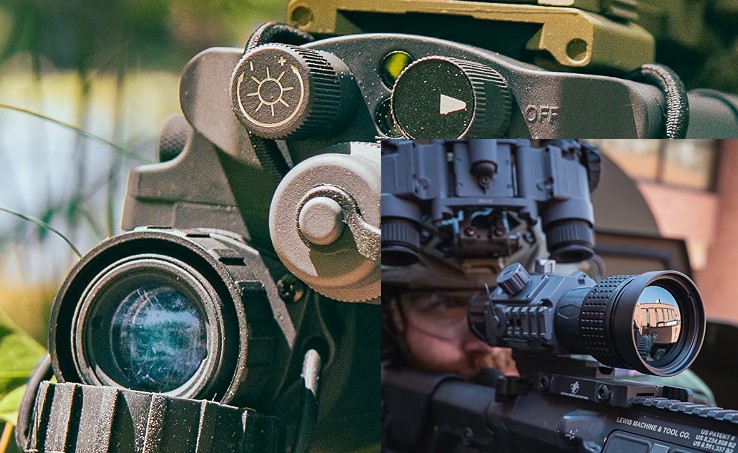
White phosphor versus green phosphor night vision is a choice that surprises a lot of first time buyers, since it has nothing to do with the image intensifier tube’s generation or its underlying performance capability. Both options can be built on identical gen 2 or gen 3 tube technology with identical amplification and sensitivity. The only difference is the colour of the phosphor screen that converts amplified electrons back into a visible image, traditionally green, and increasingly available in white as an alternative. It sounds like a purely cosmetic choice, and in terms of raw detection capability it largely is, but the practical differences in actual use are genuinely worth understanding before you buy.
Why Green Became the Traditional Colour
Green phosphor has been the standard since night vision technology matured, and the reasons were originally practical rather than aesthetic. The human eye is more sensitive to green wavelengths than to most other colours in low light conditions, meaning green phosphor screens historically appeared brighter and easier to resolve detail on for a given level of electron output than other colour options available at the time.
Green phosphor also has a longer history of refinement, and manufacturers have decades of production experience optimising its brightness, longevity and image characteristics. This is why green remains the more common and often more affordable option across the market, particularly at lower price points.
Why White Phosphor Emerged
White phosphor is a comparatively newer development, using a different phosphor compound to produce a greyscale image closer to traditional black and white photography rather than the familiar green glow.
The primary advantage reported by experienced users is reduced eye strain and improved visual clarity over extended viewing sessions. A white or greyscale image reportedly allows the eye to distinguish subtle shades and contrast more naturally than a single dominant colour, since human vision has more experience interpreting greyscale detail from ordinary daytime viewing than it does interpreting fine gradations within a narrow green spectrum.
Some users also report that white phosphor makes it easier to identify shapes, edges and fine detail, particularly during longer observation periods, though this is somewhat subjective and individual experience varies.
What Does Not Change Between the Two
It bears repeating clearly, since it is the most commonly misunderstood point in this comparison. The phosphor colour does not affect the generation of the underlying image intensifier tube, the amplification factor, the signal to noise ratio, the resolution, or any of the core performance specifications that actually determine how well the device detects and resolves detail in low light.
A gen 3 white phosphor tube and a gen 3 green phosphor tube built to the same specification will detect and resolve detail identically. The difference lives entirely in how that already processed image is displayed to your eye at the very final stage.
Practical Differences That Do Exist
| Factor | Green phosphor | White phosphor |
|---|---|---|
| Underlying tube performance | Identical for a given generation and spec | Identical for a given generation and spec |
| Eye fatigue over long sessions | Can be more noticeable for some users | Often reported as reduced |
| Colour recognition | Limited, since everything is one colour | Slightly improved shade and contrast perception |
| Familiarity and market history | Long established, more widely available | Newer, growing in availability |
| Typical price | Often somewhat lower | Often somewhat higher for equivalent tube spec |
The eye strain difference is the one most frequently cited by long term users, particularly those who spend extended periods actively glassing or observing rather than brief intermittent looks. Whether this matters enough to justify a price difference depends heavily on how you personally intend to use the device.
Does Phosphor Colour Affect Detection at Distance
No, not in any measurable way. Detection and identification range are governed by the tube’s generation, its signal to noise ratio, resolution and the objective lens, none of which phosphor colour touches. A green phosphor unit and a white phosphor unit built on an identical tube will detect a target at the same distance and resolve the same level of detail on it.
Where phosphor colour might genuinely influence your practical experience is in how comfortably and how confidently you interpret what you are already seeing, particularly during extended use, rather than in how far or how sharply the device can see in the first place.
Common Mistakes
- Assuming white phosphor is a newer, better generation of tube. It is not a generation at all. It is a display colour choice that can be paired with gen 2, gen 2+, or gen 3 tubes equally, and buying white phosphor does not automatically mean you are getting more advanced core technology.
- Paying a large premium for white phosphor without comparing the underlying tube specification. A green phosphor gen 3 tube with excellent signal to noise ratio will outperform a white phosphor gen 2 tube with mediocre specifications, regardless of phosphor colour.
- Expecting white phosphor to extend detection range. It will not, since range is determined entirely by tube generation, specification and lens, none of which phosphor colour affects.
- Dismissing green phosphor as outdated. It remains a completely valid, well proven choice, and for many users the eye strain difference is either minimal or simply not something they notice in practice.
Frequently Asked Questions
Is white phosphor better than green phosphor?
Not in terms of raw detection capability, since both can be built on identical tube technology with identical performance specifications. Many users report reduced eye strain and slightly easier detail recognition with white phosphor during extended viewing, which is a genuine practical benefit, but it comes at the cost of a display choice rather than any improvement in the underlying night vision capability.
Does phosphor colour affect night vision range?
No. Detection and identification range are determined by the image intensifier tube’s generation, its signal to noise ratio and resolution, and the objective lens, none of which phosphor colour influences in any way. Phosphor colour only affects the final displayed image, not the tube’s underlying performance.
Why is white phosphor more expensive?
Largely because it is a newer technology with less manufacturing history and scale behind it compared with the long established green phosphor process, and it is often paired with higher end tubes in a manufacturer’s lineup as a premium option. The price difference reflects market positioning as much as any inherent cost difference in the phosphor material itself.
Can I get white phosphor on a gen 2 tube?
Yes, white phosphor is available across various tube generations from various manufacturers, though it is more commonly paired with higher generation tubes in premium product lines. Check the specific product’s tube specification independently of its phosphor colour, since the two are separate choices.
Which phosphor colour is better for long observation sessions?
White phosphor is more commonly reported as easier on the eyes over extended periods, since a greyscale image is closer to how human vision naturally processes detail compared with a single dominant colour tint. Individual experience varies, and some users notice little practical difference between the two during typical use.
Summary
White and green phosphor describe the colour of the display screen inside a night vision device, not the generation or core performance of the image intensifier tube itself. A given tube specification will detect and resolve targets identically regardless of which phosphor colour sits on top of it.
The genuine practical difference lies in viewing comfort, with white phosphor commonly reported as reducing eye strain and slightly improving detail perception during extended use, at a typically higher price for an equivalent tube. Choose based on the tube’s actual generation and specification first, and treat phosphor colour as a secondary comfort preference layered on top of that decision rather than a performance upgrade in itself.
See Also: How to Zero a Thermal Scope

I’m Jake, a dedicated shooter and hunter who has spent years testing rifles, scopes, and gear in the field. I write from real experience, sharing what truly works, not what’s trendy. My goal is to give you honest, practical insights that help you make the right choices for your adventures and pursuits.

